AI Agent for Marketing: The Successful Key to Boost Marketing ROI by 40%
Introduction: The Marketing Revolution You Can’t Afford to Miss
Marketing teams are drowning in data while struggling to deliver personalized experiences at scale. The average marketer juggles 12+ tools daily, yet 63% report they’re still not meeting their ROI targets. Sound familiar?
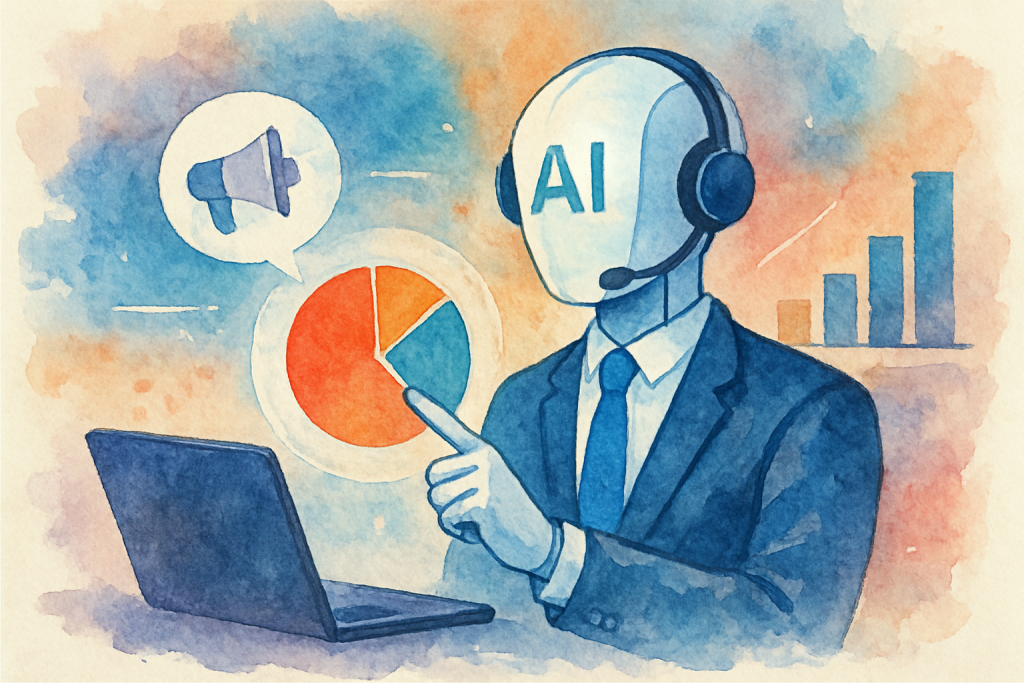
Enter the game-changer: AI agent for marketing. These intelligent systems are transforming how businesses attract, engage, and convert customers—delivering measurable results that traditional methods simply can’t match.
Unlike basic automation tools, AI agents think, learn, and adapt. They analyze customer behavior in real-time, predict buying patterns, and execute complex marketing strategies autonomously. Companies implementing AI agents report an average 40% increase in marketing ROI within the first six months.
In this comprehensive guide, you’ll discover seven proven ways AI agents revolutionize marketing performance. We’ll explore practical implementation strategies, real-world success stories, and solutions to common challenges. Whether you’re a CMO looking to scale operations or a marketing manager seeking competitive advantage, this guide provides the roadmap you need.
Let’s dive into how AI agents can transform your marketing results.
Understanding AI Agents for Marketing: Beyond Basic Automation
What Makes AI Agents Different from Traditional Marketing Tools
Think of traditional automation as a vending machine—it dispenses what you programmed. AI agents are more like skilled assistants who understand context, learn from outcomes, and improve their performance over time.
These intelligent systems handle everything from content creation and customer segmentation to campaign optimization and lead scoring. According to Gartner, 80% of marketing leaders will rely on AI agents for routine tasks by 2026, freeing human marketers to focus on strategy and creativity.
The Current State of AI Marketing Technology
The AI marketing landscape has matured significantly. Today’s AI agents integrate seamlessly with existing marketing stacks, processing millions of data points to deliver actionable insights.
Recent statistics paint a compelling picture:
- Companies using AI marketing agents see 50% faster lead response times
- Personalization powered by AI increases conversion rates by 35%
- AI-driven content optimization improves engagement metrics by 28%
- Marketing teams report saving 15+ hours weekly through AI automation
The technology has moved from experimental to essential. Forward-thinking organizations aren’t asking whether to adopt AI agents, but how quickly they can implement them.
7 Transformative Ways AI Agents Boost Marketing ROI
1. Hyper-Personalized Customer Experiences at Scale
AI agents analyze individual customer behaviors, preferences, and purchase history to deliver personalized experiences to thousands simultaneously. They track website interactions, email engagement, and social media activity to create dynamic customer profiles.
A leading e-commerce brand implemented AI agents to personalize product recommendations. The result? A 45% increase in average order value and 32% improvement in customer retention. The AI agent continuously refined recommendations based on real-time behavior, something impossible with manual segmentation.
2. Predictive Lead Scoring and Qualification
Sales teams receive qualified leads with detailed intelligence about timing, interests, and pain points. One B2B software company increased their sales team’s productivity by 60% after implementing AI-powered lead scoring, closing deals 40% faster.
3. Intelligent Content Creation and Optimization
AI agents don’t just schedule content—they create, test, and optimize it. These systems generate email subject lines, social media posts, and ad copy variations, then analyze performance to determine what resonates with specific audience segments.
They identify trending topics, suggest content angles, and even draft initial versions of blog posts and landing pages. A digital marketing agency using AI content agents increased their content output by 300% while improving engagement rates by 25%.
4. Automated Campaign Management and Optimization
AI agents monitor campaign performance 24/7, making real-time adjustments to maximize ROI. They automatically reallocate budgets to top-performing channels, pause underperforming ads, and test new variations without human intervention.
Consider this: while you sleep, your AI agent analyzes campaign data, identifies optimization opportunities, and implements changes. One retail brand’s AI agent reduced their cost-per-acquisition by 38% through continuous optimization across Google Ads, Facebook, and display networks.
5. Conversational Marketing Through AI Chatbots
Modern AI chatbots powered by advanced language models engage prospects in natural conversations, qualifying leads and booking meetings autonomously. They understand context, handle complex queries, and escalate to humans only when necessary.
These conversational agents operate across websites, social media, and messaging platforms, providing instant responses that convert visitors into leads. Companies report 3x higher engagement rates and 50% more qualified meetings booked through AI-powered chat.
6. Advanced Customer Journey Mapping and Attribution
AI agents track customers across multiple touchpoints, creating comprehensive journey maps that reveal how prospects move through your funnel. They attribute revenue to specific marketing activities with unprecedented accuracy, showing exactly which efforts drive results.
This intelligence enables smarter budget allocation and strategy refinement. Marketing teams finally answer the age-old question: “Which half of my marketing budget is working?”
AI agents forecast market trends, predict customer churn, and identify emerging opportunities before competitors. They analyze historical data, market conditions, and external factors to provide strategic recommendations.
One SaaS company’s AI agent predicted a 30% churn risk among specific customer segments, enabling proactive retention campaigns that saved $2M in annual recurring revenue. Slack achieved a 30% decrease in churn rate using AI-driven predictive analytics.
Implementing AI Agents: Your Step-by-Step Roadmap
Phase 1: Assessment and Planning (Weeks 1-2)
Start by auditing your current marketing processes. Identify repetitive tasks, bottlenecks, and areas where human judgment adds less value. Common candidates include data entry, report generation, basic customer inquiries, and routine campaign adjustments.
Define clear objectives. Are you aiming to reduce costs, increase lead volume, improve conversion rates, or enhance customer experience? Specific goals guide technology selection and success measurement.
Phase 2: Technology Selection and Integration (Weeks 3-6)
Choose AI solutions that integrate with your existing marketing stack. Leading platforms include HubSpot’s AI tools, Salesforce Einstein, Adobe Sensei, and specialized solutions like Drift for conversational marketing or Persado for content optimization.
Consider starting with one high-impact use case rather than attempting full-scale transformation. Quick wins build momentum and organizational buy-in.
Work with IT to ensure proper integration. API connections, data flows, and security protocols must be established correctly from the start.
Phase 3: Training and Optimization (Weeks 7-12)
AI agents learn from data, so initial training is crucial. Feed historical campaign data, customer interactions, and performance metrics. The more quality data provided, the faster your AI agent becomes effective.
Establish feedback loops. Monitor AI decisions, correct errors, and reinforce successful patterns. This human-in-the-loop approach accelerates learning and prevents costly mistakes.
Set up dashboards to track AI agent performance against your defined objectives. Monitor key metrics like lead quality, conversion rates, cost savings, and revenue impact.
Best Practices for Maximum Impact
Maintain human oversight, especially initially. AI agents should augment human marketers, not replace strategic thinking and creativity.
Prioritize transparency. Understand how your AI agent makes decisions. Black-box systems create risk and limit optimization opportunities.
Invest in team training. Your marketing team needs to understand AI capabilities and limitations to leverage these tools effectively.
Start small, scale fast. Prove value with pilot projects, then expand successful implementations across additional use cases and channels.
Overcoming Common AI Agent Implementation Challenges
Challenge 1: Data Quality and Integration Issues
Poor data quality is the primary reason AI implementations fail. Duplicate records, incomplete information, and siloed systems prevent AI agents from delivering accurate insights.
Solution: Conduct a data audit before implementation. Clean your CRM, establish data governance policies, and implement integration tools that ensure consistent data flow across systems. Consider data enrichment services to fill gaps in customer profiles.
Challenge 2: Team Resistance and Skill Gaps
Marketing teams often fear AI will replace their jobs or feel overwhelmed by new technology.
Solution: Frame AI agents as productivity enhancers that eliminate tedious tasks, allowing marketers to focus on creative and strategic work. Provide comprehensive training and celebrate early wins. Involve team members in the selection and implementation process to build ownership.
Challenge 3: Measuring ROI and Proving Value
Quantifying AI impact can be challenging, especially when benefits span multiple areas.
Solution: Establish baseline metrics before implementation. Track both efficiency gains (time saved, costs reduced) and effectiveness improvements (conversion rates, revenue growth). Use A/B testing to compare AI-driven campaigns against traditional approaches. Document case studies that demonstrate clear before-and-after results.
Challenge 4: Privacy and Compliance Concerns
AI agents process vast amounts of customer data, raising privacy and regulatory compliance questions.
Solution: Work with legal teams to ensure GDPR, CCPA, and industry-specific compliance. Implement transparent data practices, obtain proper consent, and provide customers control over their information. Choose AI vendors with strong security credentials and compliance certifications.
The Future of Marketing Belongs to AI-Powered Teams
The strategies outlined in this guide provide a comprehensive framework for leveraging AI agents. Companies that implement these approaches report significant competitive advantages—faster growth, lower acquisition costs, and superior customer experiences.
Your next step is clear: assess your current marketing operations, identify opportunities for AI enhancement, and begin your implementation journey. The ROI potential is too significant to ignore.
Ready to transform your marketing performance with AI agents? The Crunch specializes in helping businesses implement intelligent marketing solutions that deliver measurable results. Our team of experts will assess your needs, recommend the right AI tools, and guide you through successful implementation.
Contact The Crunch today to schedule your free consultation and discover how AI agents can revolutionize your marketing ROI. Visit https://thecrunch.io/get-a-proposal/ to get started.
Frequently Asked Questions (FAQ)
1. What is an AI agent for marketing?
2. How does an AI agent help with marketing campaigns?
3. What are the main benefits of using AI agents in marketing?
4. How do AI marketing agents compare to traditional marketing automation tools?
5. Are AI marketing agents expensive to implement?
6. What are common concerns about using AI agents in marketing?
7. How can I get started with an AI agent for marketing?
8. What types of marketing tasks can AI agents automate?
9. Do I need technical skills to use an AI marketing agent?
10. Can AI agents personalize marketing content?
11. How secure is my data with AI marketing agents?
12. Can AI agents integrate with my existing marketing tools?