The Power of AI Agent Memory: Fasten Your Decision Making in 1 Click
Introduction
Imagine an AI assistant that remembers your preferences from months ago, anticipates your needs before you express them, and learns from every interaction to serve you better. This isn’t science fiction—it’s the reality of modern AI agent memory systems transforming how machines make decisions.
Traditional AI systems operated like goldfish, forgetting everything the moment a conversation ended. Each interaction started from scratch, forcing users to repeat information and preferences endlessly. But AI agent memory has changed everything, enabling artificial intelligence to retain context, learn from past experiences, and make increasingly sophisticated decisions over time.
The integration of memory capabilities into AI agents represents one of the most significant breakthroughs in artificial intelligence. These systems now store conversational history, user preferences, behavioral patterns, and contextual information to deliver personalized, intelligent responses that improve with every interaction.
Understanding AI Agent Memory and Its Critical Role
What Is AI Agent Memory?
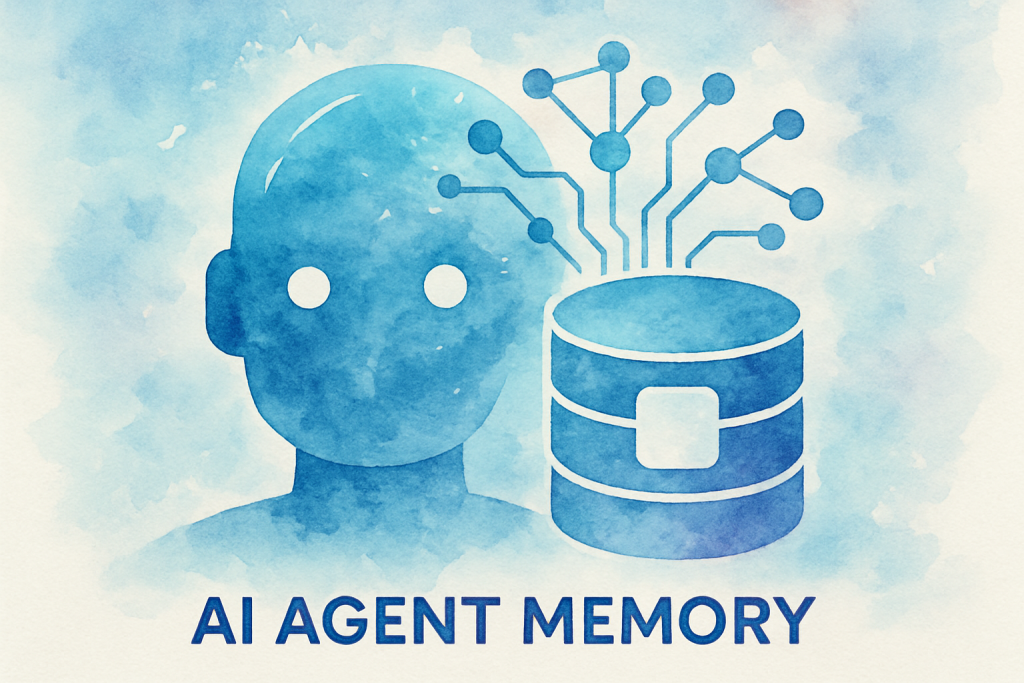
AI agent memory refers to the capability of artificial intelligence systems to store, retrieve, and utilize information from previous interactions and experiences. Unlike traditional stateless AI models that treat each query independently, memory-enabled agents maintain a persistent knowledge base that evolves over time.
This memory architecture typically consists of three layers: short-term memory for immediate context within a conversation, long-term memory for persistent user preferences and historical data, and working memory for active processing of current tasks. Together, these components enable AI agents to understand context, recognize patterns, and make informed decisions based on accumulated knowledge.
The Evolution of Memory in AI Systems
The journey from stateless to stateful AI represents a paradigm shift in machine intelligence. Early chatbots could only respond to immediate inputs without any recollection of previous exchanges. Modern AI agent memory systems, however, can recall conversations from weeks or months ago, track user preferences across multiple sessions, and build comprehensive profiles that inform future interactions.
According to recent research from Stanford University, AI systems with memory capabilities demonstrate up to 40% improvement in task completion accuracy compared to their stateless counterparts. This dramatic enhancement stems from the ability to learn from mistakes, adapt to user preferences, and apply historical context to new situations.
Why Memory Matters for Decision-Making
Memory transforms AI agents from simple response generators into intelligent decision-making partners. When an AI system remembers that a customer prefers email communication over phone calls, or that a patient has specific medication allergies, it can make better decisions automatically without requiring repeated input.
This capability reduces cognitive load on users, minimizes errors, and creates more natural, human-like interactions. The result is AI that doesn’t just respond—it anticipates, adapts, and evolves.
Seven Transformative Ways AI Agent Memory Enhances Decision-Making
1. Contextual Awareness and Continuity
AI agent memory enables systems to maintain conversational context across multiple interactions, eliminating the frustration of repeating information. When you return to a conversation days later, the AI agent picks up exactly where you left off, understanding the full history and context of your relationship.
This contextual awareness allows for more nuanced decision-making. For example, a financial advisory AI that remembers your risk tolerance, investment goals, and previous concerns can provide recommendations tailored specifically to your situation without requiring you to re-explain your entire financial picture.
2. Personalized User Experiences
Memory-enabled AI agents create deeply personalized experiences by learning individual preferences, communication styles, and behavioral patterns. Every interaction adds to the agent’s understanding, allowing it to customize responses, anticipate needs, and deliver increasingly relevant recommendations.
E-commerce platforms using AI agent memory report up to 35% increases in conversion rates because their systems remember browsing history, purchase patterns, and style preferences. Amazon attributes 35% of its revenue to its personalized recommendation system, demonstrating that the AI doesn’t just recommend products—it curates experiences based on accumulated knowledge of each customer’s unique tastes.
3. Adaptive Learning and Improvement
Unlike static systems, AI agents with memory capabilities continuously learn and improve from every interaction. They identify which responses work best, which approaches solve problems most effectively, and which strategies lead to successful outcomes.
This adaptive learning creates a positive feedback loop where the AI agent memory system becomes more valuable over time. Customer service bots, for instance, learn which troubleshooting steps resolve specific issues most efficiently, reducing resolution times and improving customer satisfaction with each support ticket.
By storing and analyzing historical data, AI agents can identify patterns invisible to human observers. These patterns enable predictive decision-making, where the system anticipates needs before they’re explicitly stated.
Healthcare AI agents using memory systems can detect subtle changes in patient symptoms over time, flagging potential health issues before they become critical. A study published in the Journal of Medical AI found that memory-enabled diagnostic systems identified early warning signs of chronic conditions 28% earlier than traditional methods.
5. Multi-Session Task Management
Complex tasks often span multiple sessions and require maintaining state across interruptions. AI agent memory allows systems to manage long-running projects, remembering progress, tracking dependencies, and resuming work seamlessly after breaks.
Project management AI agents can track tasks across weeks or months, remembering team member preferences, project constraints, and historical decisions. This capability transforms AI from a simple assistant into a true collaborative partner that maintains institutional knowledge.
6. Emotional Intelligence and Relationship Building
Advanced AI agent memory systems don’t just remember facts—they track emotional context, communication preferences, and relationship dynamics. This emotional intelligence enables more empathetic, human-like interactions that build trust over time.
Mental health support AI agents, for example, remember previous conversations about stressors, coping strategies that worked, and emotional triggers. This memory allows them to provide more compassionate, contextually appropriate support that acknowledges the user’s ongoing journey.
7. Error Prevention and Quality Assurance
Memory systems help AI agents avoid repeating mistakes and maintain consistency across interactions. By remembering what went wrong in previous situations, these systems can proactively prevent errors and ensure higher quality outcomes.
In manufacturing, AI agents with memory capabilities track equipment performance history, maintenance records, and failure patterns. This information enables predictive maintenance decisions that prevent costly breakdowns and optimize production schedules.
Implementing AI Agent Memory: A Practical Guide
Assessing Your Organization’s Memory Needs
Before implementing AI agent memory systems, evaluate your specific requirements. Consider the types of information your AI needs to remember, how long data should be retained, and what privacy considerations apply to your industry.
Start by mapping customer or user journeys to identify where memory would add the most value. Look for pain points where users currently repeat information, situations requiring historical context, or opportunities for personalization based on past interactions.
Choosing the Right Memory Architecture
Different applications require different memory architectures. Short-term memory suffices for simple conversational continuity, while complex decision-making requires robust long-term storage and sophisticated retrieval mechanisms.
Consider hybrid approaches that combine vector databases for semantic search, traditional databases for structured data, and graph databases for relationship mapping. Leading AI platforms like LangChain and LlamaIndex offer flexible memory frameworks that can be customized to your specific needs.
Data Privacy and Security Considerations
AI agent memory systems must comply with data protection regulations like GDPR and CCPA. Implement clear data retention policies, provide users with transparency about what information is stored, and offer easy mechanisms for data deletion or modification.
Encrypt sensitive information both in transit and at rest. Use anonymization techniques where possible, and implement strict access controls to ensure only authorized systems and personnel can access stored memories.
Integration with Existing Systems
Successful AI agent memory implementation requires seamless integration with your existing technology stack. Ensure your memory system can connect with CRM platforms, databases, and other data sources that contain relevant historical information.
APIs and middleware solutions can bridge gaps between legacy systems and modern AI platforms. Plan for data migration carefully, ensuring historical information is properly formatted and accessible to your AI agents.
Testing and Optimization
Deploy AI agent memory systems gradually, starting with pilot programs in controlled environments. Monitor performance metrics like response accuracy, user satisfaction, and task completion rates to measure the impact of memory capabilities.
Continuously refine your memory retrieval algorithms to ensure the most relevant information surfaces at the right time. A/B testing different memory configurations helps identify optimal approaches for your specific use cases.
Overcoming Common AI Agent Memory Challenges
Managing Memory Overload
As AI agents accumulate information, they can become overwhelmed with data, leading to slower response times and decreased relevance. The challenge lies in determining what to remember and what to forget.
Implement intelligent memory pruning strategies that archive or delete low-value information while preserving critical data. Use relevance scoring algorithms to prioritize the most important memories, and establish clear retention policies based on information type and age.
Ensuring Memory Accuracy
Incorrect or outdated information in AI agent memory can lead to poor decisions and user frustration. Memory systems must include mechanisms for validating, updating, and correcting stored information.
Build feedback loops that allow users to correct misremembered information. Implement version control for memories, tracking when information was stored and last verified. Regular audits of memory contents help identify and rectify inaccuracies before they impact decision-making.
Balancing Personalization with Privacy
Users want personalized experiences but also value privacy. Finding the right balance requires transparent communication about data usage and giving users control over their information.
Offer granular privacy controls that let users choose what information AI agents remember. Provide clear explanations of how memory enhances their experience, and make it easy to review, modify, or delete stored data. This transparency builds trust and encourages users to share information that improves AI performance.
Handling Context Switching
Users often switch between different topics or tasks within a single session. AI agent memory systems must recognize these transitions and retrieve appropriate context without confusion.
Implement conversation segmentation algorithms that detect topic changes and organize memories accordingly. Use hierarchical memory structures that maintain separate contexts for different subjects while preserving the ability to draw connections when relevant.
The Future of AI Agent Memory
The evolution of AI agent memory continues to accelerate, with emerging technologies promising even more sophisticated capabilities. Researchers are developing episodic memory systems that allow AI to recall specific experiences in rich detail, similar to human autobiographical memory.
Federated learning approaches enable AI agents to learn from collective experiences while preserving individual privacy. These systems share insights across multiple agents without centralizing sensitive data, creating smarter AI while maintaining security.
As memory capabilities advance, we’ll see AI agents that truly understand long-term relationships, anticipate complex needs, and make decisions with human-like wisdom informed by years of accumulated experience.
Conclusion: Embracing the Memory Revolution
AI agent memory represents a fundamental shift in how artificial intelligence systems operate and make decisions. By retaining context, learning from experience, and building on accumulated knowledge, memory-enabled AI agents deliver personalized, intelligent interactions that improve continuously over time.
The seven ways we’ve explored—contextual awareness, personalization, adaptive learning, pattern recognition, multi-session management, emotional intelligence, and error prevention—demonstrate the transformative power of memory in AI decision-making. Organizations that embrace these capabilities gain significant competitive advantages through improved customer experiences, operational efficiency, and decision quality.
Implementing AI agent memory requires careful planning, robust architecture, and ongoing optimization. But the investment pays dividends through AI systems that become more valuable with every interaction, building relationships and delivering insights that stateless systems simply cannot match.
The future belongs to AI agents that remember, learn, and grow alongside the humans they serve. By understanding and leveraging AI agent memory effectively, your organization can unlock new levels of intelligence, efficiency, and innovation.
Ready to transform your decision-making with AI agent memory? The experts at The Crunch specialize in implementing cutting-edge AI solutions tailored to your unique needs. Schedule your free consultation today and discover how memory-enabled AI agents can revolutionize your business operations.
Frequently Asked Questions (FAQ)
1. What is AI agent memory?
2. How does AI agent memory work?
3. What are the main types of memory in AI agents?
4. How can I add memory to my AI agent?
5. What are the benefits of AI agent memory?
6. How does AI agent memory compare to human memory?
7. Are there privacy concerns with AI agent memory?
8. How much does it cost to implement memory in an AI agent?
9. What are common challenges when using AI agent memory?
10. Can AI agent memory be updated or deleted?
11. How do I get started with AI agent memory?
12. What are some real-world applications of AI agent memory?