Software bugs cost the global economy an estimated $2.08 trillion annually, according to recent industry reports. Traditional testing methods struggle to keep pace with rapid development cycles and increasingly complex applications. Enter artificial intelligence—a transformative force reshaping how we approach quality assurance.
The integration of AI and software testing represents one of the most significant technological shifts in quality assurance history. From automated test generation to intelligent defect prediction, artificial intelligence is eliminating bottlenecks that have plagued testing teams for decades. This revolution isn’t just about speed; it’s about fundamentally reimagining what’s possible in software quality.
In this comprehensive guide, we’ll explore ten groundbreaking ways AI is revolutionizing software testing, examine practical implementation strategies, and address the challenges teams face when adopting these technologies. Whether you’re a QA professional, development manager, or technology leader, understanding these innovations is crucial for staying competitive in today’s fast-paced software landscape.
Understanding AI and Software Testing: The Foundation of Modern QA
What Makes AI-Powered Testing Different
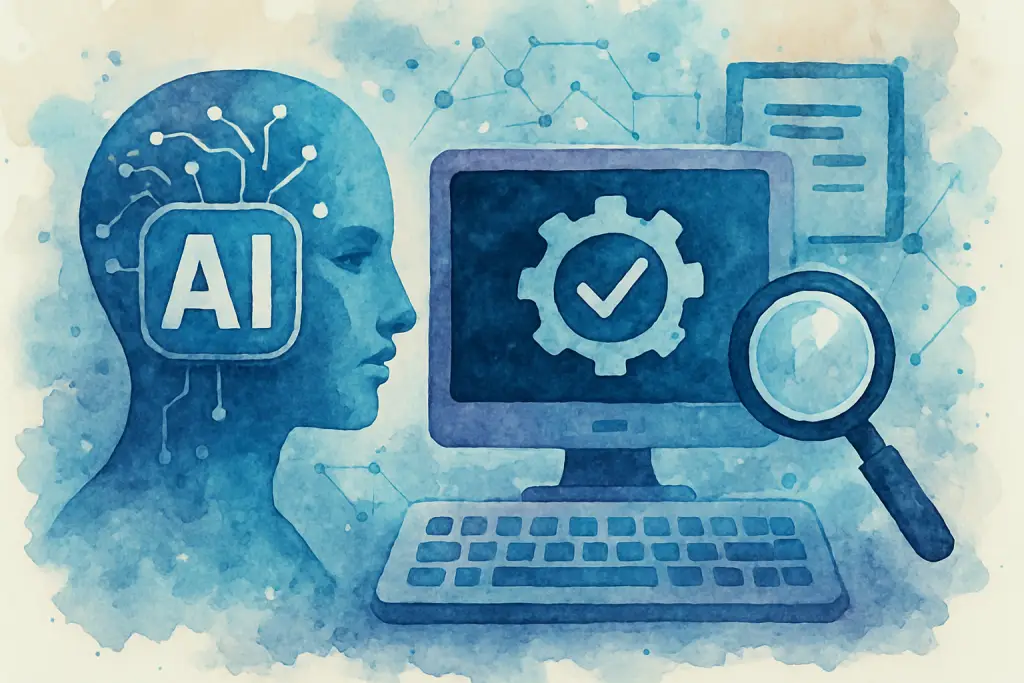
Artificial intelligence in software testing goes far beyond simple automation. While traditional automated testing follows predetermined scripts, AI and software testing solutions learn from data, adapt to changes, and make intelligent decisions without explicit programming.
Machine learning algorithms analyze historical test data, application behavior, and code changes to identify patterns humans might miss. Natural language processing enables AI to understand requirements documents and generate test cases automatically. Computer vision allows visual testing that detects UI inconsistencies across different devices and browsers.
The importance of this shift cannot be overstated. Companies implementing AI-driven testing report 40-60% reductions in testing time and 30-50% improvements in defect detection rates. These aren’t marginal gains—they represent fundamental improvements in software quality and time-to-market.
Current Trends Shaping the Industry
The market for AI-powered testing tools is projected to reach $2.8 billion by 2027, growing at a compound annual rate of 17.3%. This explosive growth reflects several converging trends:
- Continuous testing demands: DevOps and CI/CD pipelines require faster, more reliable testing that traditional methods cannot provide
- Application complexity: Modern applications span multiple platforms, devices, and integration points, creating exponential testing challenges
- Skill shortages: The global shortage of experienced QA professionals makes intelligent automation essential
- Quality expectations: Users demand flawless experiences, making comprehensive testing non-negotiable
Organizations embracing intelligent test automation are positioning themselves to deliver higher quality software faster than competitors still relying on manual processes.
10 Revolutionary Ways AI Transforms Software Testing
1. Intelligent Test Case Generation
AI algorithms analyze application requirements, user stories, and existing code to automatically generate comprehensive test cases. This eliminates the time-consuming manual process of writing test scenarios and ensures broader coverage. Machine learning models identify edge cases and unusual user paths that human testers might overlook.
2. Self-Healing Test Scripts
One of the biggest maintenance challenges in test automation is script brittleness. When UI elements change, traditional scripts break. AI-powered testing tools use machine learning to recognize elements even after modifications, automatically updating locators and maintaining test stability without manual intervention.
3. Predictive Defect Analysis
By analyzing code complexity, change frequency, developer history, and historical defect data, AI models predict which code areas are most likely to contain bugs. This enables teams to focus testing efforts where they’ll have the greatest impact, optimizing resource allocation and catching critical issues earlier.
4. Visual Testing at Scale
Computer vision algorithms detect visual anomalies across thousands of screen combinations—different browsers, devices, resolutions, and operating systems. What would take human testers weeks to verify manually happens in minutes, ensuring consistent user experiences across all platforms.
5. Natural Language Test Creation
AI-powered natural language processing allows non-technical stakeholders to create tests using plain English. Business analysts and product managers can write “When a user clicks the checkout button, verify the cart total is correct” and AI translates this into executable test code.
6. Intelligent Test Prioritization
Not all tests are equally important for every code change. AI analyzes code modifications and determines which tests are most relevant, running critical tests first and skipping unnecessary ones. This dramatically reduces testing time while maintaining comprehensive coverage.
7. Automated API Testing
Machine learning models understand API behavior patterns and automatically generate test scenarios covering various input combinations, authentication scenarios, and error conditions. AI detects anomalies in API responses that might indicate security vulnerabilities or performance issues.
8. Performance Testing Optimization
AI analyzes application performance under various load conditions, identifying bottlenecks and predicting system behavior under stress. Machine learning models establish performance baselines and automatically flag deviations, catching performance regressions before they impact users.
9. Continuous Learning and Improvement
Unlike static testing approaches, AI and software testing systems continuously learn from test results, user feedback, and production incidents. Each testing cycle improves the AI’s understanding of the application, making subsequent tests more effective and efficient.
10. Root Cause Analysis
When tests fail, AI doesn’t just report the failure—it analyzes logs, stack traces, and system states to identify root causes. This dramatically reduces debugging time, helping developers fix issues faster and preventing similar problems in the future.
Implementing AI-Powered Testing: A Practical Guide
Step 1: Assess Your Current Testing Maturity
Before implementing AI solutions, evaluate your existing testing processes. Document current test coverage, automation levels, and pain points. Identify areas where AI could deliver the most immediate value—typically repetitive tasks, maintenance-heavy test suites, or coverage gaps.
Conduct a skills assessment of your team. Successful AI implementation requires understanding both testing principles and basic data science concepts. Plan training programs to bridge knowledge gaps.
Step 2: Start with Focused Pilot Projects
Don’t attempt to transform your entire testing operation overnight. Select a specific application or testing area for a pilot project. Choose something with clear success metrics and manageable scope.
Popular starting points include visual regression testing, test case generation for new features, or self-healing automation for frequently changing UI components. These deliver quick wins that build organizational confidence in AI capabilities.
Step 3: Select the Right AI Testing Tools
The market offers numerous AI-powered testing solutions, each with different strengths:
- Test automation platforms: Tools like Testim, Mabl, and Functionize offer self-healing scripts and intelligent test generation
- Visual testing solutions: Applitools and Percy use AI for visual validation across devices
- Performance testing: AI-enhanced tools like Neotys and BlazeMeter optimize load testing
Evaluate tools based on your technology stack, integration requirements, team skills, and budget. Most vendors offer trial periods—use them to validate capabilities with your actual applications.
Step 4: Integrate with Existing Workflows
AI testing tools must fit seamlessly into your development pipeline. Ensure integration with your CI/CD platform, version control system, and project management tools. Configure automated triggers so AI-powered tests run at appropriate points in your development workflow.
Establish clear processes for reviewing AI-generated test cases and handling AI-detected issues. While AI provides powerful capabilities, human oversight remains essential for validating results and making strategic decisions.
Step 5: Measure, Learn, and Iterate
Define clear metrics to evaluate AI testing effectiveness: defect detection rates, testing time reduction, maintenance effort, and test coverage improvements. Track these metrics consistently and use them to refine your approach.
The relationship between AI and software testing evolves as both technology and your applications change. Schedule regular reviews to assess what’s working, identify new opportunities, and adjust your strategy accordingly.
Overcoming Challenges in AI-Powered Testing
Challenge 1: Data Quality and Quantity
AI models require substantial quality data to learn effectively. Organizations with limited testing history or poorly documented test results may struggle initially.
Solution: Start by improving data collection practices. Ensure test results include detailed information about failures, execution environments, and application states. Even a few months of quality data can enable meaningful AI insights. Consider synthetic data generation for training initial models.
Challenge 2: Team Resistance and Skill Gaps
Testing professionals may fear AI will replace their jobs, while others lack confidence working with AI-powered tools.
Solution: Frame AI as augmentation, not replacement. Emphasize how AI handles repetitive tasks, freeing testers for higher-value activities like exploratory testing and test strategy. Invest in training programs that build team confidence with AI tools. Celebrate early wins to demonstrate value.
Challenge 3: Integration Complexity
Incorporating AI testing tools into existing technology stacks can be technically challenging, especially in legacy environments.
Solution: Choose tools with robust APIs and pre-built integrations for your technology stack. Start with standalone AI capabilities that don’t require deep integration, then gradually expand. Work with vendors who provide implementation support and have experience with similar environments.
Challenge 4: Managing False Positives
AI models, especially in early stages, may flag issues that aren’t actually problems, creating noise and reducing trust.
Solution: Implement confidence thresholds and human review processes for AI-detected issues. Use feedback loops to train models on what constitutes real versus false positives in your specific context. As models mature, false positive rates typically decrease significantly.
Challenge 5: Cost Justification
AI-powered testing tools often require significant investment, making ROI demonstration crucial for securing budget approval.
Solution: Calculate the total cost of current testing approaches, including personnel time, delayed releases, and production defects. Compare this against projected costs with AI implementation. Most organizations find that even modest improvements in testing efficiency and defect detection deliver positive ROI within 6-12 months.
The Future of AI and Software Testing
The convergence of AI and software testing represents more than a technological upgrade—it’s a fundamental reimagining of quality assurance. Organizations embracing these innovations gain competitive advantages through faster releases, higher quality software, and more efficient resource utilization.
The ten revolutionary approaches outlined in this guide—from intelligent test generation to predictive defect analysis—demonstrate AI’s transformative potential. However, success requires more than just adopting new tools. It demands strategic planning, team development, and commitment to continuous improvement.
As AI capabilities continue advancing, we’ll see even more sophisticated testing solutions. Autonomous testing systems that require minimal human intervention, AI-powered security testing that identifies vulnerabilities before attackers do, and predictive quality models that forecast software reliability with unprecedented accuracy are all on the horizon.
The question isn’t whether to adopt AI in your testing processes—it’s how quickly you can implement these capabilities to stay competitive. Organizations that delay risk falling behind competitors who are already leveraging AI to deliver better software faster.
Ready to transform your software testing with AI? The experts at The Crunch specialize in helping organizations implement intelligent testing strategies that deliver measurable results. Schedule your free consultation today to discover how AI can revolutionize your quality assurance processes and accelerate your software delivery.
Frequently Asked Questions (FAQ)
1. What is AI in software testing?
2. How does AI improve the software testing process?
3. What are the main benefits of using AI for software testing?
4. How do I get started with AI-powered software testing?
5. How does AI-based testing compare to traditional manual testing?
6. What are the costs associated with AI in software testing?
7. Are there any risks or limitations to using AI in software testing?
8. Can AI completely replace human testers?
9. What types of tests can AI automate in software testing?
10. How accurate are AI-powered testing tools?
11. What skills are needed to use AI in software testing?
12. Are there free AI tools available for software testing?