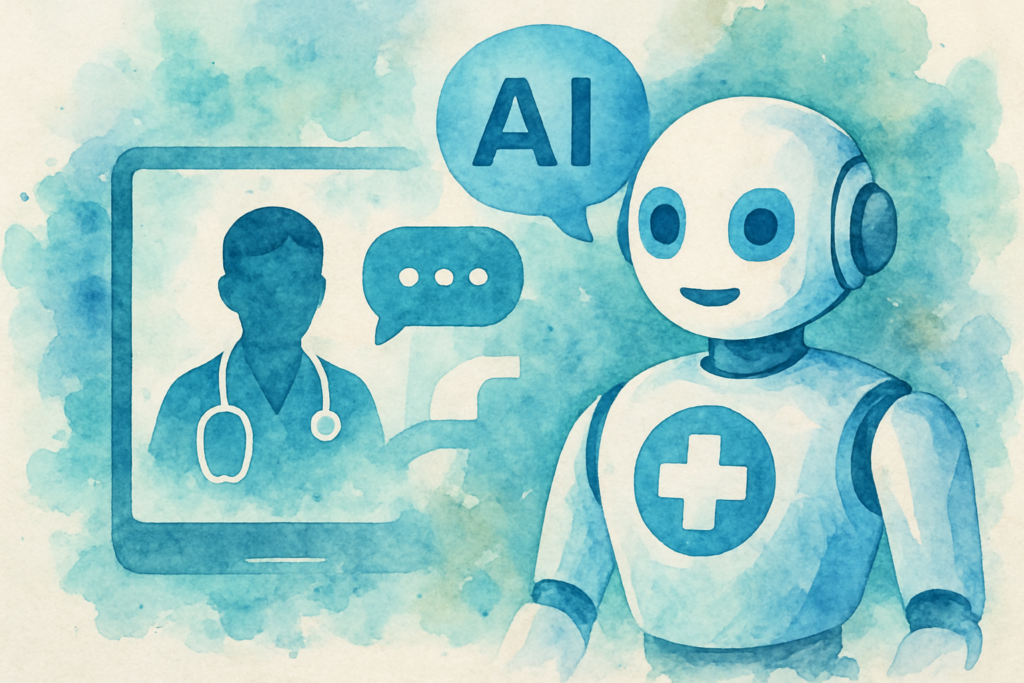
Imagine calling your doctor’s surgery at 3 AM with a pressing health concern, only to reach an answering machine. Now picture having instant access to medical guidance, appointment scheduling, and symptom assessment—all within seconds, any time of day. This isn’t science fiction; it’s the reality that AI chatbot for healthcare is creating right now.
The healthcare industry faces mounting pressure: overwhelmed staff, long waiting times, and patients demanding immediate answers. Traditional systems struggle to keep pace with modern expectations, leaving gaps in care delivery that affect millions. Enter artificial intelligence—specifically, conversational AI designed to bridge these gaps whilst maintaining the human touch patients need.
Quick Answers
What is an AI chatbot for healthcare? An AI-powered virtual assistant that uses natural language processing to interact with patients, answer medical queries, schedule appointments, and provide health information 24/7.
Are healthcare chatbots secure? Yes, when properly implemented with HIPAA compliance, end-to-end encryption, and robust data protection measures.
Can AI chatbots replace doctors? No, they complement healthcare professionals by handling routine tasks, allowing clinicians to focus on complex cases requiring human expertise.
How accurate are medical chatbots? Leading healthcare chatbots achieve 85-95% accuracy in symptom assessment and triage, though they always recommend professional consultation for serious concerns.
The transformation happening in patient care through AI chatbots isn’t just about technology—it’s about reimagining how healthcare delivery can be more accessible, efficient, and patient-centred. Let’s explore the ten revolutionary ways these digital assistants are reshaping the medical landscape.
Understanding AI Chatbots in Healthcare: The Foundation of Digital Patient Care
An AI chatbot for healthcare represents a sophisticated convergence of artificial intelligence, natural language processing, and medical knowledge databases. Unlike simple automated response systems, these intelligent assistants understand context, learn from interactions, and provide personalised responses based on individual patient needs.
The technology operates through machine learning algorithms trained on vast medical datasets, enabling them to recognise symptoms, understand medical terminology, and guide patients through healthcare journeys. According to research from Accenture, the healthcare AI market is projected to reach $6.6 billion by 2021, with chatbots representing a significant portion of this growth.
The Current State of Healthcare AI Adoption
Healthcare organisations worldwide are rapidly embracing conversational AI. A study by Oracle revealed that 78% of healthcare organisations have already implemented or plan to implement AI chatbots by 2025. This surge isn’t merely following trends—it’s responding to genuine operational needs and patient expectations.
The COVID-19 pandemic accelerated this adoption dramatically. With physical distancing requirements and overwhelmed healthcare systems, chatbots became essential tools for initial screening, symptom checking, and reducing unnecessary hospital visits. The World Health Organisation even deployed its own chatbot to provide accurate information and combat misinformation during the crisis.
Why Healthcare Needs AI Chatbots Now
The healthcare sector faces unprecedented challenges: an ageing population, chronic disease management, staff shortages, and rising costs. Traditional models simply cannot scale to meet demand. AI chatbots address these pressures by:
- Providing immediate responses to patient queries, reducing anxiety and unnecessary emergency visits
- Handling routine administrative tasks that consume valuable clinical time
- Offering consistent, evidence-based information across all patient interactions
- Operating continuously without fatigue, ensuring round-the-clock patient support
- Collecting valuable health data that improves care coordination and outcomes
The technology has matured beyond simple question-and-answer systems. Modern healthcare chatbots integrate with electronic health records, understand medical nuances, and even detect emotional cues in patient communications, providing empathetic responses when needed.
10 Revolutionary Ways AI Chatbots Transform Patient Care
1. 24/7 Symptom Assessment and Triage
Healthcare emergencies don’t follow office hours. AI chatbots provide immediate symptom assessment whenever patients need it, using sophisticated algorithms to evaluate severity and recommend appropriate action. Ada Health, for instance, has conducted over 30 million symptom assessments globally, helping patients understand when to seek immediate care versus scheduling routine appointments.
These systems ask targeted questions based on reported symptoms, cross-reference against medical databases, and provide risk-stratified recommendations. They’re particularly valuable for reducing inappropriate emergency department visits—a study in the British Medical Journal found that AI-powered triage could safely redirect up to 30% of non-urgent cases to more appropriate care settings.
2. Intelligent Appointment Scheduling and Management
Missed appointments cost the NHS approximately £216 million annually. AI chatbots tackle this problem by making scheduling effortless. Patients can book, reschedule, or cancel appointments through natural conversation, receiving automated reminders and preparation instructions.
The chatbot checks availability across multiple providers, considers patient preferences, and even suggests optimal times based on the urgency of care needed. Babylon Health reports that their AI scheduling system reduced appointment no-shows by 38% whilst increasing booking efficiency by 50%.
3. Medication Adherence and Reminders
Non-adherence to medication regimens affects 50% of patients with chronic conditions, leading to worse outcomes and increased healthcare costs. AI chatbots send personalised medication reminders, answer questions about side effects, and provide encouragement to maintain treatment plans.
These systems adapt to individual routines, sending reminders at optimal times and adjusting communication frequency based on patient response patterns. Research published in the Journal of Medical Internet Research demonstrated that chatbot-based medication reminders improved adherence rates by 25-40% across various chronic conditions.
4. Mental Health Support and Crisis Intervention
Mental health services face enormous demand with limited resources. AI chatbots like Woebot and Wysa provide immediate emotional support using cognitive behavioural therapy techniques. They’re available during crisis moments when human therapists aren’t accessible, offering coping strategies and, when necessary, escalating to human professionals.
A clinical trial published in The Lancet found that patients using mental health chatbots showed significant reductions in depression and anxiety symptoms, with many appreciating the non-judgmental, always-available support. These tools don’t replace therapists but extend care between sessions and provide crucial support during vulnerable moments.
5. Chronic Disease Management and Monitoring
Managing chronic conditions requires consistent monitoring and lifestyle adjustments. AI chatbots check in regularly with patients, tracking symptoms, vital signs, and medication adherence. They identify concerning patterns and alert healthcare teams when intervention is needed.
For diabetes management, chatbots help patients log blood glucose readings, provide dietary suggestions, and adjust insulin dosages based on established protocols. Livongo (now part of Teladoc Health) demonstrated that their AI-driven diabetes management platform reduced HbA1c levels by an average of 1.0% whilst decreasing hypoglycaemic events.
6. Patient Education and Health Literacy
Understanding medical information empowers patients to make informed decisions. AI chatbots explain diagnoses, treatment options, and procedures in plain language tailored to individual comprehension levels. They answer follow-up questions without judgement, ensuring patients truly understand their health situations.
This educational role is particularly valuable for newly diagnosed patients who may feel overwhelmed. The chatbot can revisit information multiple times, provide visual aids, and connect patients with relevant support resources—all at the patient’s own pace.
7. Streamlined Insurance and Billing Queries
Healthcare billing confusion frustrates patients and consumes administrative resources. AI chatbots handle insurance verification, explain coverage details, provide cost estimates, and answer billing questions. They access patient accounts securely, offering personalised financial information without long hold times.
By automating these routine enquiries, healthcare organisations reduce call centre volume by 40-60%, allowing human staff to focus on complex cases requiring personal attention. Patients receive immediate answers, reducing anxiety about healthcare costs.
8. Post-Operative Care and Recovery Monitoring
The period following surgery is critical yet often under-monitored. AI chatbots conduct daily check-ins with post-operative patients, assessing pain levels, monitoring for complications, and providing recovery guidance. They ensure patients follow post-operative instructions and identify warning signs requiring immediate attention.
A study at Johns Hopkins Medicine found that chatbot-based post-operative monitoring reduced readmission rates by 23% whilst improving patient satisfaction scores. Patients appreciated the consistent support and immediate access to guidance during recovery.
9. Multilingual Support and Healthcare Accessibility
Language barriers significantly impact healthcare quality. AI chatbots communicate in multiple languages, ensuring non-native speakers receive the same quality of information and support. They understand cultural nuances and adapt communication styles accordingly.
This capability is transformative for diverse communities where interpreter services are limited. The chatbot provides consistent, accurate medical information regardless of language, reducing health disparities and improving outcomes for underserved populations.
10. Data Collection and Population Health Insights
Every chatbot interaction generates valuable data. Aggregated and anonymised, this information reveals population health trends, identifies emerging health concerns, and informs public health strategies. Healthcare organisations use these insights to allocate resources effectively and develop targeted interventions.
During disease outbreaks, chatbot data provides real-time surveillance, tracking symptom patterns across geographic areas. This early warning capability enables faster public health responses, potentially containing outbreaks before they escalate.
Implementing AI Chatbots in Healthcare: A Practical Guide
Successfully deploying an AI chatbot for healthcare requires careful planning and execution. The following steps ensure effective implementation that genuinely improves patient care whilst meeting regulatory requirements.
Step 1: Define Clear Objectives and Use Cases
Begin by identifying specific problems the chatbot will solve. Are you addressing appointment scheduling inefficiencies? Reducing emergency department overcrowding? Improving medication adherence? Clear objectives guide technology selection and measure success.
Engage stakeholders across your organisation—clinicians, administrators, IT staff, and importantly, patients. Their insights reveal pain points and ensure the solution addresses real needs rather than implementing technology for its own sake.
Step 2: Choose the Right Technology Platform
Not all chatbot platforms suit healthcare applications. Evaluate options based on:
- Medical knowledge base: Does it understand healthcare terminology and clinical pathways?
- Integration capabilities: Can it connect with your electronic health records and existing systems?
- Compliance features: Does it meet GDPR, HIPAA, or relevant regulatory requirements?
- Scalability: Will it handle your patient volume and grow with your organisation?
- Customisation options: Can you tailor responses to your specific protocols and patient population?
Leading healthcare chatbot platforms include Microsoft Healthcare Bot, IBM Watson Health, and specialised solutions like Sensely. Request demonstrations and pilot programmes before committing to ensure the platform meets your requirements.
Step 3: Ensure Regulatory Compliance and Data Security
Healthcare data is highly sensitive. Your chatbot implementation must comply with all relevant regulations. In the UK, this means GDPR compliance and adherence to NHS Digital standards. In the US, HIPAA compliance is mandatory.
Key security measures include:
- End-to-end encryption for all patient communications
- Secure authentication protocols to verify patient identity
- Regular security audits and penetration testing
- Clear data retention and deletion policies
- Transparent privacy policies explaining data usage
Work closely with your legal and compliance teams throughout implementation. Non-compliance risks significant penalties and, more importantly, damages patient trust.
Step 4: Train and Customise Your Chatbot
Generic chatbots provide generic results. Invest time training your AI on your organisation’s specific protocols, formularies, and patient demographics. Input your clinical pathways, approved treatment guidelines, and frequently asked questions.
Test extensively before launch. Create scenarios covering common and edge cases, ensuring the chatbot responds appropriately. Include clinical staff in testing—they’ll identify medical inaccuracies or inappropriate recommendations that non-clinical testers might miss.
Step 5: Integrate with Existing Systems
Your chatbot shouldn’t operate in isolation. Integration with electronic health records, appointment systems, and communication platforms creates seamless experiences. Patients shouldn’t need to repeat information, and clinicians should access chatbot interactions within their existing workflows.
API connections enable this integration, but require careful planning. Work with your IT department to map data flows, ensure system compatibility, and maintain security throughout the integration process.
Step 6: Launch with Clear Communication
Introduce your chatbot gradually. Start with a pilot group, gather feedback, and refine before full deployment. Communicate clearly with patients about what the chatbot can and cannot do, setting realistic expectations.
Provide multiple access points—website, mobile app, SMS—meeting patients where they are. Ensure the chatbot clearly identifies itself as AI, not a human, maintaining transparency and trust.
Step 7: Monitor, Measure, and Continuously Improve
Implementation isn’t the end; it’s the beginning. Continuously monitor chatbot performance through:
- Conversation completion rates
- Patient satisfaction scores
- Accuracy of responses and recommendations
- Escalation rates to human staff
- Impact on key metrics (appointment no-shows, emergency visits, etc.)
Review conversations regularly, identifying misunderstandings or gaps in the chatbot’s knowledge. Update training data, refine responses, and expand capabilities based on actual usage patterns and patient feedback.
Overcoming Challenges in Healthcare AI Chatbot Implementation
Despite their benefits, implementing an AI chatbot for healthcare presents challenges. Understanding these obstacles and their solutions ensures successful deployment.
Challenge 1: Patient Trust and Acceptance
Many patients, particularly older demographics, feel uncomfortable discussing health concerns with AI. They worry about accuracy, privacy, and the loss of human connection in healthcare.
Solution: Build trust through transparency and gradual introduction. Clearly explain how the chatbot works, what data it collects, and how it protects privacy. Start with low-stakes interactions like appointment scheduling before expanding to clinical applications. Always provide easy escalation to human staff when patients prefer or need it. Share success stories and testimonials from other patients who’ve benefited from the technology.
Challenge 2: Clinical Accuracy and Liability Concerns
Healthcare organisations worry about liability if chatbots provide incorrect medical advice. Even sophisticated AI can misinterpret symptoms or miss critical warning signs.
Solution: Implement robust safety protocols. Programme chatbots to err on the side of caution, escalating uncertain cases to human clinicians. Include clear disclaimers that chatbot advice doesn’t replace professional medical judgement. Maintain detailed logs of all interactions for quality assurance and liability protection. Regularly audit chatbot recommendations against clinical standards, updating algorithms when discrepancies emerge. Consider professional liability insurance covering AI-related risks.
Challenge 3: Integration with Legacy Systems
Many healthcare organisations operate on outdated IT infrastructure that doesn’t easily integrate with modern AI platforms. Data silos prevent chatbots from accessing information needed for personalised interactions.
Solution: Conduct thorough technical assessments before selecting a chatbot platform. Choose solutions with flexible integration options and strong API support. Consider middleware solutions that bridge legacy systems and modern applications. If complete integration isn’t immediately feasible, implement the chatbot for standalone functions first, gradually expanding integration as systems modernise. Budget for necessary IT infrastructure upgrades as part of the implementation plan.
Challenge 4: Maintaining Human Touch in Healthcare
Healthcare is fundamentally about human connection. Patients fear that AI chatbots will dehumanise care, replacing empathetic clinicians with cold algorithms.
Solution: Position chatbots as tools that enhance rather than replace human care. Use AI to handle routine tasks, freeing clinicians to spend more quality time with patients on complex, emotionally demanding cases. Programme chatbots with empathetic language and emotional intelligence capabilities. Train them to recognise when patients need human interaction and facilitate those connections. Emphasise that technology serves humanity, not the reverse.
Challenge 5: Keeping Pace with Medical Knowledge
Medical knowledge evolves rapidly. Treatment guidelines change, new medications emerge, and best practices update regularly. Chatbots risk providing outdated information if not continuously maintained.
Solution: Establish processes for regular content updates. Assign clinical staff to review and update chatbot knowledge bases quarterly or when significant guidelines change. Subscribe to medical literature databases and regulatory updates, incorporating relevant changes promptly. Implement version control for chatbot knowledge, tracking what information was provided when. Consider AI systems that automatically flag when their information contradicts newly published guidelines, prompting human review.
The Future of AI Chatbots in Healthcare
The AI chatbot for healthcare landscape continues evolving rapidly. Emerging technologies promise even more sophisticated capabilities that will further transform patient care.
Voice-enabled chatbots will become standard, allowing hands-free interaction particularly valuable for elderly or disabled patients. Natural language processing will improve, understanding regional accents, medical jargon, and even emotional undertones more accurately.
Integration with wearable devices and remote monitoring tools will enable proactive health management. Chatbots will analyse continuous health data streams, identifying concerning trends before patients notice symptoms. This shift from reactive to predictive healthcare could prevent complications and save lives.
Personalisation will reach new levels as AI learns individual patient preferences, communication styles, and health patterns. The chatbot will remember previous conversations, understand family medical history, and tailor advice to specific circumstances—approaching the continuity of care traditionally provided by long-term family doctors.
Regulatory frameworks will mature, providing clearer guidance on AI in healthcare whilst protecting patient safety. Standardisation will emerge, ensuring consistent quality across different chatbot platforms and healthcare organisations.
Conclusion: Embracing the AI Revolution in Patient Care
AI chatbots represent more than technological advancement—they’re reshaping the fundamental delivery of healthcare. From 24/7 symptom assessment to chronic disease management, these intelligent assistants address critical gaps in modern healthcare systems whilst improving patient experiences and outcomes.
The ten revolutionary applications explored here demonstrate that AI chatbot for healthcare isn’t future speculation; it’s present reality delivering measurable benefits. Organisations implementing these technologies report reduced costs, improved efficiency, and most importantly, better patient satisfaction and health outcomes.
Success requires thoughtful implementation: clear objectives, appropriate technology selection, robust security measures, and continuous improvement. Challenges exist, but solutions are proven and accessible. The organisations thriving in modern healthcare are those embracing AI as a partner in care delivery, not a threat to human clinicians.
The question isn’t whether to implement healthcare chatbots, but how quickly you can deploy them effectively. Every day without these tools means missed opportunities to improve patient care, reduce staff burden, and operate more efficiently.
Ready to revolutionise your patient care with AI chatbots? The Crunch specialises in implementing healthcare AI solutions tailored to your organisation’s unique needs. Our team understands both the technology and the healthcare landscape, ensuring compliant, effective deployments that genuinely improve outcomes. Schedule your free consultation today and discover how AI chatbots can transform your patient care delivery.
Frequently Asked Questions (FAQ)
1. What is an AI chatbot for healthcare?
2. How do AI chatbots work in healthcare settings?
3. What are the benefits of using AI chatbots in healthcare?
4. Are AI healthcare chatbots safe and secure?
5. How much does it cost to implement an AI chatbot for healthcare?
6. How do AI chatbots compare to traditional customer service in healthcare?
7. Can AI chatbots diagnose medical conditions?
8. What are common concerns about using AI chatbots in healthcare?
9. How can a healthcare provider get started with an AI chatbot?
10. What features should I look for in a healthcare AI chatbot?
11. Can patients trust the information provided by AI healthcare chatbots?
12. Do AI chatbots support multiple languages in healthcare?