Skyrocket Your Business Growth: Harness the Power of AI Chatbot Integration for 24/7 Customer Engagement
In today’s fast-paced digital landscape, businesses are constantly seeking innovative ways to stay ahead of the curve and provide exceptional customer experiences. Enter AI chatbot integration – a game-changing solution that’s revolutionising the way companies interact with their customers. But what exactly is AI chatbot integration, and how can it propel your business to new heights?
This comprehensive guide will delve into the world of AI chatbot integration, exploring its benefits, implementation strategies, and potential challenges. We’ll equip you with the knowledge and tools you need to harness this powerful technology and transform your customer engagement efforts. So, buckle up and get ready to embark on a journey that could redefine your business’s future!
1. Understanding AI Chatbot Integration: A Game-Changer for Customer Engagement
Before we dive into the nitty-gritty of AI chatbot integration, let’s establish a solid foundation by understanding what it entails and why it’s causing such a stir in the business world.
1.1 Defining AI Chatbot Integration
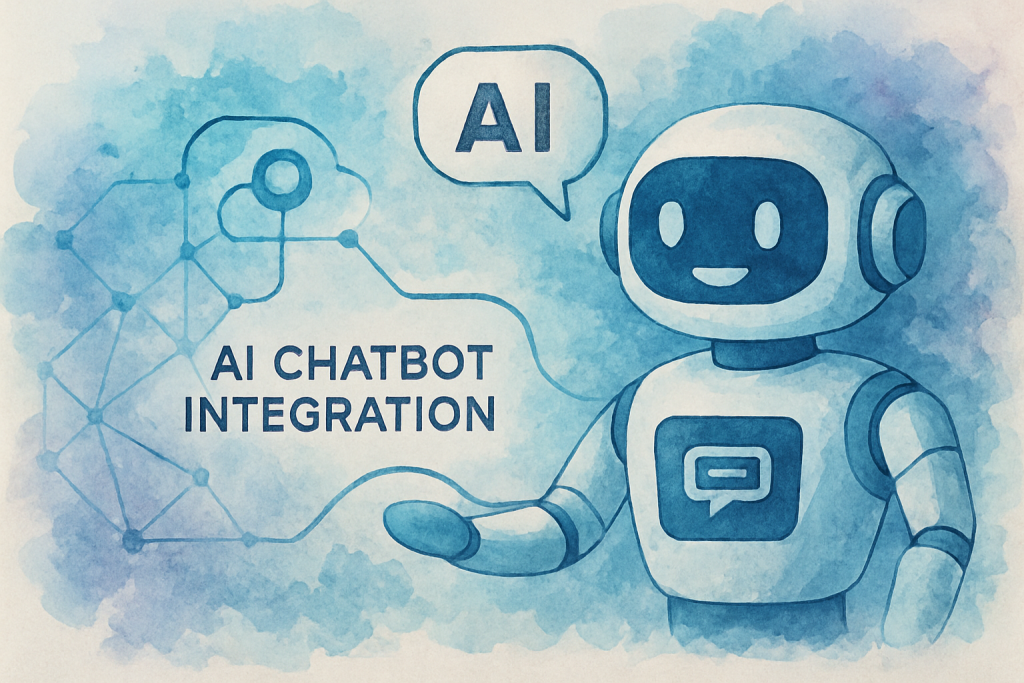
AI chatbot integration refers to the process of incorporating artificial intelligence-powered conversational agents into various aspects of your business operations. These intelligent chatbots can seamlessly interact with customers, answer queries, and even perform tasks – all without human intervention. By leveraging natural language processing and machine learning algorithms, AI chatbots can understand and respond to user inputs in a human-like manner, providing a personalised and efficient customer experience.
1.2 The Rising Importance of AI Chatbots in Business
The adoption of AI chatbots has skyrocketed in recent years, and for good reason. According to a report by Grand View Research, the global chatbot market size is expected to reach $1.25 billion by 2025, growing at a CAGR of 24.3%.
This surge in popularity can be attributed to several factors:
- 24/7 availability and instant responses
- Cost-effective customer support
- Scalability to handle multiple conversations simultaneously
- Consistent and accurate information delivery
- Improved customer satisfaction and engagement
1.3 The Evolution of Chatbot Technology
From simple rule-based chatbots to sophisticated AI-powered conversational agents, the evolution of chatbot technology has been nothing short of remarkable. Today’s AI chatbots can understand context, learn from interactions, and even detect emotions – capabilities that were once thought to be exclusive to human agents.
2. The Benefits of AI Chatbot Integration: Transforming Customer Engagement
Now that we’ve laid the groundwork, let’s explore the myriad benefits that AI chatbot integration can bring to your business, particularly in terms of enhancing customer engagement.
2.1 Round-the-Clock Customer Support
One of the most significant advantages of AI chatbot integration is the ability to provide 24/7 customer support. Unlike human agents, chatbots don’t need sleep or breaks, ensuring that your customers can receive assistance at any time of day or night. This constant availability can significantly boost customer satisfaction and loyalty.
2.2 Personalised Customer Experiences
AI chatbots can analyse customer data and interaction history to deliver personalised experiences. By understanding individual preferences and past behaviours, chatbots can offer tailored product recommendations, customised solutions, and relevant information – creating a more engaging and satisfying customer journey.
2.3 Efficient Lead Generation and Qualification
AI chatbots can serve as powerful lead generation tools by engaging website visitors, gathering information, and qualifying leads based on predefined criteria. This automated process not only saves time for your sales team but also ensures that they focus their efforts on the most promising prospects.
2.4 Streamlined Customer Onboarding
Integrating AI chatbots into your onboarding process can help new customers navigate your products or services more efficiently. Chatbots can provide step-by-step guidance, answer frequently asked questions, and offer instant support – reducing friction and improving the overall onboarding experience.
3. Implementing AI Chatbot Integration: A Step-by-Step Guide
Ready to harness the power of AI chatbot integration for your business? Follow this comprehensive guide to ensure a smooth and successful implementation.
3.1 Define Your Objectives and Use Cases
Before diving into AI chatbot integration, it’s crucial to clearly define your objectives and identify specific use cases. Consider the following questions:
- What are the primary goals you want to achieve with AI chatbots?
- Which areas of your business would benefit most from chatbot integration?
- What types of customer queries or tasks do you want the chatbot to handle?
By establishing clear objectives, you can ensure that your AI chatbot integration efforts align with your overall business strategy.
3.2 Choose the Right AI Chatbot Platform
Selecting the appropriate AI chatbot platform is crucial for successful integration. Consider factors such as:
- Natural language processing capabilities
- Machine learning and AI features
- Integration options with your existing systems
- Customisation and scalability
- Analytics and reporting functionalities
Research and compare different platforms to find the one that best suits your needs and budget.
3.3 Design Conversational Flows and Scripts
Create engaging and natural conversational flows for your AI chatbot. Consider the following tips:
- Use a conversational tone that aligns with your brand voice
- Anticipate common user queries and design appropriate responses
- Include options for users to escalate to human agents when necessary
- Incorporate personalisation elements based on user data
3.4 Train and Test Your AI Chatbot
Properly training your AI chatbot is crucial for its success. Follow these steps:
- Feed your chatbot with relevant data and information
- Conduct extensive testing to identify and fix any issues
- Continuously monitor and refine the chatbot’s performance
- Gather feedback from users and make necessary improvements
3.5 Integrate with Existing Systems
Ensure seamless integration between your AI chatbot and existing business systems, such as:
- Customer Relationship Management (CRM) platforms
- E-commerce systems
- Knowledge bases and content management systems
- Analytics tools
This integration will enable your chatbot to access relevant information and provide more accurate and helpful responses.
4. Overcoming Challenges in AI Chatbot Integration
While AI chatbot integration offers numerous benefits, it’s not without its challenges. Let’s explore some common obstacles and how to overcome them.
4.1 Maintaining a Human Touch
One of the primary concerns with AI chatbots is the potential loss of the human touch in customer interactions. To address this:
- Design your chatbot to have a friendly and empathetic personality
- Incorporate emotional intelligence features to detect and respond to user sentiments
- Provide clear options for users to connect with human agents when needed
4.2 Handling Complex Queries
AI chatbots may struggle with complex or nuanced queries. To mitigate this:
- Continuously train your chatbot with diverse datasets
- Implement a robust escalation system for complex issues
- Use machine learning algorithms to improve the chatbot’s understanding over time
4.3 Ensuring Data Privacy and Security
With AI chatbots handling sensitive customer information, data privacy and security are paramount. Consider the following measures:
- Implement strong encryption and security protocols
- Comply with relevant data protection regulations (e.g., GDPR)
- Regularly audit and update your chatbot’s security features
Conclusion: Embracing the Future of Customer Engagement
AI chatbot integration represents a powerful opportunity to revolutionise your customer engagement strategy and drive business growth. By providing round-the-clock support, personalised experiences, and efficient lead generation, AI chatbots can help you stay ahead of the competition and meet the ever-evolving needs of your customers.
As you embark on your AI chatbot integration journey, remember to focus on clear objectives, choose the right platform, and continuously refine your chatbot’s performance. By addressing challenges head-on and leveraging the full potential of this technology, you can create a seamless and engaging customer experience that sets your business apart.
Ready to take the next step in revolutionising your customer engagement with AI chatbot integration? Contact The Crunch today to schedule a free consultation and discover how we can help you harness the power of AI for your business. Get started now!
Frequently Asked Questions (FAQ)
1. What is AI chatbot integration?
2. How do I integrate an AI chatbot into my website?
3. What are the benefits of integrating an AI chatbot?
4. How much does AI chatbot integration cost?
5. What is the difference between AI chatbots and rule-based chatbots?
6. Is AI chatbot integration secure?
7. Can I customize the AI chatbot to match my brand?
8. What platforms can I integrate an AI chatbot with?
9. Do I need coding skills to integrate an AI chatbot?
10. How do I measure the effectiveness of my AI chatbot?
11. What are common challenges with AI chatbot integration?
12. How do I get started with AI chatbot integration?