Imagine losing a potential customer at 2 AM simply because no one was available to answer their question. In today’s always-on digital economy, businesses can’t afford to miss opportunities due to limited support hours or overwhelmed customer service teams. This is where an ai chatbot solution becomes not just helpful, but essential for survival.
Customer expectations have evolved dramatically. According to research from Salesforce, 64% of customers expect real-time assistance regardless of the channel they use, and 69% want to resolve as many issues as possible on their own. Traditional customer service models simply can’t keep pace with these demands without exponentially increasing costs.
The good news? AI-powered chatbots are revolutionising how businesses interact with customers, delivering instant responses, personalised experiences, and significant cost savings. But the transformation goes far beyond simple automation—it’s about creating smarter, more efficient customer journeys that drive measurable business results.
Quick Answers: AI Chatbot Solutions at a Glance
What is an AI chatbot solution?
An AI chatbot solution is an intelligent software application that uses artificial intelligence, natural language processing, and machine learning to simulate human conversation and automate customer interactions across multiple channels.
How much can businesses save with AI chatbots?
According to IBM, businesses can reduce customer service costs by up to 30% by implementing conversational AI solutions, with some organisations reporting even higher savings.
Do customers actually like using chatbots?
Research from Gartner indicates that 54% of consumers prefer using chatbots for simple customer service queries, particularly when they need immediate assistance.
In this comprehensive guide, we’ll explore seven transformative ways AI chatbots are reshaping customer service whilst delivering impressive returns on investment. Whether you’re considering your first chatbot implementation or looking to optimise existing solutions, you’ll discover actionable strategies to enhance customer satisfaction and drive business growth.
Understanding AI Chatbot Solutions and Their Growing Importance
An ai chatbot solution represents far more than a simple automated response system. These sophisticated platforms leverage artificial intelligence, natural language processing (NLP), and machine learning algorithms to understand context, interpret user intent, and deliver increasingly human-like interactions.
The Evolution of Chatbot Technology
Early chatbots were rule-based systems that could only respond to specific commands or keywords. Today’s AI-powered solutions are fundamentally different. They learn from every interaction, understand nuance and context, and can handle complex, multi-turn conversations across text, voice, and even visual interfaces.
Modern AI chatbots integrate seamlessly with existing business systems—CRM platforms, knowledge bases, payment gateways, and analytics tools—creating a unified ecosystem that enhances both customer experience and operational efficiency.
Market Growth and Adoption Trends
The chatbot market is experiencing explosive growth. According to Grand View Research, the global chatbot market size was valued at $5.13 billion in 2023 and is projected to grow at a compound annual growth rate (CAGR) of 23.3% from 2024 to 2030.
This growth is driven by several factors:
- Increasing customer demand for instant, 24/7 support
- Rising labour costs in customer service departments
- Advances in AI and natural language understanding
- Growing mobile commerce and messaging app usage
- Proven ROI from early adopters across industries
Industries ranging from retail and banking to healthcare and hospitality are deploying AI chatbot solutions to stay competitive. Companies like Sephora, Bank of America, and Domino’s Pizza have demonstrated how chatbots can transform customer engagement whilst delivering measurable business value.
7 Transformative Benefits of AI Chatbot Solutions
1. 24/7 Availability Without Additional Staffing Costs
Perhaps the most immediate benefit of implementing an ai chatbot solution is round-the-clock availability. Unlike human agents who require shifts, breaks, and time off, chatbots work continuously without fatigue or decreased performance.
This constant availability addresses a critical customer pain point. Research from Microsoft shows that 90% of consumers expect an immediate response when they have a customer service question, with “immediate” defined as 10 minutes or less.
Real-world impact: A mid-sized e-commerce retailer implemented a chatbot and saw a 35% increase in after-hours conversions. Customers who previously abandoned their carts due to unanswered questions could now get instant assistance, regardless of the time.
2. Dramatic Reduction in Response Times
Speed matters enormously in customer service. Every minute a customer waits increases the likelihood they’ll abandon their enquiry and potentially switch to a competitor.
AI chatbots respond instantly to customer queries, eliminating wait times entirely for common questions. According to Zendesk, the average first response time for human agents is approximately 12 hours, whilst chatbots respond in seconds.
This speed advantage creates a ripple effect throughout the customer journey:
- Faster problem resolution leads to higher satisfaction scores
- Reduced friction in the purchase process increases conversion rates
- Quick answers prevent customer frustration and negative reviews
- Immediate engagement captures customer attention before they navigate away
3. Significant Cost Savings and Improved ROI
The financial case for AI chatbot solutions is compelling. Juniper Research estimates that chatbots will help businesses save over $8 billion annually by 2026, up from $20 million in 2017.
These savings come from multiple sources:
- Reduced staffing requirements: Chatbots can handle 80% of routine queries without human intervention
- Lower training costs: Once programmed, chatbots don’t require ongoing training like human agents
- Decreased call centre expenses: Fewer phone calls mean lower telecommunications costs
- Improved agent productivity: Human agents can focus on complex, high-value interactions
Case study: KLM Royal Dutch Airlines implemented an AI chatbot called BlueBot (BB) that handles over 15,000 conversations weekly. The airline reported handling 40% more customer service interactions without increasing staff, whilst maintaining high customer satisfaction scores.
4. Scalability During Peak Demand Periods
Traditional customer service models struggle during peak periods—product launches, seasonal sales, or unexpected crises. Hiring temporary staff is expensive and time-consuming, whilst existing teams become overwhelmed, leading to longer wait times and frustrated customers.
An ai chatbot solution scales effortlessly. Whether handling 10 conversations or 10,000 simultaneously, performance remains consistent. This scalability is particularly valuable for:
- E-commerce sites during Black Friday or holiday shopping seasons
- Financial services during tax season or market volatility
- Travel companies during peak booking periods
- Any business experiencing rapid growth
5. Personalised Customer Experiences at Scale
Modern consumers expect personalisation. According to Epsilon, 80% of consumers are more likely to make a purchase when brands offer personalised experiences.
AI chatbots excel at delivering personalisation by:
- Accessing customer history and previous interactions instantly
- Remembering preferences and past purchases
- Providing tailored product recommendations
- Adjusting communication style based on customer sentiment
- Offering relevant content based on browsing behaviour
This level of personalisation was previously only possible with dedicated account managers—an approach that doesn’t scale for businesses serving thousands or millions of customers.
6. Valuable Data Collection and Customer Insights
Every chatbot conversation generates valuable data. Unlike phone calls that may go unrecorded or emails that sit in individual inboxes, chatbot interactions create structured data that can be analysed for insights.
Businesses can leverage this data to:
- Identify common customer pain points and frequently asked questions
- Discover gaps in product information or website content
- Track customer sentiment and satisfaction trends
- Understand which products or services generate the most enquiries
- Optimise marketing messages based on actual customer language
These insights inform product development, marketing strategies, and overall business decisions, creating value that extends far beyond customer service.
7. Seamless Omnichannel Customer Support
Today’s customers interact with brands across multiple channels—websites, mobile apps, social media platforms, and messaging apps like WhatsApp or Facebook Messenger.
An effective ai chatbot solution provides consistent support across all these touchpoints. Customers can start a conversation on one channel and continue it on another without repeating information or losing context.
This omnichannel approach delivers several advantages:
- Customers can engage through their preferred communication channel
- Conversation history follows the customer across platforms
- Businesses maintain a unified view of customer interactions
- Support quality remains consistent regardless of channel
Implementing an AI Chatbot Solution: A Practical Guide
Successfully deploying an ai chatbot solution requires careful planning and execution. Follow these steps to maximise your chances of success:
Step 1: Define Clear Objectives and Use Cases
Begin by identifying specific problems you want your chatbot to solve. Common objectives include:
- Reducing response times for customer enquiries
- Decreasing support ticket volume
- Increasing conversion rates on product pages
- Improving customer satisfaction scores
- Generating qualified leads
Be specific about success metrics. Rather than “improve customer service,” aim for “reduce average response time from 12 hours to under 5 minutes for 80% of enquiries.”
Step 2: Choose the Right Platform and Technology
The chatbot platform you select should align with your technical capabilities, budget, and specific requirements. Consider factors such as:
- Integration capabilities: Does it connect with your existing CRM, helpdesk, or e-commerce platform?
- Natural language processing quality: How well does it understand varied customer inputs?
- Customisation options: Can you tailor the chatbot’s personality and responses to match your brand?
- Analytics and reporting: What insights does the platform provide?
- Scalability: Will it grow with your business?
Popular platforms include Intercom, Drift, Tidio, and enterprise solutions like IBM Watson Assistant or Google Dialogflow.
Step 3: Design Conversation Flows and Train Your Chatbot
Effective chatbots require thoughtful conversation design. Map out common customer journeys and create dialogue flows that feel natural and helpful.
Best practices include:
- Start with your most frequent customer enquiries
- Keep initial responses concise and offer clear next steps
- Provide easy escalation to human agents when needed
- Use your brand’s voice and tone consistently
- Include fallback responses for queries the chatbot can’t handle
Training involves feeding your chatbot examples of customer questions and desired responses. The more diverse training data you provide, the better your chatbot will perform.
Step 4: Test Thoroughly Before Full Deployment
Never launch a chatbot without extensive testing. Conduct both internal testing with your team and beta testing with a small group of customers.
Test for:
- Accuracy of responses to common questions
- Handling of unexpected or unusual queries
- Smooth handoffs to human agents
- Performance across different devices and channels
- Integration functionality with backend systems
Gather feedback and refine your chatbot based on real user interactions before rolling it out to your entire customer base.
Step 5: Monitor Performance and Continuously Optimise
Launching your chatbot is just the beginning. Ongoing optimisation is essential for long-term success.
Regularly review key metrics:
- Containment rate (percentage of conversations resolved without human intervention)
- Customer satisfaction scores
- Average conversation length
- Escalation rate to human agents
- Conversion rates for sales-focused chatbots
Analyse conversations where the chatbot struggled and add new training data to address these gaps. Update your chatbot’s knowledge base as products, policies, or services change.
Overcoming Common AI Chatbot Solution Challenges
Whilst AI chatbots offer tremendous benefits, implementation isn’t without challenges. Here’s how to address the most common obstacles:
Challenge 1: Customer Resistance to Automated Support
Some customers prefer speaking with humans and may feel frustrated when greeted by a chatbot.
Solution: Be transparent about using AI and always provide an easy path to human support. Frame your chatbot as an additional option rather than a replacement. Many customers will appreciate the speed and convenience once they experience it, but choice is essential.
Challenge 2: Handling Complex or Emotional Situations
AI chatbots excel at routine queries but can struggle with nuanced, emotional, or highly complex situations.
Solution: Implement intelligent routing that recognises when a conversation requires human empathy or expertise. Use sentiment analysis to detect frustration or distress and escalate these conversations immediately. Train your chatbot to acknowledge its limitations gracefully.
Challenge 3: Maintaining Accuracy and Avoiding Misinformation
Chatbots that provide incorrect information can damage customer trust and create legal or compliance issues.
Solution: Regularly audit your chatbot’s responses for accuracy. Implement approval workflows for sensitive topics like medical advice, financial guidance, or legal information. Keep your knowledge base updated and version-controlled. Consider having human oversight for high-stakes industries.
Challenge 4: Integration with Legacy Systems
Many organisations struggle to connect modern AI chatbot solutions with older backend systems.
Solution: Work with platforms that offer robust API capabilities and pre-built integrations. Consider middleware solutions that can bridge the gap between your chatbot and legacy systems. In some cases, a phased approach—starting with standalone functionality and gradually adding integrations—may be more practical.
Challenge 5: Measuring True ROI
Whilst cost savings are relatively straightforward to calculate, measuring the full value of improved customer experience can be challenging.
Solution: Establish baseline metrics before implementation, including customer satisfaction scores, conversion rates, and customer lifetime value. Track these metrics post-implementation to demonstrate impact beyond direct cost savings. Use attribution modelling to understand how chatbot interactions influence customer behaviour throughout the journey.
The Future of AI Chatbot Solutions
As we look ahead, several emerging trends will shape the evolution of AI chatbot technology:
Voice-enabled chatbots: Integration with voice assistants like Amazon Alexa and Google Assistant will make conversational AI even more accessible.
Emotional intelligence: Advanced sentiment analysis will enable chatbots to detect and respond appropriately to customer emotions, creating more empathetic interactions.
Predictive assistance: Rather than waiting for customers to ask questions, AI will anticipate needs based on behaviour patterns and proactively offer help.
Multilingual capabilities: Real-time translation will allow a single chatbot to serve customers in dozens of languages, expanding global reach.
Visual AI integration: Chatbots will increasingly handle image-based queries, helping customers with tasks like product identification or troubleshooting through visual analysis.
Transform Your Customer Service with AI Chatbots
The evidence is clear: an ai chatbot solution is no longer a luxury or experimental technology—it’s a competitive necessity. Businesses that embrace conversational AI are delivering faster, more personalised customer experiences whilst significantly reducing operational costs.
The seven transformative benefits we’ve explored—24/7 availability, instant response times, cost savings, scalability, personalisation, data insights, and omnichannel support—combine to create a compelling case for implementation. When executed thoughtfully, AI chatbots don’t just improve customer service; they fundamentally transform how businesses engage with their customers.
Success requires more than simply deploying technology. It demands clear objectives, careful platform selection, thoughtful conversation design, rigorous testing, and ongoing optimisation. By addressing common challenges proactively and learning from early adopters, you can avoid pitfalls and accelerate your path to positive ROI.
The question isn’t whether to implement an ai chatbot solution, but how quickly you can do so effectively. Your competitors are already exploring or deploying these technologies. More importantly, your customers increasingly expect the instant, personalised support that only AI-powered chatbots can deliver at scale.
Ready to transform your customer service and boost your ROI with an intelligent AI chatbot solution? The Crunch specialises in helping businesses implement conversational AI that delivers measurable results. Our team will work with you to understand your unique challenges, design a solution tailored to your needs, and ensure successful deployment.
Schedule your free consultation today at The Crunch and discover how AI chatbots can revolutionise your customer experience whilst driving significant cost savings.
Frequently Asked Questions (FAQ)
1. What is an AI chatbot solution?
2. How does an AI chatbot work?
3. What are the main benefits of using an AI chatbot solution?
4. How do I integrate an AI chatbot into my website or app?
5. How much does an AI chatbot solution cost?
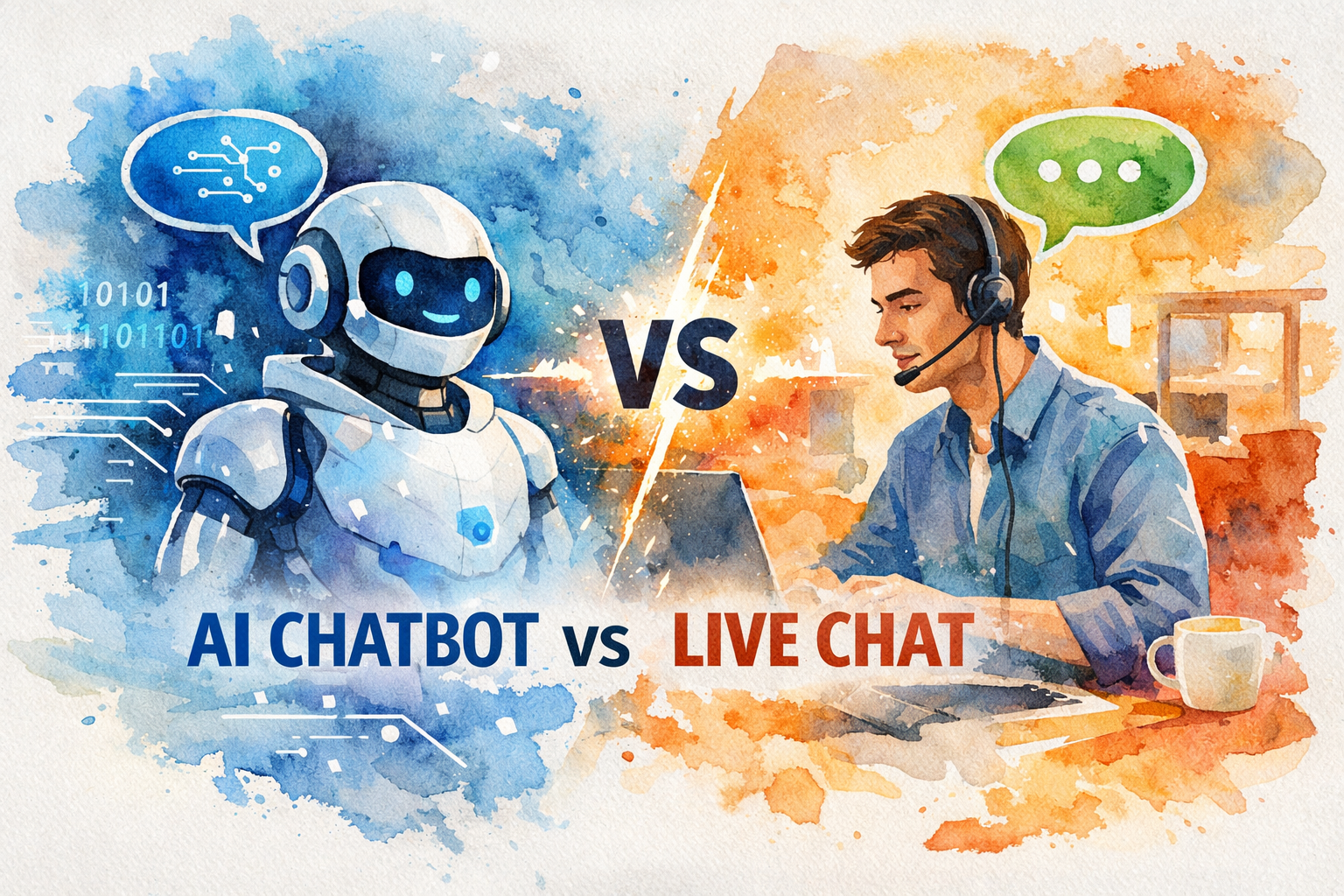
6. How does an AI chatbot compare to a live chat with human agents?
7. Are AI chatbots secure and private?
8. Can AI chatbots be customized for my business needs?
9. What are common challenges when implementing an AI chatbot?
10. How do I get started with an AI chatbot solution?
11. Can AI chatbots handle multiple languages?
12. Will an AI chatbot replace human customer service agents?