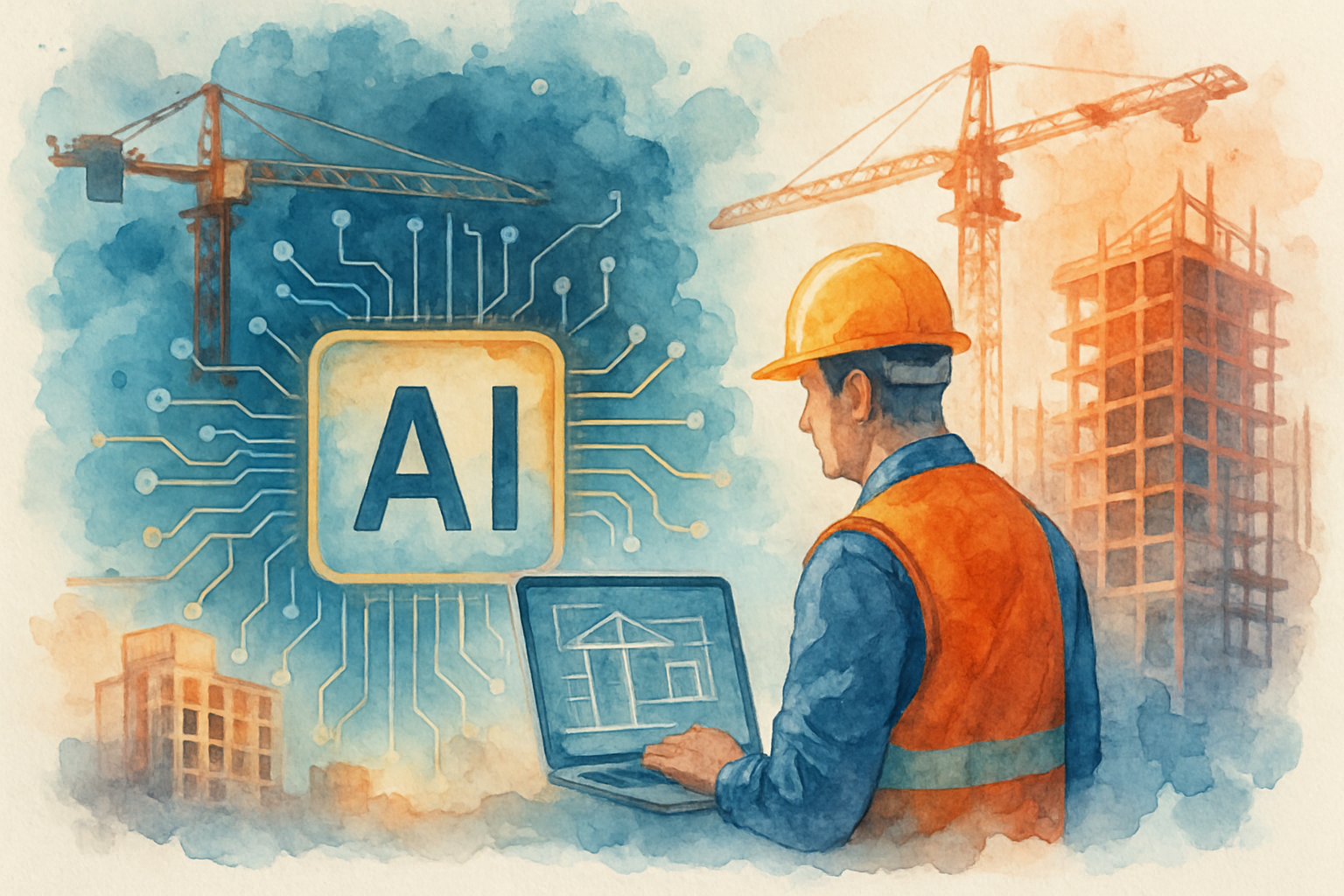
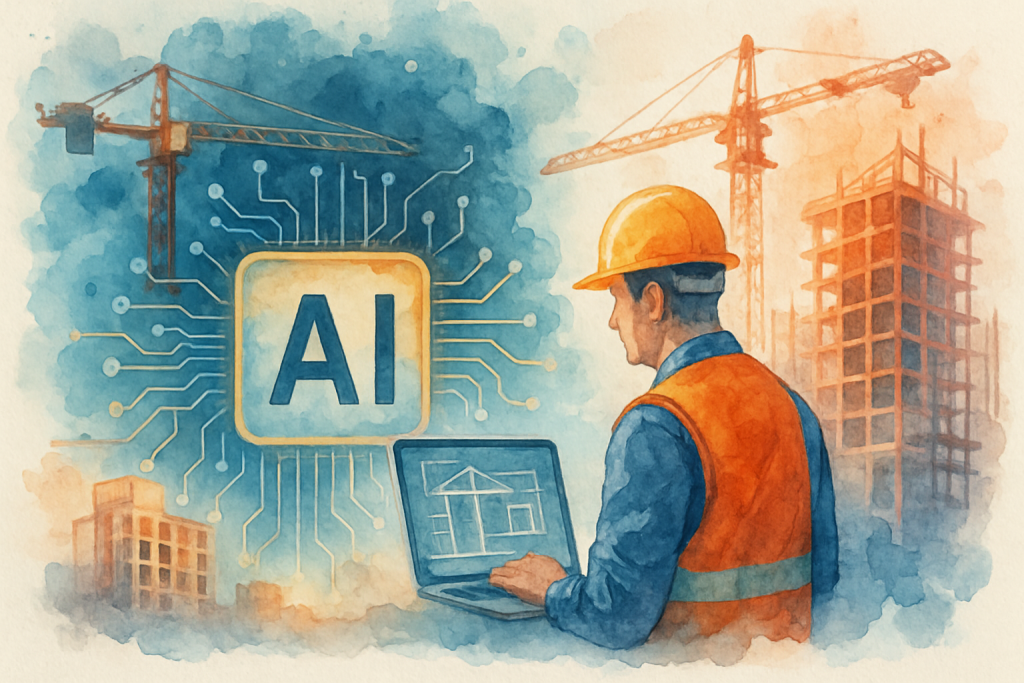
Construction sites are no longer just about hard hats and blueprints. The industry is experiencing a technological renaissance, with artificial intelligence leading the charge. While construction has traditionally lagged behind other sectors in digital adoption, AI software for construction is now transforming how projects are planned, executed, and delivered.
The numbers tell a compelling story: projects using AI-powered tools report up to 30% reduction in delays and 25% improvement in cost management. Yet, many construction professionals remain uncertain about which AI solutions deliver real value versus those that simply add complexity.
This comprehensive guide explores seven proven AI construction software tools that are genuinely boosting productivity across job sites worldwide. Whether you’re managing a small residential project or overseeing large-scale commercial developments, you’ll discover practical solutions that address real challenges—from predictive maintenance and safety monitoring to automated scheduling and resource optimization.
Let’s dive into the tools that are reshaping the construction landscape.
Understanding AI Software for Construction: What It Is and Why It Matters
The Current State of AI Adoption in Construction
The construction industry generates massive amounts of data daily—from drone footage and IoT sensors to project schedules and budget reports. However, only 1% of this data is typically analyzed and used for decision-making. AI bridges this gap by processing vast datasets to uncover insights that would be impossible for humans to detect manually.
According to McKinsey research, the construction sector could boost its productivity by 50% through full digitalization, with AI playing a central role. Early adopters are already seeing tangible results: reduced rework, fewer safety incidents, and projects completed on time and within budget.
Key Applications of AI in Modern Construction
AI technology is being deployed across multiple construction domains:
- Predictive Project Management: Forecasting delays before they occur and automatically adjusting schedules
- Safety Monitoring: Real-time detection of safety violations using computer vision
- Quality Control: Automated inspection of work completed versus design specifications
- Resource Optimization: Intelligent allocation of equipment, materials, and labor
- Risk Assessment: Identifying potential project risks through historical data analysis
The shift toward AI-powered construction management represents more than just technological advancement—it’s a fundamental reimagining of how construction projects are conceived and executed.
The 7 Best AI Construction Software Tools Transforming the Industry
1. Buildots: Computer Vision for Progress Tracking
Buildots uses hardhat-mounted cameras and AI algorithms to automatically document construction progress. The system compares actual site conditions against BIM models, identifying discrepancies in real-time. Construction managers receive detailed reports highlighting areas behind schedule or not built according to specifications.
This AI software for construction eliminates the need for manual progress tracking, saving project managers up to 15 hours per week. Companies using Buildots report 20% faster project delivery and significant reductions in rework costs.
2. Alice Technologies: AI-Powered Scheduling Optimisation
Alice Technologies applies generative design principles to construction scheduling. The platform analyses millions of potential schedule scenarios, considering constraints like labour availability, equipment capacity, and material delivery timelines. It then recommends the optimal construction sequence that minimises duration and costs.
What traditionally takes schedulers weeks to plan, Alice accomplishes in hours. The software has helped contractors reduce project timelines by 10-15% whilst maintaining quality standards.
3. Smartvid.io: AI for Safety and Quality Management
Smartvid.io uses computer vision to analyse photos and videos from construction sites, automatically identifying safety hazards, quality issues, and progress indicators. The platform can detect missing PPE, unsafe working conditions, and deviations from quality standards without human intervention.
With over 8 billion images analysed, Smartvid.io’s AI has been trained on diverse construction scenarios. Companies using this tool report 30% reduction in safety incidents and faster quality assurance processes.
4. Doxel: AI-Powered Project Controls
This AI software for construction provides early warnings about budget overruns and schedule delays, typically identifying issues 2-3 weeks before traditional methods. Doxel users have achieved 38% reduction in rework and 11% improvement in labour productivity.
5. Procore with AI Integrations: Comprehensive Project Management
Procore’s AI capabilities help teams make data-driven decisions faster, with users reporting 25% reduction in administrative time and improved collaboration across project stakeholders.
6. OpenSpace: Automated Site Documentation
OpenSpace uses 360-degree cameras and AI to create comprehensive visual records of construction sites. The system automatically maps photos to floor plans, creating a time-lapse history of project progress. AI algorithms can identify discrepancies between planned and actual construction, flagging potential issues.
This automated documentation saves field teams hours of manual photo capture and organisation. OpenSpace users can resolve disputes faster and maintain complete project records with minimal effort.
7. Togal.AI: Automated Takeoff and Estimating
Togal.AI applies machine learning to construction drawings, automatically detecting and measuring building components for cost estimation. The software can process complex blueprints in minutes, identifying walls, doors, windows, and other elements with high accuracy.
Estimators using Togal.AI complete takeoffs 10 times faster than manual methods, with 95%+ accuracy rates. This speed advantage allows contractors to bid on more projects and respond to opportunities more competitively.
Implementing AI Software for Construction: A Practical Roadmap
Step 1: Assess Your Current Pain Points
Begin by identifying specific challenges in your construction operations. Are you struggling with schedule delays? Safety compliance? Budget overruns? Quality control? Different AI tools address different problems, so clarity about your priorities is essential.
Conduct stakeholder interviews with project managers, superintendents, and field teams to understand where inefficiencies exist. Quantify these problems where possible—for example, “We spend 12 hours per week on manual progress reporting” or “We experience 15% rework on average.”
Step 2: Start with a Pilot Project
Rather than implementing AI software for construction across your entire organization immediately, select a single project as a pilot. Choose a project that’s representative of your typical work but not mission-critical, allowing room for learning and adjustment.
Define clear success metrics before starting. These might include time saved on specific tasks, reduction in safety incidents, or improvement in schedule adherence. Having baseline measurements ensures you can objectively evaluate the AI tool’s impact.
Step 3: Invest in Team Training and Change Management
Technology adoption fails more often due to people issues than technical problems. Allocate sufficient time for training, ensuring team members understand not just how to use the software, but why it benefits them personally.
Address resistance proactively by involving skeptics in the pilot program. When field teams see AI tools reducing their administrative burden rather than replacing their expertise, adoption accelerates significantly.
Step 4: Integrate with Existing Systems
AI construction software delivers maximum value when integrated with your existing technology stack. Ensure the tools you select can connect with your project management software, accounting systems, and BIM platforms.
Most modern AI solutions offer APIs and pre-built integrations with popular construction software. Work with vendors to establish data flows that eliminate duplicate entry and create a single source of truth for project information.
Step 5: Monitor, Measure, and Optimize
Track the metrics you defined in Step 2 throughout your pilot project. Collect feedback from users regularly, identifying friction points and areas where additional training might help.
AI systems improve with use, so be patient during the initial learning period. Most organizations see significant productivity gains within 3-6 months of consistent use. Use these results to build the business case for broader implementation.
Best Practices for Long-Term Success
Successful AI adoption requires ongoing commitment. Designate AI champions within your organization who can troubleshoot issues and share best practices. Schedule regular reviews to assess whether you’re maximizing the software’s capabilities or if additional features could provide value.
Stay informed about updates and new features from your AI software vendors. The construction AI landscape evolves rapidly, and vendors frequently release enhancements that could benefit your operations.
Overcoming Common Challenges with AI Construction Software
Challenge 1: High Initial Investment Costs
AI software for construction often requires significant upfront investment, which can be daunting for smaller contractors or firms with tight margins. The subscription costs, hardware requirements, and training expenses add up quickly.
Solution: Calculate the total cost of ownership against quantifiable benefits. Most AI tools pay for themselves within 12-18 months through time savings, reduced rework, and fewer delays. Consider starting with one tool that addresses your most expensive problem, then expand as ROI is demonstrated. Many vendors offer flexible pricing models or pilot programs that reduce initial financial risk.
Challenge 2: Data Quality and Availability Issues
AI systems require substantial amounts of quality data to function effectively. Many construction companies lack organized historical data or struggle with inconsistent data collection practices across projects.
Solution: Begin improving data collection practices immediately, even before implementing AI tools. Standardize how project information is captured and stored. Most AI software for construction can start delivering value with limited historical data, then improve as more information accumulates. Focus on consistent, accurate data entry moving forward rather than trying to perfect historical records.
Challenge 3: Resistance from Field Teams
Construction professionals often view AI with skepticism, fearing job displacement or seeing it as another administrative burden. This resistance can undermine even the best technology implementations.
Solution: Frame AI as a tool that enhances human expertise rather than replacing it. Demonstrate how AI software for construction eliminates tedious tasks, allowing skilled workers to focus on higher-value activities. Involve field teams in tool selection and implementation, giving them ownership of the process. Share success stories from similar companies to build confidence.
Challenge 4: Integration Complexity
Construction companies typically use multiple software systems that may not communicate effectively with new AI tools. This fragmentation creates data silos and reduces the potential value of AI investments.
Solution: Prioritize AI solutions with robust integration capabilities and open APIs. Work with vendors who have experience integrating with your existing technology stack. Consider engaging a construction technology consultant who can architect an integrated system that maximizes data flow and minimizes redundancy.
Conclusion: Building the Future with AI Construction Software
The construction industry stands at a pivotal moment. AI software for construction is no longer experimental technology—it’s a proven approach to solving persistent challenges that have plagued the industry for decades. From predictive scheduling and automated safety monitoring to intelligent resource allocation and quality control, AI tools are delivering measurable improvements in productivity, profitability, and project outcomes.
The seven AI construction software tools highlighted in this guide represent the current state of the art, each addressing specific pain points with sophisticated yet practical solutions. Whether you’re drawn to Buildots’ progress tracking, Alice Technologies’ scheduling optimization, or Smartvid.io’s safety management, there’s an AI solution tailored to your needs.
Success with AI software for construction requires more than just purchasing licenses. It demands thoughtful implementation, team buy-in, and commitment to data-driven decision-making. Start small, measure results, and scale what works. The companies that embrace this technology today will be the industry leaders tomorrow.
The question isn’t whether AI will transform construction—it’s already happening. The question is whether your organization will lead this transformation or struggle to catch up.
Ready to explore how AI software for construction can transform your projects? The Crunch specializes in helping construction companies identify, implement, and optimize AI solutions that deliver real results. Our team of experts will assess your specific needs and recommend the right tools for your operations. Schedule a free consultation today and discover how AI can boost your productivity, reduce costs, and give you a competitive edge in an increasingly digital industry.
Frequently Asked Questions (FAQ)
1. What is AI software for construction?
2. How does AI software improve construction project management?
3. What are the main benefits of using AI in construction?
4. How do I get started with AI software for my construction business?
5. How does AI software for construction compare to traditional construction management tools?
6. What types of tasks can AI automate in construction?
7. Is AI software for construction expensive?
8. What are common concerns about using AI in construction?
9. Can AI software help improve construction site safety?
10. What should I look for when choosing AI software for construction?
11. How long does it take to implement AI software in a construction company?
12. Do I need technical expertise to use AI software for construction?