10 Ways AI CRM Systems Boost Sales & Customer Loyalty
Introduction: The Future of Customer Relationships is Here
Imagine having a sales assistant that never sleeps, remembers every customer interaction, and predicts what your clients need before they even ask. That’s not science fiction—it’s the reality of AI CRM technology today.
Traditional customer relationship management systems have served businesses well for decades, but they’re no longer enough in our hyper-competitive marketplace. Companies are drowning in customer data yet starving for actionable insights. Sales teams spend countless hours on administrative tasks instead of building relationships. Customer expectations have skyrocketed, demanding personalized experiences at every touchpoint.
Enter AI CRM—the game-changing fusion of artificial intelligence and customer relationship management. This powerful combination is revolutionizing how businesses attract, engage, and retain customers. In this comprehensive guide, we’ll explore 10 concrete ways that AI CRM systems are transforming sales performance and customer loyalty, helping businesses of all sizes achieve unprecedented growth.
Whether you’re a small business owner looking to scale or an enterprise seeking competitive advantage, understanding these AI-powered capabilities will position you at the forefront of customer relationship innovation.
Understanding AI CRM: The Intelligence Behind Modern Customer Management
What Makes AI CRM Different from Traditional Systems
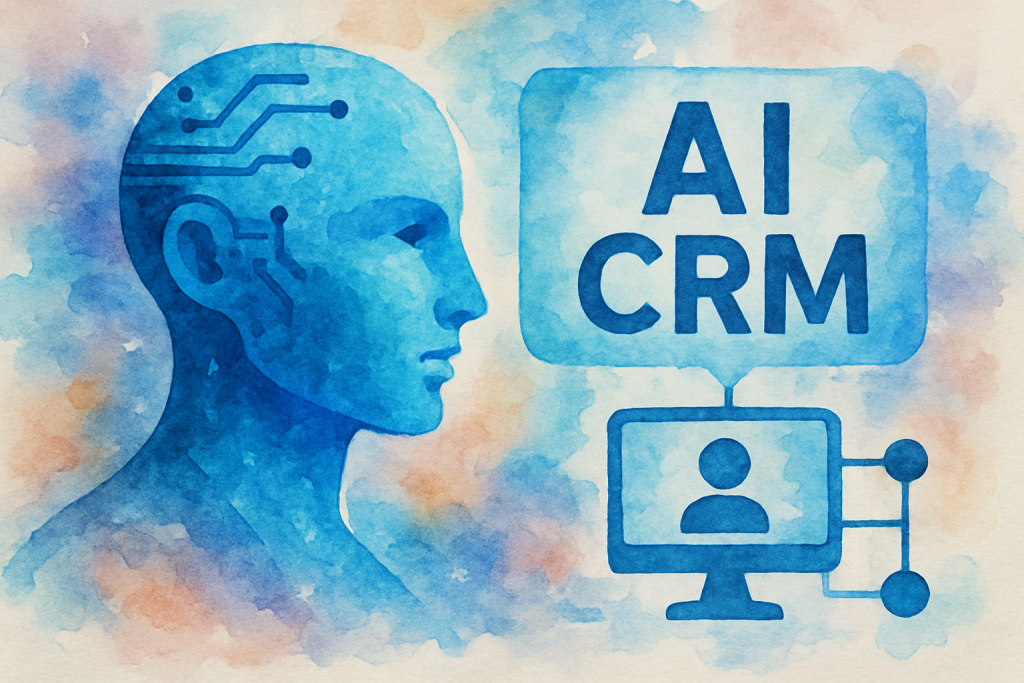
An ai crm platform goes far beyond simple contact management and data storage. While traditional CRM systems act as digital filing cabinets, AI-powered solutions function as intelligent assistants that learn, predict, and recommend.
The technology continuously analyzes patterns in customer behavior, communication preferences, purchase history, and engagement metrics. This creates a dynamic, ever-improving system that becomes smarter with every interaction.
The Current State of AI in Customer Relationship Management
The adoption of artificial intelligence in CRM is accelerating rapidly. Gartner predicts that by 2025, 80% of B2B sales interactions will occur through digital channels, with AI playing a central role in managing these relationships.
Modern AI CRM platforms now offer capabilities that seemed impossible just five years ago: sentiment analysis that detects customer frustration in real-time, chatbots that handle complex inquiries with human-like understanding, and predictive models that identify which leads are most likely to convert.
Investment in this technology reflects its value—the global AI in CRM market is projected to reach $125 billion by 2028, growing at a compound annual rate of over 30%.
10 Powerful Ways AI CRM Transforms Sales and Customer Loyalty
1. Intelligent Lead Scoring and Prioritization
AI CRM systems analyze hundreds of data points to score leads with unprecedented accuracy. Instead of relying on gut feeling or basic demographic information, the system evaluates behavioral signals, engagement patterns, and historical conversion data.
Sales teams can focus their energy on prospects most likely to convert, increasing efficiency by up to 50%. The AI continuously refines its scoring model based on outcomes, ensuring the system becomes more accurate over time.
2. Predictive Sales Forecasting
Gone are the days of spreadsheet-based forecasting and hopeful projections. AI CRM platforms analyze historical sales data, market trends, seasonal patterns, and pipeline health to generate highly accurate revenue predictions.
This capability helps businesses make informed decisions about inventory, staffing, and resource allocation. Companies using AI-powered forecasting report up to 95% accuracy in their quarterly projections, compared to 70% with traditional methods.
3. Personalized Customer Experiences at Scale
Personalization drives loyalty, but delivering customized experiences to thousands of customers manually is impossible. AI CRM solves this challenge by automatically tailoring communications, product recommendations, and content based on individual customer profiles.
The system tracks preferences, purchase history, browsing behavior, and engagement patterns to create unique customer journeys. Research shows that 80% of consumers are more likely to purchase from brands offering personalized experiences.
4. Automated Task Management and Workflow Optimization
Sales professionals spend only 36% of their time actually selling—the rest is consumed by administrative tasks. AI CRM systems automate data entry, follow-up scheduling, email responses, and report generation.
Smart workflows trigger actions based on customer behavior: sending follow-up emails after meetings, creating tasks when deals stall, or alerting managers when high-value opportunities need attention. This automation frees sales teams to focus on relationship-building activities that truly drive revenue.
5. Intelligent Chatbots and Virtual Assistants
Modern AI-powered chatbots handle customer inquiries 24/7 with remarkable sophistication. They understand context, detect sentiment, and provide relevant solutions without human intervention.
When complex issues arise, these virtual assistants seamlessly transfer conversations to human agents along with complete context. Companies implementing AI chatbots report a 70% reduction in response times and a 40% decrease in support costs while improving customer satisfaction scores.
6. Sentiment Analysis and Customer Health Monitoring
An ai crm continuously monitors customer sentiment across all touchpoints—emails, support tickets, social media, and survey responses. Natural language processing detects frustration, satisfaction, or confusion in customer communications.
This early warning system alerts teams to at-risk accounts before they churn. Proactive intervention based on sentiment analysis can reduce customer attrition by up to 25%, significantly impacting lifetime value and revenue stability.
7. Dynamic Pricing and Offer Optimization
AI algorithms analyze market conditions, competitor pricing, customer willingness to pay, and inventory levels to recommend optimal pricing strategies. The system can suggest personalized discounts that maximize both conversion probability and profit margins.
This intelligent approach to pricing increases win rates while protecting margins—a delicate balance that human analysis alone struggles to achieve consistently.
8. Cross-Selling and Upselling Intelligence
By analyzing purchase patterns across your entire customer base, AI CRM identifies opportunities for cross-selling and upselling with remarkable precision. The system recognizes which products are frequently purchased together and which customers are ready for premium offerings.
Sales teams receive timely recommendations with supporting data, making conversations more relevant and valuable. Companies leveraging AI for product recommendations see 10-30% increases in average order value.
9. Churn Prediction and Retention Strategies
Losing customers is expensive—acquiring new ones costs 5-25 times more than retaining existing ones. AI CRM platforms identify churn risk by analyzing engagement decline, support ticket patterns, payment issues, and usage metrics.
The system not only predicts which customers might leave but also recommends specific retention strategies based on similar customer profiles. This proactive approach to customer retention can reduce churn rates by 15-20%.
10. Continuous Learning and Performance Optimization
Perhaps the most powerful aspect of AI CRM is its ability to learn and improve continuously. Every interaction, outcome, and data point feeds back into the system, refining its algorithms and recommendations.
The platform identifies which sales approaches work best for different customer segments, which communication channels drive engagement, and which strategies yield the highest ROI. This creates a virtuous cycle of improvement that compounds over time.
Implementing AI CRM: Your Roadmap to Success
Step 1: Assess Your Current CRM Capabilities and Needs
Begin by auditing your existing customer relationship management processes. Identify pain points, bottlenecks, and opportunities where AI could deliver the most value. Survey your sales and customer service teams to understand their daily challenges.
Document your key performance indicators and establish baseline metrics. This foundation will help you measure the impact of your AI CRM implementation and justify the investment to stakeholders.
Step 2: Choose the Right AI CRM Platform
Not all AI CRM solutions are created equal. Evaluate platforms based on your specific needs, industry requirements, integration capabilities, and scalability. Consider factors like ease of use, training requirements, and vendor support.
Leading platforms include Salesforce Einstein, HubSpot AI, Microsoft Dynamics 365 AI, and Zoho Zia. Request demos and trial periods to test functionality with your actual data and workflows.
Step 3: Prepare Your Data for AI Success
AI is only as good as the data it learns from. Clean and organize your existing customer data, removing duplicates, correcting errors, and standardizing formats. Establish data governance policies to maintain quality going forward.
Ensure you have sufficient historical data for the AI to learn meaningful patterns. Most systems require at least 6-12 months of quality data to generate reliable insights.
Step 4: Start Small and Scale Gradually
Rather than attempting a complete overhaul, implement ai crm capabilities in phases. Begin with one or two high-impact use cases—perhaps lead scoring or chatbot implementation—and expand as you gain confidence and demonstrate results.
This approach minimizes disruption, allows for learning and adjustment, and builds organizational buy-in through early wins.
Step 5: Train Your Team and Foster Adoption
Technology alone doesn’t drive transformation—people do. Invest in comprehensive training that helps your team understand not just how to use the AI CRM, but why it benefits them personally.
Address concerns about AI replacing jobs by emphasizing how it augments human capabilities rather than replacing them. Create champions within each department who can support their colleagues and share best practices.
Step 6: Monitor, Measure, and Optimize
Establish clear metrics to track the impact of your AI CRM implementation. Monitor adoption rates, time savings, conversion improvements, customer satisfaction scores, and revenue impact.
Review these metrics regularly and adjust your approach based on results. The most successful implementations treat AI CRM as an evolving system that requires ongoing optimization rather than a one-time project.
Overcoming Common AI CRM Challenges
Challenge 1: Data Privacy and Security Concerns
With AI systems processing vast amounts of customer data, privacy and security are paramount concerns. Organizations must ensure compliance with regulations like GDPR, CCPA, and industry-specific requirements.
Solution: Choose AI CRM vendors with robust security certifications and transparent data handling practices. Implement strict access controls, encrypt sensitive data, and conduct regular security audits. Clearly communicate your data practices to customers to build trust.
Challenge 2: Integration with Existing Systems
Many businesses struggle to integrate new ai crm platforms with legacy systems, marketing automation tools, and other business applications.
Solution: Prioritize platforms with extensive integration capabilities and APIs. Consider working with implementation partners who specialize in system integration. Plan for a phased integration approach that minimizes disruption to ongoing operations.
Challenge 3: Resistance to Change and Low Adoption
Even the most sophisticated AI CRM fails if your team doesn’t use it. Resistance often stems from fear of complexity, job security concerns, or comfort with existing processes.
Solution: Involve end-users in the selection and implementation process. Demonstrate quick wins that make their jobs easier. Provide ongoing training and support. Recognize and reward early adopters who embrace the new system.
Challenge 4: Unrealistic Expectations and ROI Concerns
Some organizations expect immediate, dramatic results from AI CRM implementation, leading to disappointment when transformation takes time.
Solution: Set realistic expectations from the start. Communicate that AI systems improve over time as they learn from more data. Focus on incremental improvements and celebrate milestones. Track both quantitative metrics and qualitative benefits like improved customer satisfaction.
Challenge 5: Maintaining Data Quality
AI systems are only as effective as the data they’re trained on. Poor data quality leads to inaccurate predictions and recommendations.
Solution: Establish data governance policies and assign ownership for data quality. Implement validation rules and automated data cleaning processes. Regularly audit your data and address quality issues promptly. Make data hygiene part of your team’s regular workflow.
Conclusion: Embracing the AI CRM Revolution
The transformation from traditional customer relationship management to AI CRM represents more than a technology upgrade—it’s a fundamental shift in how businesses understand and serve their customers. The ten strategies we’ve explored demonstrate the remarkable potential of artificial intelligence to boost sales performance while deepening customer loyalty.
The implementation journey requires thoughtful planning, quality data, and organizational commitment. Challenges will arise, but the solutions we’ve outlined provide a roadmap for overcoming obstacles and maximizing your return on investment. Remember that AI CRM is not a destination but an ongoing evolution—your system will become more valuable as it learns from your unique business context and customer base.
The question is no longer whether to adopt AI CRM, but how quickly you can implement it to stay competitive. Your customers expect personalized, responsive, and intelligent interactions. Your sales team deserves tools that amplify their capabilities rather than burden them with administrative tasks. Your business needs the insights that only AI-powered analysis can provide.
Ready to transform your customer relationships and accelerate your sales growth? The experts at The Crunch specialize in helping businesses implement AI CRM solutions that deliver measurable results. Don’t navigate this transformation alone—schedule a free consultation today to discover how AI CRM can revolutionize your business. Contact The Crunch now and take the first step toward smarter customer relationships and unprecedented growth.
Frequently Asked Questions (FAQ)
1. What is an AI CRM?
2. How does an AI CRM work?
3. What are the main benefits of using an AI CRM?
4. How is an AI CRM different from a traditional CRM?
5. How much does an AI CRM cost?
6. What features should I look for in an AI CRM?
7. Is my data safe with an AI CRM?
8. Can AI CRMs integrate with my existing tools?
9. How do I get started with an AI CRM?
10. What are common challenges when implementing an AI CRM?
11. Who can benefit from using an AI CRM?
12. Do I need technical skills to use an AI CRM?