AI CRM Automation: 7 Game Changing Solution to Improve Customer Relationships
Sales teams are drowning in data while customers expect personalized experiences at every touchpoint. This paradox creates a critical challenge: how do businesses scale their operations without sacrificing the human touch that builds lasting relationships?
Enter AI CRM automation—a game-changing solution that’s revolutionizing how companies manage customer relationships and drive revenue growth. By combining artificial intelligence with customer relationship management systems, businesses can now automate repetitive tasks, predict customer behavior, and deliver personalized experiences at scale.
In this comprehensive guide, we’ll explore seven powerful ways AI CRM automation enhances both sales performance and customer loyalty. You’ll discover practical strategies, implementation tips, and real-world examples that demonstrate how this technology transforms ordinary customer interactions into extraordinary business outcomes. Whether you’re a small business owner or leading an enterprise sales team, these insights will help you leverage AI to stay competitive in today’s digital marketplace.
Understanding AI CRM Automation and Its Growing Importance
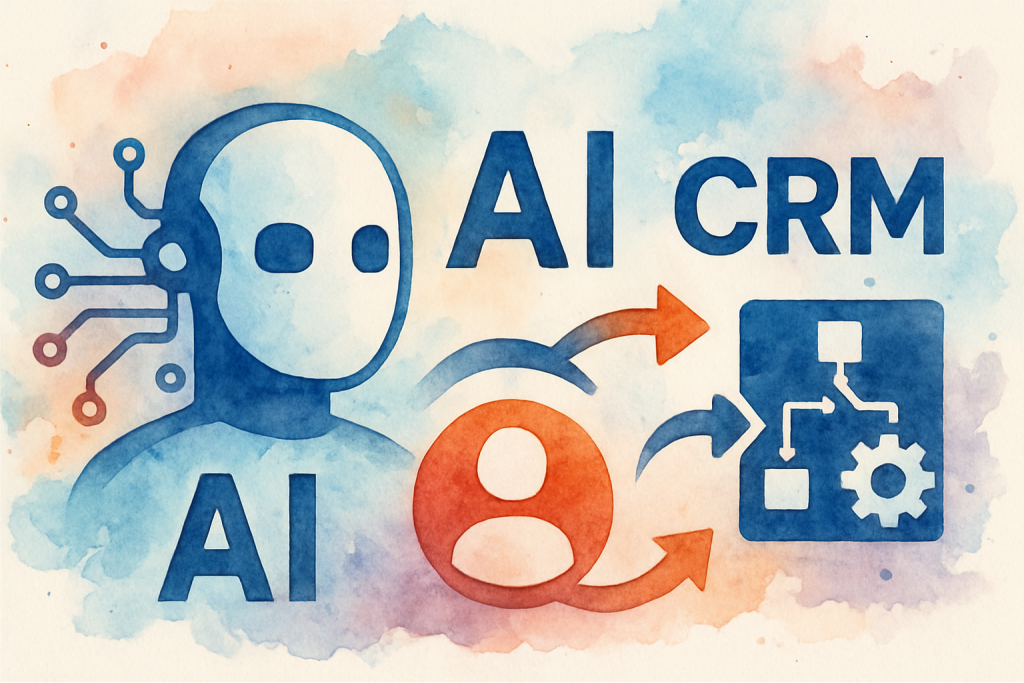
AI CRM automation represents the convergence of artificial intelligence technologies with traditional customer relationship management platforms. This powerful combination enables businesses to automate routine tasks, analyze vast amounts of customer data, and generate actionable insights that drive smarter decision-making.
The importance of this technology has skyrocketed in recent years. According to Salesforce research, 84% of customers say the experience a company provides is as important as its products or services. Meanwhile, Gartner predicts that by 2025, 80% of B2B sales interactions will occur through digital channels, making intelligent automation essential for maintaining competitive advantage.
Current market trends reveal explosive growth in AI CRM adoption. The global AI in CRM market was valued at $1.8 billion in 2023 and is projected to reach $13.9 billion by 2030, growing at a compound annual rate of 34.6%. This surge reflects businesses’ recognition that manual processes can no longer keep pace with customer expectations or market dynamics.
Seven Transformative Benefits of AI CRM Automation
1. Intelligent Lead Scoring and Prioritization
AI CRM automation revolutionizes lead management by analyzing hundreds of data points to identify which prospects are most likely to convert. The system examines behavioral signals, demographic information, engagement history, and external data sources to assign accurate lead scores in real-time.
Sales teams can focus their energy on high-value opportunities instead of chasing cold leads. This targeted approach typically increases conversion rates by 30-50% while reducing the sales cycle length significantly.
2. Personalized Customer Experiences at Scale
Modern customers expect personalized interactions, but delivering customization manually is impossible at scale. AI-powered CRM systems analyze individual customer preferences, purchase history, and behavior patterns to automatically tailor communications, product recommendations, and service offerings.
This level of personalization drives remarkable results. Research shows that 80% of consumers are more likely to purchase from brands offering personalized experiences, and businesses implementing advanced personalization see revenue increases of 10-15%.
For example, if a customer’s engagement suddenly drops or their usage patterns change, the AI can trigger automated outreach or alert account managers to intervene. This proactive approach reduces churn rates by up to 25% and increases customer lifetime value substantially.
4. Automated Task Management and Workflow Optimization
Sales professionals spend only 34% of their time actually selling, with the remainder consumed by administrative tasks. AI CRM automation eliminates this inefficiency by handling data entry, scheduling follow-ups, updating records, and managing routine communications automatically.
Smart workflow automation ensures nothing falls through the cracks while freeing sales teams to focus on relationship-building and closing deals. Companies implementing comprehensive CRM automation report productivity increases of 40–60%.
5. Enhanced Customer Service Through Intelligent Chatbots
AI-powered chatbots integrated with CRM systems provide instant, accurate responses to customer inquiries 24/7. These intelligent assistants access complete customer histories, understand context through natural language processing, and resolve common issues without human intervention.
When complex situations arise, chatbots seamlessly transfer conversations to human agents along with complete context, ensuring smooth handoffs.This hybrid approach reduces response times by 80% while maintaining high satisfaction scores.
6. Data-Driven Sales Forecasting
Accurate forecasting has always challenged sales organizations, but AI transforms this process by analyzing historical data, market conditions, seasonal trends, and pipeline health to generate precise revenue predictions.
Machine learning models continuously refine their forecasts based on actual outcomes, achieving accuracy rates of 90% or higher. This reliability enables better resource allocation, inventory management, and strategic planning across the organization.
7. Continuous Learning and Improvement
Unlike static systems, AI CRM platforms continuously learn from every interaction, outcome, and data point. They identify which messages resonate with specific customer segments, which sales approaches yield the best results, and which service strategies drive loyalty.
This self-improving capability means your CRM becomes more valuable over time, automatically adapting to changing customer preferences and market conditions without manual reprogramming.
Implementing AI CRM Automation: A Practical Guide
Step 1: Assess Your Current CRM Capabilities and Needs
Begin by evaluating your existing CRM system and identifying specific pain points. Which manual processes consume the most time? Where do leads fall through the cracks? What customer data remains underutilized?
Conduct stakeholder interviews with sales, marketing, and customer service teams to understand their daily challenges. Document current workflows and measure baseline metrics like conversion rates, response times, and customer satisfaction scores.
Step 2: Define Clear Objectives and Success Metrics
Establish specific, measurable goals for your AI CRM automation initiative. Rather than vague aspirations like “improve efficiency,” set concrete targets such as “reduce lead response time from 4 hours to 15 minutes” or “increase lead-to-customer conversion rate by 25%.”
Identify key performance indicators that align with business objectives. These might include sales cycle length, customer acquisition cost, lifetime value, retention rate, or revenue per sales representative.
Step 3: Choose the Right AI CRM Platform
Select a platform that matches your technical capabilities, budget, and scalability requirements. Leading options include Salesforce Einstein, HubSpot AI, Microsoft Dynamics 365 AI, and Zoho CRM with Zia.
Evaluate platforms based on integration capabilities with existing tools, ease of use, customization options, and the specific AI features they offer. Request demonstrations and trial periods to test functionality with your actual data and workflows.
Step 4: Prepare and Clean Your Data
AI systems are only as effective as the data they’re trained on. Before implementation, conduct a thorough data audit to identify duplicates, inconsistencies, and gaps in your customer information.
Establish data governance policies ensuring ongoing data quality. Implement validation rules, standardize formats, and create processes for regular data maintenance. Clean, comprehensive data is the foundation of successful AI CRM automation.
Step 5: Start with Pilot Programs
Rather than attempting organization-wide implementation immediately, launch pilot programs with specific teams or use cases. This approach allows you to test functionality, identify issues, and demonstrate value before full-scale rollout.
Choose pilot projects with high visibility and clear success metrics. Quick wins build momentum and stakeholder buy-in for broader adoption.
Step 6: Train Teams and Foster Adoption
Technology alone doesn’t drive transformation—people do. Invest in comprehensive training programs that help teams understand not just how to use the system, but why it benefits them personally.
Address concerns about AI replacing jobs by emphasizing how automation handles tedious tasks, allowing employees to focus on strategic, creative work that machines cannot replicate. Create champions within each department who can provide peer support and encourage adoption.
Step 7: Monitor, Measure, and Optimize
Schedule regular review sessions to gather user feedback and refine automation rules. AI systems improve with use, but human oversight ensures they’re optimizing for the right outcomes.
Overcoming Common AI CRM Automation Challenges
Challenge 1: Data Privacy and Security Concerns
With AI systems processing vast amounts of sensitive customer information, data security becomes paramount. Organizations worry about breaches, compliance violations, and unauthorized access.
Solution: Implement robust security protocols including encryption, access controls, and regular security audits. Choose CRM providers with strong security certifications and compliance with regulations like GDPR and CCPA. Establish clear data handling policies and train employees on privacy best practices.
Challenge 2: Integration with Legacy Systems
Many businesses operate with patchwork technology stacks where legacy systems don’t easily communicate with modern AI platforms.
Solution: Utilize middleware and API integration tools to bridge gaps between systems. Consider phased migration strategies that gradually replace outdated components while maintaining business continuity. Work with integration specialists who understand both your legacy infrastructure and modern AI CRM platforms.
Challenge 3: Resistance to Change
Employees comfortable with existing processes often resist new technologies, fearing complexity or job displacement.
Solution: Involve end-users early in the selection and implementation process. Demonstrate how AI CRM automation eliminates frustrating manual tasks rather than replacing people. Provide ongoing support, celebrate early adopters, and share success stories that illustrate tangible benefits.
Challenge 4: Unrealistic Expectations
Some organizations expect AI to solve all problems immediately, leading to disappointment when results take time to materialize.
Solution: Set realistic timelines and expectations from the outset. Explain that AI systems require training periods and continuous optimization. Focus on incremental improvements rather than overnight transformation. Communicate both successes and challenges transparently to maintain stakeholder confidence.
Challenge 5: Insufficient Data Quality
Poor data quality undermines AI effectiveness, producing inaccurate predictions and unreliable automation.
Solution: Prioritize data quality initiatives before and during AI implementation. Establish data governance frameworks, implement validation rules, and conduct regular data cleansing. Consider data enrichment services to fill gaps in customer information.
Conclusion
AI CRM automation represents a fundamental shift in how businesses build and maintain customer relationships. By intelligently automating routine tasks, predicting customer needs, and personalizing interactions at scale, this technology empowers organizations to deliver exceptional experiences while driving significant revenue growth.
The seven strategies outlined in this guide—from intelligent lead scoring to continuous learning capabilities—demonstrate the transformative potential of AI CRM automation. Companies implementing these approaches consistently report higher conversion rates, improved customer satisfaction, increased sales productivity, and stronger customer loyalty.
Success requires more than just technology adoption. It demands strategic planning, quality data, proper training, and ongoing optimization. Organizations that approach AI CRM automation as a journey rather than a destination position themselves to reap compounding benefits as their systems learn and improve over time.
The competitive landscape continues evolving rapidly, and businesses that delay AI adoption risk falling behind more agile competitors. However, those who embrace intelligent automation thoughtfully and strategically will discover unprecedented opportunities to scale their operations while maintaining the personalized touch that customers value.
Ready to transform your customer relationships and accelerate sales growth through AI CRM automation? The experts at The Crunch specialize in helping businesses implement intelligent automation strategies tailored to their unique needs and goals. Schedule your free consultation today to discover how AI-powered CRM can revolutionize your business outcomes.
Frequently Asked Questions (FAQ)
1. What is AI CRM automation?
2. How does AI improve traditional CRM systems?
3. What are the main benefits of using AI CRM automation?
4. How do I get started with AI CRM automation?
5. How does AI CRM automation compare to manual CRM management?
6. What features should I look for in an AI-powered CRM?
7. Is AI CRM automation expensive?
8. Can AI CRM automation integrate with my existing tools?
9. What are common concerns about AI CRM automation?
10. How secure is my data with AI CRM automation?
11. Can AI CRM automation help with customer retention?
12. Do I need technical expertise to use AI CRM automation?