How AI Enabled CRM Helps You to Boost Sales & Customer Loyalty 10x
Introduction: The Future of Customer Relationships is Here
Imagine having a sales assistant that never sleeps, predicts customer needs before they arise, and personalizes every interaction at scale. That’s not science fiction—it’s the reality of AI enabled CRM systems transforming businesses today.
Traditional customer relationship management tools have served businesses well, but they’re no longer enough in our hyper-competitive marketplace. Companies are drowning in customer data yet struggling to extract meaningful insights that drive revenue and loyalty. The average sales rep spends only 34% of their time actually selling, with the rest consumed by administrative tasks and data entry.
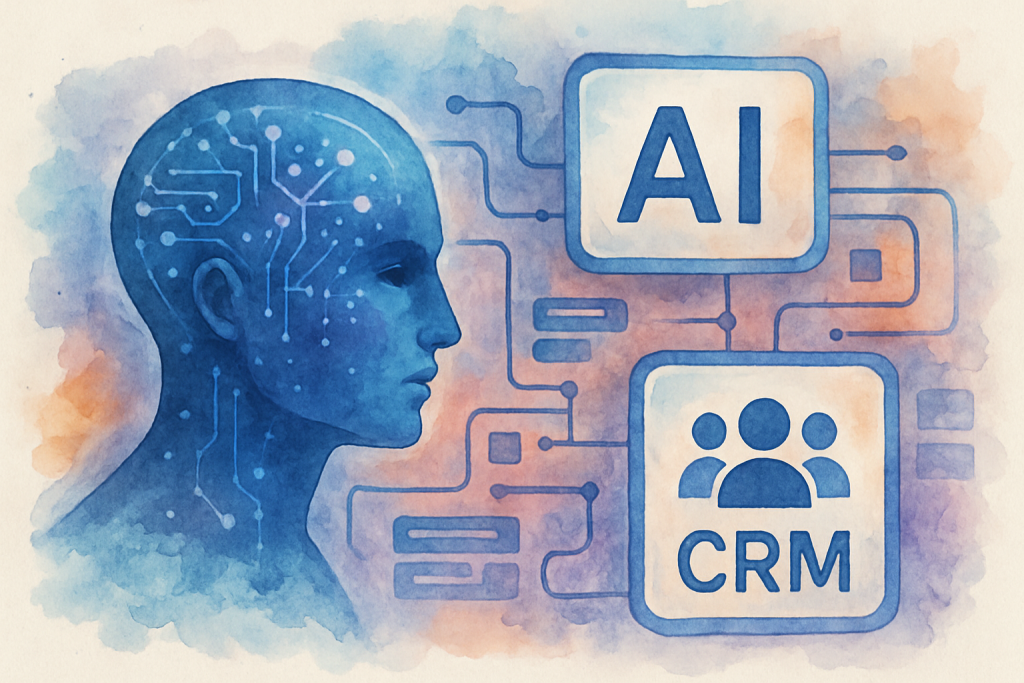
AI enabled CRM changes this equation entirely. By combining artificial intelligence with customer relationship management, businesses can automate routine tasks, predict customer behavior, and deliver personalized experiences that build lasting loyalty. In this comprehensive guide, we’ll explore seven powerful ways AI-powered CRM systems boost sales performance and strengthen customer relationships.
Whether you’re a small business owner or leading a large sales organization, you’ll discover actionable strategies to leverage AI technology for measurable business growth.
Understanding AI Enabled CRM: The Foundation of Modern Sales
What Makes AI-Powered CRM Different?
Unlike conventional CRM systems that simply store information, AI-powered platforms actively analyze patterns, predict outcomes, and recommend actions. They learn from every customer interaction, continuously improving their accuracy and effectiveness. This intelligent automation handles repetitive tasks while empowering your team to focus on high-value activities that require human creativity and emotional intelligence.
The Current State of CRM Technology
The CRM market is experiencing explosive growth, projected to reach $128.97 billion by 2028. More significantly, 91% of companies with more than 11 employees now use CRM software, and AI integration is becoming the key differentiator.
According to Salesforce research, 84% of customers say the experience a company provides is as important as its products or services. AI enabled CRM systems help deliver those exceptional experiences by providing real-time insights, personalized recommendations, and proactive customer service.
Why Businesses Are Making the Switch
Companies adopting AI-powered CRM solutions report impressive results. Sales productivity increases by up to 30%, customer satisfaction scores improve by 25%, and revenue grows by an average of 29%. These aren’t marginal improvements—they’re transformative changes that directly impact the bottom line.
The technology has matured to the point where implementation is straightforward, costs are reasonable, and ROI is measurable within months rather than years.
Seven Powerful Ways AI-Powered CRM Drives Results
1. Predictive Lead Scoring and Prioritization
AI enabled CRM systems analyze hundreds of data points to identify which leads are most likely to convert. Instead of relying on gut feelings or basic demographic filters, your sales team receives scientifically-ranked prospects based on behavioral patterns, engagement history, and similarity to past successful conversions.
This intelligent prioritization means your best salespeople spend time with your best prospects. Companies using AI lead scoring report 50% more sales-ready leads and 30% higher conversion rates.
2. Automated Data Entry and Enrichment
Sales professionals waste countless hours on manual data entry. AI-powered CRM platforms automatically capture information from emails, calls, meetings, and social media interactions. Natural language processing extracts key details and updates records without human intervention.
Beyond automation, AI enriches your data by pulling information from public sources, social profiles, and business databases. Your team always has complete, current information at their fingertips.
3. Personalized Customer Engagement at Scale
Modern customers expect personalized experiences, but delivering customization to thousands of contacts seems impossible. AI enabled CRM solves this challenge by analyzing individual customer preferences, purchase history, and behavior patterns to recommend personalized content, offers, and communication timing.
The system can automatically segment audiences, craft tailored messages, and determine the optimal channel and time for each interaction. This level of personalization drives 40% higher customer engagement rates.
4. Intelligent Sales Forecasting
Accurate forecasting is critical for resource planning, inventory management, and investor relations. AI algorithms analyze historical data, current pipeline status, market conditions, and seasonal trends to generate highly accurate revenue predictions.
These forecasts update in real-time as new information becomes available, giving leadership the insights needed for confident decision-making. Companies using AI forecasting reduce prediction errors by up to 50%.
5. Proactive Customer Service and Retention
AI enabled CRM systems identify at-risk customers before they churn. By analyzing engagement patterns, support ticket frequency, product usage, and sentiment in communications, the platform flags accounts needing attention.
Your customer success team receives automated alerts with recommended retention strategies based on what has worked with similar customers. This proactive approach reduces churn by 25% and increases customer lifetime value significantly.
6. Conversational AI and Chatbot Integration
AI-powered chatbots handle routine customer inquiries 24/7, providing instant responses and freeing your team for complex issues. These intelligent assistants learn from each interaction, improving their ability to resolve questions and identify opportunities.
When a conversation requires human intervention, the chatbot seamlessly transfers the interaction along with complete context, ensuring customers never repeat themselves. This hybrid approach delivers both efficiency and exceptional service.
Traditional CRM reporting shows what happened. AI enabled CRM explains why it happened and what to do next. Machine learning algorithms identify patterns invisible to human analysis, revealing opportunities to optimize sales processes, improve messaging, and enhance customer experiences.
Implementing AI Enabled CRM: Your Step-by-Step Guide
Step 1: Assess Your Current State and Define Goals
Begin by evaluating your existing CRM usage and identifying pain points. What tasks consume the most time? Where do leads fall through the cracks? Which customer segments need better engagement?
Set specific, measurable goals for your AI implementation. Examples include reducing sales cycle length by 20%, improving lead conversion by 15%, or increasing customer retention by 10%. Clear objectives guide platform selection and measure success.
Step 2: Choose the Right AI-Powered CRM Platform
Not all AI enabled CRM systems are created equal. Evaluate platforms based on your specific needs, industry requirements, integration capabilities, and budget. Leading options include Salesforce Einstein, HubSpot AI, Microsoft Dynamics 365 AI, and Zoho Zia.
Request demos focused on your use cases. Ask about training requirements, implementation timelines, and ongoing support. Consider starting with a pilot program before full deployment.
Step 3: Prepare Your Data
AI is only as good as the data it learns from. Clean your existing CRM data by removing duplicates, standardizing formats, and filling gaps. Establish data governance policies to maintain quality going forward.
Identify which data sources should integrate with your AI enabled CRM—marketing automation, customer service platforms, e-commerce systems, and social media channels all provide valuable inputs for AI algorithms.
Step 4: Train Your Team
Technology alone doesn’t drive results—people do. Invest in comprehensive training that goes beyond basic platform navigation. Help your team understand how AI works, what insights to trust, and how to act on recommendations.
Create champions within each department who can support colleagues and provide feedback for continuous improvement. Address concerns about AI replacing jobs by emphasizing how it augments human capabilities rather than replacing them.
Step 5: Start Small and Scale Gradually
Implement AI features incrementally rather than activating everything at once. Begin with high-impact, low-complexity capabilities like automated data entry or lead scoring. As your team gains confidence and sees results, expand to more sophisticated features.
Monitor adoption rates and gather user feedback regularly. Adjust workflows and configurations based on real-world usage patterns.
Step 6: Measure, Optimize, and Iterate
AI systems improve over time as they process more data. Regularly review algorithm performance and refine parameters. What works for one team or customer segment may need adjustment for others.
Overcoming Common AI CRM Implementation Challenges
Challenge 1: Data Privacy and Security Concerns
With AI processing sensitive customer information, security is paramount. Choose AI enabled CRM providers with robust security certifications, encryption standards, and compliance with regulations like GDPR and CCPA.
Implement clear data usage policies and ensure customers understand how their information is used. Transparency builds trust and reduces privacy concerns.
Challenge 2: Integration with Existing Systems
Legacy systems and disconnected tools create integration headaches. Select AI-powered CRM platforms with extensive API capabilities and pre-built connectors for common business applications.
Work with experienced implementation partners who understand your technology stack. Sometimes custom integration work is necessary, but modern platforms make this increasingly straightforward.
Challenge 3: User Adoption and Change Management
The most sophisticated AI enabled CRM fails if your team doesn’t use it. Combat resistance by involving users in the selection process, communicating benefits clearly, and celebrating early wins.
Make adoption easy by integrating AI features into existing workflows rather than requiring entirely new processes. Provide ongoing support and recognize team members who embrace the technology.
Challenge 4: Managing Expectations and ROI Timelines
AI isn’t magic—it requires time to learn patterns and deliver optimal results. Set realistic expectations about implementation timelines and when benefits will materialize.
Most organizations see initial productivity gains within 3-6 months, with more sophisticated benefits like accurate forecasting and churn prediction emerging after 6-12 months of data collection and algorithm training.
Conclusion: Transform Your Business with AI-Powered CRM
AI enabled CRM represents more than a technology upgrade—it’s a fundamental shift in how businesses build and maintain customer relationships. By automating routine tasks, predicting customer needs, and personalizing every interaction, AI-powered platforms free your team to focus on what humans do best: building genuine connections and solving complex problems.
Companies that embrace AI enabled CRM now will lead their industries tomorrow. Those that delay risk falling behind competitors who are already leveraging these powerful capabilities to win customers and drive growth.
The implementation journey requires planning, investment, and commitment, but the returns are substantial and measurable. Higher conversion rates, increased customer loyalty, improved productivity, and accelerated revenue growth are within reach.
Ready to transform your sales and customer relationships with AI-powered CRM? The experts at The Crunch specialize in helping businesses select, implement, and optimize AI enabled CRM solutions tailored to your unique needs. Schedule your free consultation today and discover how AI can revolutionize your customer relationships and drive unprecedented growth.
Frequently Asked Questions (FAQ)
1. What is an AI-enabled CRM?
2. How does AI improve traditional CRM systems?
3. What are the main benefits of using an AI-enabled CRM?
4. How do I get started with an AI-enabled CRM?
5. How does an AI-enabled CRM personalize customer interactions?
6. What are the common concerns about AI-enabled CRMs?
7. How much does an AI-enabled CRM cost?
8. How does AI-enabled CRM compare to traditional CRM?
9. Can AI-enabled CRMs integrate with other business tools?
10. Is it difficult to train staff to use an AI-enabled CRM?
11. What types of businesses benefit most from AI-enabled CRMs?
12. How secure is customer data in an AI-enabled CRM?