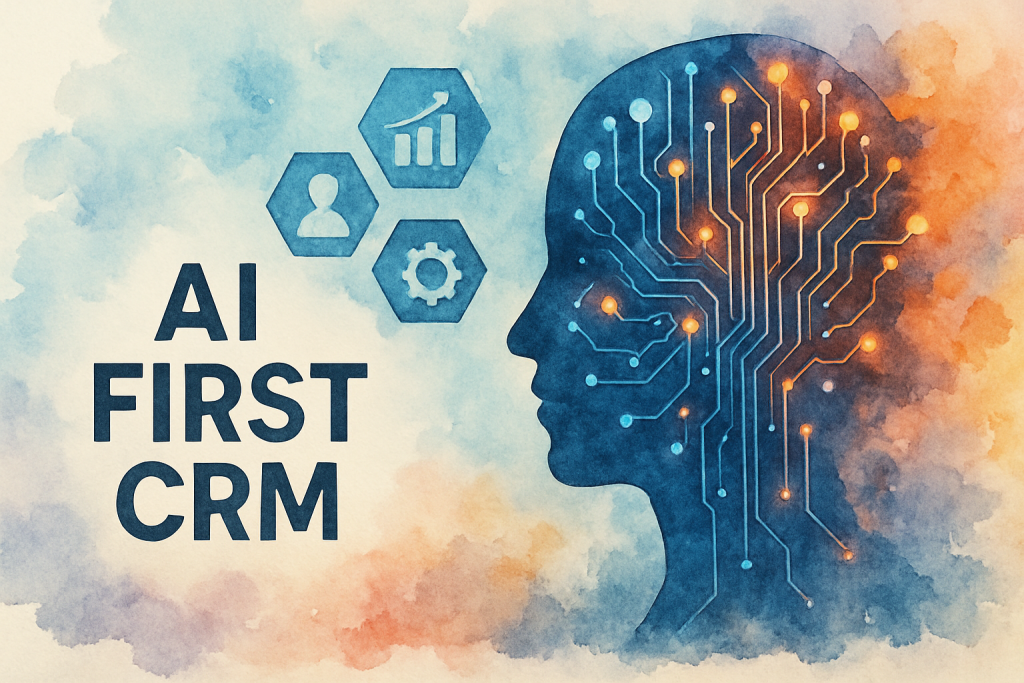
Revolutionary Tech AI-First CRM: Not Your Traditional Way,1 Step Ahead
What is AI First CRM? Your sales team is drowning in data, yet somehow still missing opportunities. Sound familiar? While traditional CRM systems have served businesses well for decades, they’re increasingly becoming digital filing cabinets rather than strategic growth engines.
The difference is profound. Instead of manually updating records and chasing leads, your team gets intelligent recommendations, automated workflows, and predictive insights that identify which prospects are ready to buy. According to Salesforce research, 84% of customers say the experience a company provides is as important as its products,and AI first CRM makes delivering exceptional experiences scalable.
In this comprehensive guide, we’ll explore five powerful ways an AI first CRM can transform your sales pipeline from a leaky funnel into a revenue-generating machine. You’ll discover practical strategies, implementation tips, and solutions to common challenges that will help you leverage artificial intelligence to drive measurable sales growth.
Understanding AI First CRM: The Foundation of Modern Sales
An AI first CRM represents a fundamental shift from traditional customer relationship management systems. Rather than being a passive database with AI features bolted on as an afterthought, these platforms are built from the ground up with artificial intelligence at their core.
What Makes a CRM “AI First”?
The distinction matters more than you might think. Traditional CRMs with AI features typically offer basic automation or simple chatbots. In contrast, AI first CRM systems use machine learning algorithms to continuously analyze customer interactions, predict behaviors, and recommend actions across every touchpoint.
These intelligent systems process vast amounts of data from emails, calls, meetings, and social media interactions to understand customer intent and sentiment. They learn from every interaction, becoming more accurate and valuable over time. Think of it as having a data scientist and sales strategist working 24/7 alongside every team member.
The Current State of CRM Technology
The CRM market is experiencing a seismic shift. Gartner predicts that by 2025, 80% of B2B sales interactions will occur through digital channels, making intelligent automation essential rather than optional. Companies using AI-powered CRM systems report 50% more leads and appointments, according to Harvard Business Review research.
This transformation is driven by several factors: the explosion of customer data, rising customer expectations for personalization, and the competitive pressure to do more with less. Sales teams can no longer afford to waste time on manual data entry or guesswork about which leads to prioritize.
Why Traditional CRMs Fall Short
Legacy CRM systems create more work than they eliminate. Sales representatives spend an average of 4 hours per week on manual data entry, time that could be spent actually selling. These systems also suffer from data decay, with contact information becoming outdated at a rate of 30% annually.
More critically, traditional CRMs are reactive rather than proactive. They tell you what happened yesterday but offer little insight into what should happen tomorrow. Without predictive capabilities, your team is essentially driving forward while looking in the rearview mirror.
Five Powerful Ways AI First CRM Supercharges Your Sales Pipeline
1. Intelligent Lead Scoring and Prioritization
Not all leads are created equal, but identifying the hot prospects has traditionally required intuition and experience. An AI first CRM analyzes hundreds of data points to score leads with remarkable accuracy.
The system examines behavioral signals like email engagement, website visits, content downloads, and social media interactions. It compares these patterns against your historical data to identify which characteristics correlate with closed deals. The result? Your sales team focuses energy on prospects most likely to convert, dramatically improving efficiency.
For example, a B2B software company using AI lead scoring increased their conversion rate by 35% simply by redirecting effort toward higher-quality opportunities. The system identified that prospects who viewed pricing pages three times and attended a webinar had an 80% likelihood of purchasing within 30 days.
These systems identify at-risk deals before they slip away, flagging opportunities that have stalled or show declining engagement. They also predict which deals will close and when, allowing for more accurate revenue projections and resource allocation.
Sales leaders gain visibility into pipeline health at a granular level. Instead of relying on gut feelings or optimistic sales rep estimates, you get data-driven forecasts that account for seasonality, market conditions, and individual rep performance patterns.
3. Automated Personalization at Scale
Personalization drives results, but manually customizing outreach for hundreds of prospects is impossible. AI first CRM solves this paradox by automating personalization based on customer data, behavior, and preferences.
The system analyzes each contact’s industry, role, company size, previous interactions, and content engagement to craft tailored messaging. It determines optimal send times, preferred communication channels, and relevant content recommendations for each individual.
This goes beyond inserting a first name into an email template. AI-powered personalization adapts the entire customer journey, from initial outreach through post-sale nurturing. A marketing automation study found that personalized emails deliver 6x higher transaction rates, and AI makes this level of customization scalable across your entire database.
4. Intelligent Task Automation and Workflow Optimization
Sales representatives spend only 36% of their time actually selling, according to Salesforce research. The rest is consumed by administrative tasks, data entry, and coordination. AI first CRM reclaims this lost productivity through intelligent automation.
The system automatically logs emails, calls, and meetings, extracting key information and updating relevant records. It schedules follow-up tasks based on customer behavior, sends reminders when deals require attention, and routes leads to appropriate team members based on territory, expertise, or workload.
More sophisticated workflows adapt based on outcomes. If a particular email sequence generates poor response rates, the AI adjusts messaging or timing. If certain objections frequently arise at specific deal stages, the system proactively provides relevant content or suggests involving a specialist.
5. Real-Time Insights and Recommendations
Perhaps the most transformative capability of AI first CRM is its ability to provide actionable insights in the moment. Rather than generating static reports that analyze past performance, these systems offer real-time guidance that improves current conversations and decisions.
During sales calls, AI can analyze conversation sentiment, identify buying signals, and suggest relevant talking points or resources. After meetings, it recommends next steps based on what has worked in similar situations. When deals stall, it suggests specific actions to re-engage prospects.
This continuous intelligence transforms every team member into a top performer by democratizing the insights and strategies that previously resided only with your best salespeople. New hires ramp faster, and experienced reps close deals more efficiently.
Implementing AI First CRM: A Practical Roadmap
Step 1: Assess Your Current State and Define Objectives
Begin by auditing your existing CRM usage and identifying pain points. Where do deals typically stall? What manual processes consume the most time? Which metrics need improvement? Clear objectives guide platform selection and implementation priorities.
Involve stakeholders from sales, marketing, and customer success in this assessment. Their frontline experience reveals practical challenges that leadership might overlook. Document current workflows, integration requirements, and must-have features versus nice-to-haves.
Step 2: Choose the Right AI First CRM Platform
Not all AI first CRM solutions are created equal. Evaluate platforms based on your specific needs, industry requirements, and technical capabilities. Key considerations include:
- Native AI capabilities versus third-party integrations
- Data security and compliance features
- Scalability to support growth
- Integration with existing tools and systems
- User interface and adoption ease
- Training and support resources
Request demos focused on your use cases rather than generic presentations. Ask vendors to demonstrate how their AI handles scenarios specific to your business, and speak with current customers in similar industries.
Step 3: Prepare Your Data Foundation
AI is only as good as the data it learns from. Before implementation, clean your existing customer data by removing duplicates, standardizing formats, and filling critical gaps. Establish data governance policies that maintain quality going forward.
This preparation phase is crucial. Poor data quality will undermine AI accuracy, leading to flawed predictions and recommendations that erode user trust. Invest time upfront to ensure your AI-first CRM has a solid foundation.
Step 4: Implement in Phases with Clear Success Metrics
Resist the temptation to activate every feature simultaneously. Start with high-impact, low-complexity capabilities like automated data entry or basic lead scoring. As users gain confidence and see results, gradually introduce more sophisticated AI features.
Define specific, measurable success criteria for each phase. This might include metrics like time saved on administrative tasks, lead conversion rate improvements, or forecast accuracy gains. Regular measurement demonstrates ROI and builds momentum for broader adoption.
Step 5: Train Teams and Foster Adoption
Technology alone doesn’t drive results; people do. Comprehensive training ensures your team understands not just how to use the AI first CRM, but why it benefits them personally. Focus on time savings, easier quota attainment, and reduced frustration rather than just features.
Identify champions within each team who embrace the new system and can support their peers. Create feedback loops that allow users to report issues and suggest improvements. Celebrate early wins publicly to build enthusiasm and demonstrate value.
Overcoming Common AI-First CRM Challenges
Challenge 1: User Resistance and Change Management
Sales teams often resist new systems, especially if they’ve experienced failed CRM implementations before. Combat this resistance by involving users in the selection process and clearly communicating benefits that matter to them personally.
Address concerns about AI replacing jobs head-on. Position the AI-first CRM as a tool that handles tedious tasks so salespeople can focus on relationship-building and strategic selling—the aspects of their job they actually enjoy. Share success stories from early adopters who’ve seen tangible improvements in their performance and work-life balance.
Challenge 2: Data Privacy and Security Concerns
AI systems require access to substantial customer data, raising legitimate privacy and security questions. Choose platforms with robust security certifications and compliance with regulations like GDPR and CCPA.
Implement clear data governance policies that specify what information is collected, how it’s used, and who can access it. Be transparent with customers about your use of AI, and provide opt-out mechanisms where appropriate. Security isn’t just a technical issue—it’s a trust issue that affects customer relationships.
Challenge 3: Integration Complexity
Most organizations use multiple systems that need to communicate with the CRM. Integration challenges can derail implementations and limit AI effectiveness if the system can’t access necessary data.
Prioritize platforms with pre-built integrations for your essential tools, and allocate sufficient technical resources for custom integrations. Consider working with implementation partners who have experience connecting AI-first CRM systems with your specific technology stack.
Challenge 4: Managing Expectations and ROI Timeline
AI systems improve over time as they learn from more data, but stakeholders often expect immediate results. Set realistic expectations about the learning curve and timeline for seeing significant ROI.
Track both leading indicators (like user adoption rates and data quality improvements) and lagging indicators (like conversion rates and revenue growth). Early wins in efficiency and user satisfaction build support while the AI continues learning and improving its predictions.
Transform Your Sales Pipeline with AI-First CRM
The sales landscape has fundamentally changed, and the tools we use must evolve accordingly. An AI-first CRM isn’t just an incremental improvement over traditional systems—it’s a complete reimagining of how technology can empower sales teams to work smarter, close faster, and deliver exceptional customer experiences.
Implementation requires thoughtful planning, clean data, and change management, but the results justify the investment. Organizations that embrace AI-first CRM gain competitive advantages that compound over time as their systems learn and improve. The question isn’t whether to adopt this technology, but how quickly you can implement it before your competitors do.
The five strategies outlined in this guide provide a roadmap for supercharging your sales pipeline through artificial intelligence. Start with clear objectives, choose the right platform, prepare your data foundation, implement in phases, and invest in user adoption. Address challenges proactively, and measure results consistently to demonstrate value and build momentum.
Ready to transform your sales pipeline with AI-first CRM? The team at The Crunch specializes in helping businesses implement and optimize AI-powered sales technologies. We’ll assess your current state, recommend the right solutions, and guide you through implementation to ensure you achieve measurable results. Schedule your free consultation today and discover how AI-first CRM can supercharge your sales performance.
Frequently Asked Questions (FAQ)
1. What is an AI-first CRM?
2. How does an AI-first CRM work?
3. What are the main benefits of using an AI-first CRM?
4. How is an AI-first CRM different from a traditional CRM?
5. What features should I look for in an AI-first CRM?
6. How much does an AI-first CRM cost?
7. Is an AI-first CRM suitable for small businesses?
8. How do I get started with an AI-first CRM?
9. What are common concerns about adopting an AI-first CRM?
10. Can an AI-first CRM integrate with my existing tools?
11. How does AI in CRM improve sales performance?
12. Is my customer data safe with an AI-first CRM?