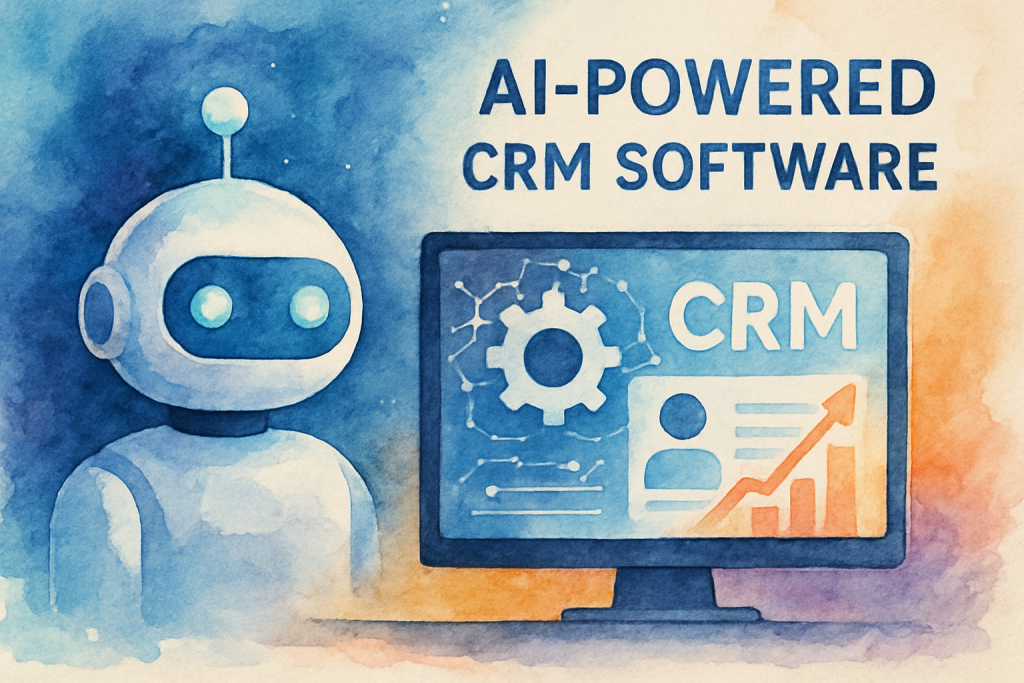
Sales teams today face an unprecedented challenge: customers expect personalized experiences, instant responses, and solutions tailored to their specific needs. Traditional customer relationship management systems simply can’t keep pace with these demands. Enter AI-powered CRM software—a game-changing technology that’s revolutionizing how businesses manage customer relationships and drive revenue growth.
According to Salesforce research, 84% of customers say being treated like a person, not a number, is crucial to winning their business. Yet most sales teams struggle to deliver this level of personalization at scale. AI-powered CRM software bridges this gap by combining artificial intelligence with customer data to create smarter, more efficient sales processes.
In this comprehensive guide, we’ll explore seven powerful ways AI-powered CRM software enhances sales performance, from predictive lead scoring to automated customer engagement. Whether you’re a small business owner or managing an enterprise sales team, you’ll discover actionable strategies to leverage AI technology for measurable results.
Understanding AI-Powered CRM Software and Its Impact on Modern Sales
The global CRM market is projected to reach $128.97 billion by 2028, with AI integration being a primary growth driver. This surge reflects a fundamental shift in how businesses approach customer relationships. Modern AI-powered CRM software doesn’t just track interactions—it predicts customer behavior, automates routine tasks, and provides sales teams with real-time recommendations.
What Makes AI-Powered CRM Different
Traditional CRM systems function as sophisticated databases, requiring manual data entry and analysis. AI-powered CRM software, however, actively learns from every customer interaction. These systems identify patterns humans might miss, automatically update customer records, and even suggest the best next action for each prospect.
Current Trends Shaping AI CRM Adoption
Several key trends are accelerating AI CRM adoption across industries. Conversational AI and chatbots now handle initial customer inquiries, qualifying leads before human intervention. Sentiment analysis tools evaluate customer emotions during interactions, helping sales teams adjust their approach in real-time.
Additionally, integration with other business intelligence tools creates comprehensive customer views. Sales teams can now access purchasing history, social media activity, support tickets, and engagement metrics—all enhanced by AI-driven insights that highlight opportunities and risks.
Seven Powerful Ways AI-Powered CRM Software Elevates Sales Performance
1. Intelligent Lead Scoring and Prioritization
AI-powered CRM software analyzes hundreds of data points to score leads based on their likelihood to convert. The system examines demographic information, behavioral patterns, engagement history, and even external signals like company growth indicators or industry trends.
This intelligent prioritization ensures sales representatives focus their energy on high-value opportunities. Research from Harvard Business Review shows that companies using predictive lead scoring see a 10-15% increase in sales productivity. The AI continuously refines its scoring model based on actual outcomes, becoming more accurate over time.
2. Predictive Sales Forecasting
Accurate forecasting has always challenged sales leaders. AI-powered CRM software transforms this process by analyzing historical data, current pipeline status, market conditions, and seasonal trends to generate precise revenue predictions.
These systems identify which deals are likely to close, which might stall, and where additional resources could make a difference. Sales managers gain visibility into potential shortfalls weeks or months in advance, allowing proactive strategy adjustments rather than reactive scrambling.
3. Automated Customer Engagement
Timing matters in sales. AI-powered CRM software determines the optimal moment to reach out to prospects based on their behavior patterns and engagement history. The system can automatically send personalized emails, schedule follow-ups, and trigger specific actions when prospects show buying signals.
This automation doesn’t replace human interaction—it enhances it. Sales professionals receive alerts when prospects visit pricing pages, download resources, or exhibit other high-intent behaviors, enabling timely and relevant conversations.
4. Personalized Customer Experiences at Scale
Modern buyers expect personalized interactions, but delivering customization to hundreds or thousands of customers seems impossible. AI-powered CRM software solves this challenge by analyzing individual customer preferences, purchase history, and communication patterns to tailor every interaction.
The technology can recommend specific products, customize email content, and even adjust messaging tone based on customer personality profiles. According to Epsilon research, 80% of consumers are more likely to purchase when brands offer personalized experiences—AI makes this scalability achievable.
5. Enhanced Sales Coaching and Performance Optimization
AI-powered CRM software doesn’t just help sales representatives—it makes them better at their jobs. These systems analyze successful sales patterns and provide coaching recommendations based on what works. They identify skill gaps, suggest training opportunities, and highlight best practices from top performers.
Call analysis features transcribe and evaluate sales conversations, providing feedback on talk-to-listen ratios, objection handling, and closing techniques. This data-driven coaching approach accelerates skill development and standardizes excellence across the entire sales team.
6. Intelligent Customer Retention and Upselling
Acquiring new customers costs five times more than retaining existing ones. AI-powered CRM software identifies at-risk customers by detecting changes in engagement patterns, usage frequency, or satisfaction indicators. Early warning systems alert account managers to intervene before customers churn.
Simultaneously, the AI identifies upselling and cross-selling opportunities by analyzing customer needs, product usage, and purchasing patterns. These insights enable sales teams to present relevant offers at precisely the right moment, increasing customer lifetime value.
7. Streamlined Administrative Tasks
Sales professionals spend only 34% of their time actually selling, according to Salesforce research. The remainder goes to administrative tasks like data entry, meeting scheduling, and report generation. AI-powered CRM software automates these time-consuming activities.
The system automatically logs emails, updates contact records, schedules appointments, and generates reports. Voice-to-text capabilities allow sales reps to update CRM records while driving between meetings. This automation reclaims valuable selling time and ensures data accuracy without manual effort.
Implementing AI-Powered CRM Software: A Strategic Approach
Step 1: Assess Your Current Sales Process
Before implementing AI-powered CRM software, thoroughly evaluate your existing sales workflow. Identify bottlenecks, inefficiencies, and areas where sales representatives struggle most. Document current metrics like conversion rates, sales cycle length, and customer acquisition costs to establish baseline measurements.
Engage your sales team in this assessment. They understand daily challenges and can provide valuable insights into which AI capabilities would deliver the most immediate impact. This involvement also builds buy-in for the upcoming transition.
Step 2: Define Clear Objectives and Success Metrics
Establish specific, measurable goals for your AI CRM implementation. Are you primarily focused on increasing conversion rates, shortening sales cycles, improving forecast accuracy, or enhancing customer retention? Clear objectives guide platform selection and implementation priorities.
Define key performance indicators that will measure success. These might include lead response time, opportunity win rate, average deal size, sales productivity metrics, or customer satisfaction scores. Quantifiable goals enable you to demonstrate ROI and refine your approach over time.
Step 3: Choose the Right AI-Powered CRM Platform
Not all AI-powered CRM software offers the same capabilities. Evaluate platforms based on your specific needs, existing technology stack, and growth plans. Consider factors like ease of use, integration capabilities, customization options, and vendor support quality.
Request demonstrations focused on your use cases. Ask vendors to show how their AI handles scenarios relevant to your business. Review customer testimonials and case studies from companies similar to yours. The right platform should align with your sales process rather than forcing you to adapt to its limitations.
Step 4: Prepare Your Data
AI systems are only as good as the data they analyze. Before implementation, clean your existing customer database. Remove duplicates, standardize formatting, fill information gaps, and ensure data accuracy. This preparation significantly impacts AI performance from day one.
Establish data governance policies that maintain quality over time. Define who can enter data, what information is required, and how often records should be updated. Consistent, high-quality data enables AI algorithms to generate reliable insights and recommendations.
Step 5: Implement in Phases
Rather than deploying all AI features simultaneously, implement in strategic phases. Start with high-impact, low-complexity capabilities like automated data entry or basic lead scoring. This approach allows your team to adapt gradually while demonstrating quick wins that build momentum.
As users become comfortable with initial features, progressively introduce more advanced AI capabilities. This phased approach reduces overwhelm, allows for course corrections, and ensures each feature is properly adopted before adding complexity.
Step 6: Train Your Team Thoroughly
Technology alone doesn’t drive results—people do. Invest in comprehensive training that helps sales professionals understand not just how to use AI-powered CRM software, but why it benefits them personally. Focus on how AI eliminates frustrating tasks and helps them close more deals.
Provide ongoing education as new features roll out. Create internal champions who master the system and can support their colleagues. Consider role-specific training that addresses the unique needs of sales representatives, managers, and executives.
Step 7: Monitor, Measure, and Optimize
Gather feedback from users about their experience. Are certain features underutilized? Do sales representatives trust the AI recommendations? This qualitative input complements quantitative metrics and guides optimization efforts.
Overcoming Common Challenges with AI-Powered CRM Software
Challenge 1: User Adoption Resistance
Sales professionals often resist new technology, especially when they’re comfortable with existing processes. This resistance can undermine even the most sophisticated AI-powered CRM software implementation.
Solution: Address concerns directly by demonstrating how AI eliminates tasks sales reps dislike while enhancing activities they enjoy. Share success stories from early adopters within your organization. Make adoption part of performance evaluations, but balance accountability with adequate support and training. Celebrate wins publicly to build positive momentum.
Challenge 2: Data Privacy and Security Concerns
AI systems require access to sensitive customer information, raising legitimate privacy and security questions. Organizations must balance AI capabilities with data protection obligations and customer trust.
Solution: Choose AI-powered CRM software vendors with robust security certifications and compliance with regulations like GDPR and CCPA. Implement strict access controls that limit data visibility based on roles. Be transparent with customers about how their information is used. Regular security audits and employee training on data handling best practices minimize risks.
Challenge 3: Integration with Existing Systems
Most organizations use multiple business applications. AI-powered CRM software must integrate seamlessly with marketing automation platforms, email systems, accounting software, and other tools to deliver maximum value.
Solution: Prioritize CRM platforms with extensive integration capabilities and open APIs. Work with implementation partners who have experience connecting disparate systems. Start with critical integrations that deliver immediate value, then expand connectivity over time. Middleware solutions can bridge gaps when direct integrations aren’t available.
Challenge 4: Managing AI Accuracy and Bias
AI algorithms can perpetuate biases present in training data or make inaccurate predictions that lead to poor business decisions. These issues can damage customer relationships and sales performance.
Solution: Regularly audit AI recommendations for accuracy and bias. Maintain human oversight of critical decisions rather than fully automating them. Diversify training data to ensure the AI learns from varied scenarios. When the system makes errors, use those instances as learning opportunities to refine algorithms. Transparency about AI limitations helps users apply appropriate judgment.
Challenge 5: Demonstrating ROI
AI-powered CRM software represents a significant investment. Stakeholders rightfully expect clear returns, but benefits sometimes take time to materialize and can be difficult to quantify.
Solution: Establish baseline metrics before implementation and track them consistently. Calculate both hard ROI (increased revenue, reduced costs) and soft benefits (improved customer satisfaction, enhanced employee experience). Document time savings from automation and convert them to dollar values. Share regular progress reports that highlight wins while acknowledging areas for improvement. Patient, transparent communication builds confidence in the investment.
Maximizing Your AI-Powered CRM Software Investment
The transformative potential of AI-powered CRM software extends far beyond simple automation. Organizations that fully embrace these intelligent systems experience fundamental improvements in how they understand customers, engage prospects, and drive revenue growth.
The seven strategies outlined in this guide—intelligent lead scoring, predictive forecasting, automated engagement, personalized experiences, enhanced coaching, customer retention, and administrative automation—work synergistically to create a competitive advantage. Sales teams equipped with AI insights make smarter decisions faster, build stronger customer relationships, and consistently exceed targets.
Success requires more than just purchasing technology. It demands strategic implementation, ongoing optimization, and organizational commitment to data-driven selling. The companies that thrive with AI-powered CRM software view it not as a one-time project but as a continuous journey of improvement and innovation.
As artificial intelligence capabilities continue advancing, early adopters will establish increasingly difficult leads over competitors still relying on traditional approaches. The question isn’t whether to implement AI-powered CRM software, but how quickly you can harness its potential to transform your sales performance.
Ready to revolutionize your sales process with AI-powered CRM software? The Crunch specializes in helping businesses select, implement, and optimize intelligent CRM solutions tailored to their unique needs. Our team of experts will guide you through every step of the journey, from initial assessment to full-scale deployment and beyond.
Contact The Crunch today to schedule your free consultation and discover how AI-powered CRM software can boost your sales performance. Visit https://thecrunch.io/get-a-proposal/ to get started.
Frequently Asked Questions (FAQ)
1. What is AI-powered CRM software?
2. How does AI-powered CRM software work?
3. What are the main benefits of using AI-powered CRM software?
4. How is AI-powered CRM different from traditional CRM?
5. What features should I look for in an AI-powered CRM?
6. How much does AI-powered CRM software cost?
7. Is AI-powered CRM software secure?
8. Can AI-powered CRM integrate with my existing tools?
9. What are common concerns about adopting AI-powered CRM?
10. How do I get started with AI-powered CRM software?
11. Who can benefit from using AI-powered CRM software?
12. Does AI-powered CRM require technical expertise to use?