Imagine cutting your design time in half while producing work that rivals seasoned professionals. That’s not a fantasy anymore—it’s the reality of modern AI software for graphic design. The creative industry is experiencing a seismic shift as artificial intelligence transforms how designers conceptualize, create, and deliver visual content.
Traditional design workflows often involve hours of repetitive tasks, endless revisions, and creative roadblocks. Designers spend countless hours on mundane activities like background removal, color matching, and layout adjustments when they could be focusing on strategic creative decisions. The emergence of AI-powered design tools has fundamentally changed this equation.
In this comprehensive guide, we’ll explore seven cutting-edge AI design tools that are reshaping the creative landscape. You’ll discover how these platforms leverage machine learning and neural networks to automate tedious tasks, generate stunning visuals, and unlock creative possibilities you never thought possible. Whether you’re a seasoned designer or just starting your creative journey, these tools will revolutionize your workflow.
Understanding AI Software for Graphic Design
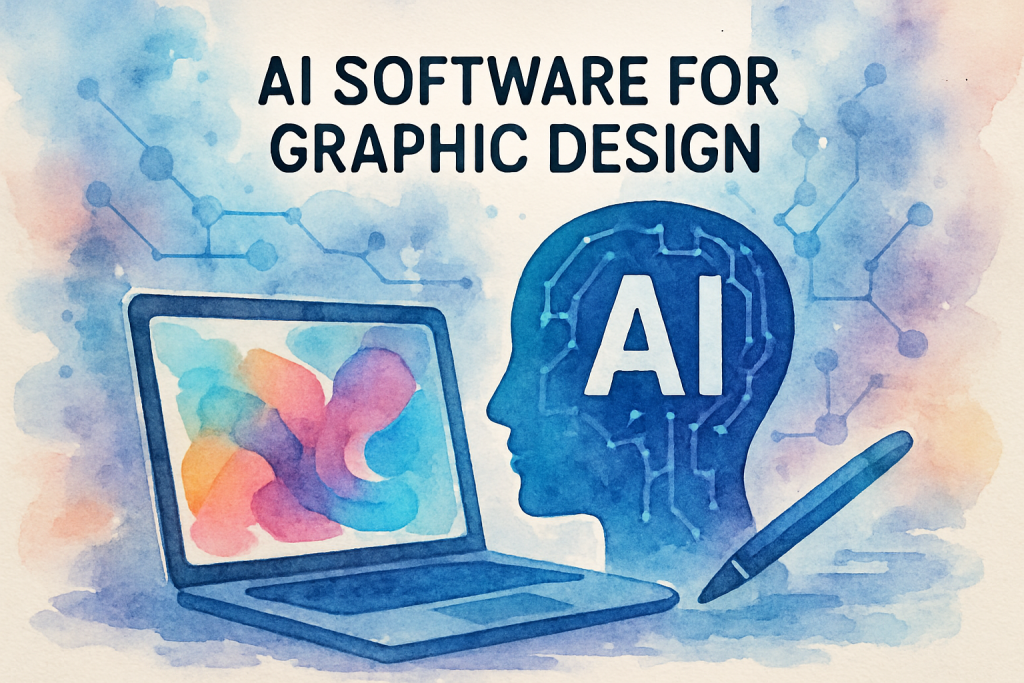
AI software for graphic design represents a new generation of creative tools that use artificial intelligence, machine learning, and neural networks to assist designers in creating visual content. Unlike traditional design software that requires manual input for every element, AI-powered platforms can generate, modify, and optimize designs based on text prompts, existing images, or learned patterns.
The importance of these tools cannot be overstated. According to recent industry research, designers using AI-powered tools report a 40% increase in productivity and a 35% reduction in project completion time. The global AI in design market is projected to reach $7.8 billion by 2028, growing at a compound annual growth rate of 28.6%.
These intelligent design assistants excel at pattern recognition, style transfer, automated layout generation, and predictive design suggestions. They learn from millions of design examples to understand composition principles, color theory, typography rules, and visual hierarchy. This knowledge enables them to provide intelligent recommendations and automate complex design tasks.
Current trends show AI integration across all design disciplines—from logo creation and brand identity to social media graphics and web design. Machine learning algorithms now handle tasks like automatic image enhancement, intelligent cropping, font pairing suggestions, and even complete design generation from simple text descriptions.
Top 7 AI Design Tools Transforming Creative Workflows
1. Adobe Firefly
Adobe Firefly stands as a powerhouse in generative AI, seamlessly integrated into the Creative Cloud ecosystem. This tool excels at text-to-image generation, allowing designers to create custom graphics, textures, and illustrations from simple descriptions. Its generative fill feature intelligently adds or removes objects from images while maintaining photorealistic quality.
The platform’s strength lies in its commercial safety—all training data comes from Adobe Stock, openly licensed content, and public domain materials. This ensures designers can use generated assets without copyright concerns. Firefly also offers text effects that transform typography into stunning visual elements with materials like fire, water, or foliage.
2. Canva Magic Studio
Canva’s AI-powered Magic Studio democratizes professional design for users of all skill levels. The Magic Design feature generates complete design layouts from uploaded images or text prompts, automatically selecting appropriate templates, fonts, and color schemes. Magic Edit allows users to modify specific elements within images using natural language commands.
The platform’s Magic Write tool assists with copywriting, generating headlines, social media captions, and marketing content that complements visual designs. With over 100 million monthly active users, Canva has proven that AI software for graphic design can be both powerful and accessible.
3. Midjourney
Midjourney has captured the imagination of designers worldwide with its exceptional ability to create artistic, stylized imagery. Operating through Discord, this AI image generator produces stunning visuals from text descriptions, excelling particularly in conceptual art, fantasy illustrations, and atmospheric scenes.
The tool’s latest version offers improved photorealism, better text rendering, and enhanced control over composition. Designers use Midjourney for mood boards, concept exploration, and creating unique visual assets that would take hours to produce manually. Its community-driven approach fosters creativity and knowledge sharing among users.
4. Dall-E 3
Developed by OpenAI and integrated into ChatGPT Plus, Dall-E 3 represents a significant leap in AI image generation accuracy and prompt understanding. The tool excels at interpreting complex descriptions and generating images that precisely match user intent, including accurate text rendering within images.
Dall-E 3’s integration with ChatGPT allows for conversational refinement of generated images. Designers can iterate on concepts through natural dialogue, making adjustments without crafting perfect prompts. The platform’s safety features and content policy ensure responsible use while maintaining creative freedom.
5. Looka (formerly Logojoy)
Looka specializes in AI-powered brand identity creation, making professional logo design accessible to businesses of all sizes. The platform’s intelligent algorithm analyzes design preferences, industry standards, and visual trends to generate custom logo concepts in minutes.
Beyond logo creation, Looka provides complete brand kits including color palettes, typography selections, and branded templates for business cards, social media, and marketing materials. The AI ensures visual consistency across all brand touchpoints, maintaining professional standards throughout.
6. Khroma
Khroma revolutionizes color palette selection using neural network technology trained on thousands of popular color combinations. Designers train the AI by selecting colors they like, and the algorithm learns their preferences to generate personalized palette suggestions.
The tool provides unlimited color combinations with real-world examples showing how palettes work in typography, gradients, images, and custom designs. This AI software for graphic design eliminates the guesswork from color selection, ensuring harmonious and professional results every time.
7. Remove.bg
Remove.bg uses advanced AI to automatically remove backgrounds from images with remarkable precision. What once required meticulous manual selection and masking now happens in seconds. The tool intelligently identifies subjects, handles complex edges like hair and fur, and produces clean cutouts ready for compositing.
The platform offers batch processing, API integration, and plugins for popular design software. For designers handling product photography, portrait editing, or creating marketing materials, Remove.bg saves countless hours while delivering professional results.
Implementing AI Design Tools in Your Creative Workflow
Step 1: Assess Your Design Needs
Begin by identifying which aspects of your design process consume the most time or present the biggest challenges. Are you spending hours on background removal? Struggling with color selection? Need faster concept generation? Different AI tools excel at different tasks, so understanding your specific needs ensures you choose the right solutions.
Create a workflow audit documenting your typical design projects from start to finish. Note time-consuming tasks, repetitive activities, and creative bottlenecks. This analysis reveals where AI software for graphic design can provide the most significant impact.
Step 2: Start with Free Trials and Experimentation
Most AI design platforms offer free trials or limited free tiers. Take advantage of these to test multiple tools before committing to subscriptions. Experiment with different prompting techniques, explore various features, and evaluate how each tool integrates with your existing workflow.
Create sample projects that mirror your actual work. This hands-on experience reveals each platform’s strengths, limitations, and learning curve. Join online communities and forums where designers share tips, prompts, and best practices for specific tools.
Step 3: Integrate AI Tools with Traditional Software
The most effective approach combines AI capabilities with traditional design software. Use AI tools for rapid concept generation, then refine results in Adobe Photoshop or Illustrator. Generate color palettes with AI, then apply them in your standard workflow. Remove backgrounds automatically, then composite elements in your preferred editing software.
Many AI platforms offer plugins or integrations with popular design applications. Adobe Firefly integrates directly into Photoshop, while tools like Remove.bg offer plugins for various programs. These integrations create seamless workflows that leverage both AI efficiency and traditional design control.
Step 4: Develop Effective Prompting Skills
Success with AI design tools depends heavily on prompt engineering—the art of crafting descriptions that produce desired results. Effective prompts include specific details about style, composition, lighting, mood, and technical specifications. Study successful prompts shared by other designers and iterate on your descriptions.
Build a prompt library documenting successful descriptions for different project types. Include style references, technical parameters, and modifier keywords that consistently produce quality results. This resource becomes invaluable as you scale your use of AI software for graphic design.
Step 5: Establish Quality Control Processes
AI-generated content requires human oversight to ensure quality, brand consistency, and appropriateness. Establish review processes that check for copyright issues, brand alignment, technical quality, and creative effectiveness. AI tools are assistants, not replacements for human judgment and expertise.
Create guidelines for when to use AI-generated content as-is versus when to use it as a starting point for further refinement. Document best practices specific to your brand, industry, and quality standards.
Overcoming Common Challenges with AI Design Software
Challenge 1: Maintaining Creative Originality
One concern with AI software for graphic design is the potential for homogenized, generic output. Since AI tools learn from existing designs, there’s risk of producing work that lacks unique creative vision. The solution lies in using AI as a starting point rather than a final product.
Combine multiple AI-generated elements, add custom modifications, and inject your unique creative perspective. Use AI for ideation and rapid prototyping, then apply human creativity to refine and personalize results. The most successful designers use AI to enhance rather than replace their creative process.
Challenge 2: Copyright and Licensing Concerns
The legal landscape surrounding AI-generated content continues evolving, creating uncertainty about usage rights and copyright. Different platforms have different policies regarding commercial use of generated content. Adobe Firefly offers commercial safety through its training data sources, while other platforms may have restrictions.
Always review each platform’s terms of service and licensing agreements. For commercial projects, prioritize tools with clear commercial usage rights. Consider consulting legal professionals for high-stakes projects. Document your creative process, showing how AI-generated elements were modified and integrated into original work.
Challenge 3: Learning Curve and Skill Development
While AI tools promise to simplify design, mastering them requires time and practice. Each platform has unique interfaces, capabilities, and optimal use cases. The rapid pace of AI development means tools constantly evolve with new features and capabilities.
Invest in structured learning through tutorials, courses, and community resources. Many platforms offer official training materials and certification programs. Dedicate regular time to experimentation and skill development. Join designer communities focused on AI tools to learn from peers and stay updated on best practices.
Challenge 4: Technical Limitations and Inconsistencies
AI design tools sometimes produce unexpected results, struggle with specific requests, or generate inconsistent output. Text rendering, precise positioning, and maintaining consistency across multiple generations remain challenging for many AI systems.
Work around limitations by breaking complex requests into simpler components. Generate multiple variations and select the best results. Use traditional design software for precise adjustments and technical requirements. Understand each tool’s strengths and assign tasks accordingly—use AI for what it does best and handle edge cases manually.
Conclusion
The integration of AI software for graphic design represents a fundamental shift in how creative professionals work. These seven tools—Adobe Firefly, Canva Magic Studio, Midjourney, Dall-E 3, Looka, Khroma, and Remove.bg—demonstrate the transformative potential of artificial intelligence in creative workflows.
By automating repetitive tasks, accelerating concept generation, and providing intelligent design assistance, AI tools free designers to focus on strategic thinking, creative problem-solving, and high-value activities. The most successful designers embrace these technologies not as replacements for human creativity but as powerful amplifiers of their skills and vision.
The key to success lies in thoughtful implementation—understanding your needs, choosing appropriate tools, developing necessary skills, and maintaining quality standards. As AI technology continues advancing, early adopters who master these tools will gain significant competitive advantages in speed, efficiency, and creative capability.
Start experimenting with these AI design tools today. Begin with free trials, explore different platforms, and discover how artificial intelligence can transform your creative process. The future of design is here, and it’s more accessible, efficient, and exciting than ever before.
Ready to revolutionize your design workflow with AI-powered solutions? Contact The Crunch to schedule a free consultation and discover how we can help you implement cutting-edge AI software for graphic design in your business. Visit https://thecrunch.io/get-a-proposal/ to get started today.
Frequently Asked Questions (FAQ)
1. What is AI software for graphic design?
2. How does AI improve the graphic design process?
3. What are some popular AI tools for graphic design?
4. How do I get started with AI graphic design software?
5. Is AI graphic design software suitable for beginners?
6. How does AI graphic design software compare to traditional design tools?
7. What are the benefits of using AI in graphic design?
8. Are there any drawbacks or limitations to AI graphic design software?
9. How much does AI graphic design software cost?
10. Can AI graphic design software replace human designers?
11. Is my data safe when using AI graphic design tools?
12. What types of projects can I create with AI graphic design software?