Introduction: The Revolution of AI Video Editing Editing Software
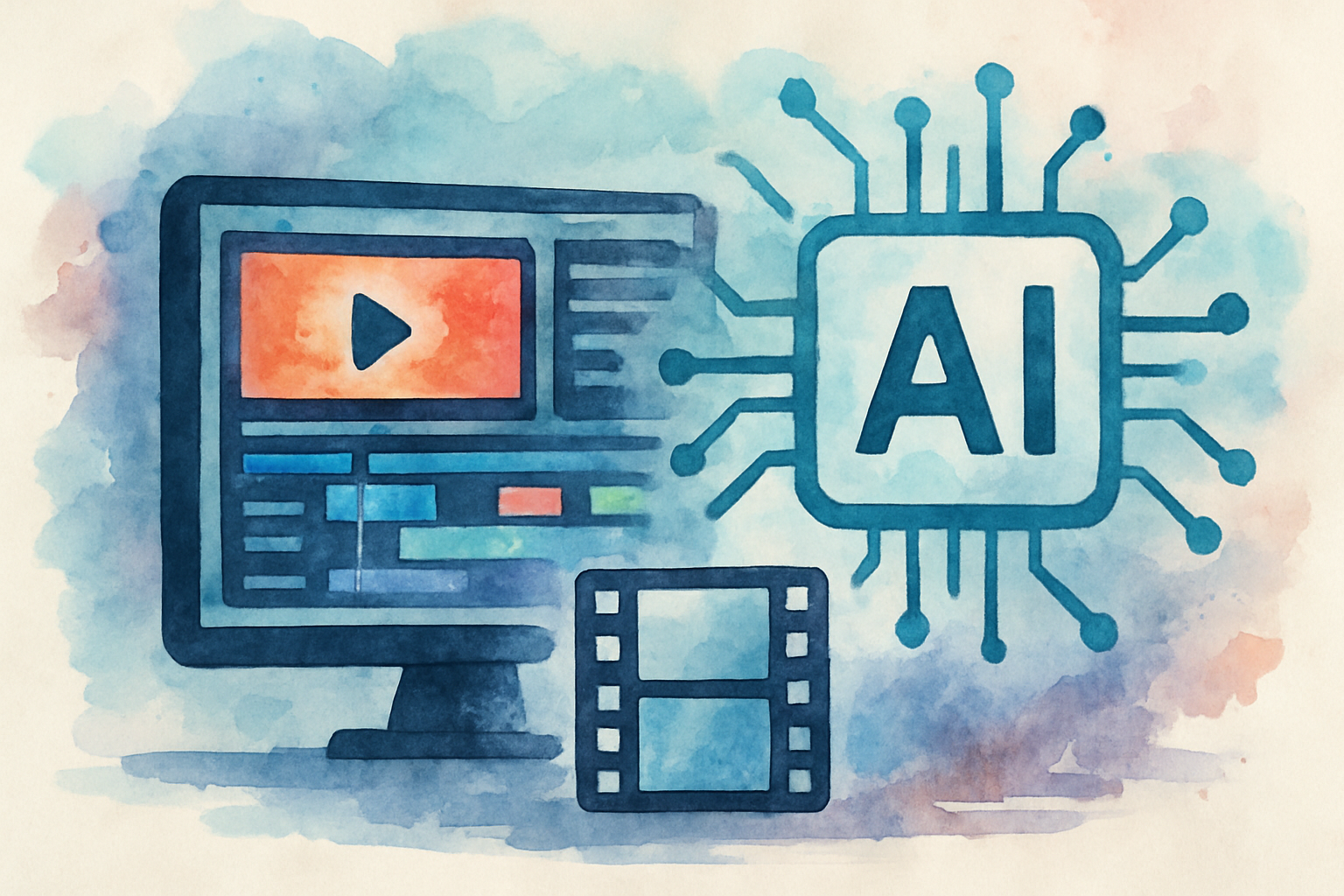
Video content dominates the digital landscape, with over 82% of all internet traffic now consisting of video. Yet, traditional editing remains time-consuming and technically demanding. Enter AI software for video editing—a game-changing solution that’s democratizing content creation.
Whether you’re a content creator, marketer, or business owner, artificial intelligence is transforming how we produce videos. These intelligent tools can automatically cut footage, add captions, enhance audio, and even generate entire scenes with minimal human intervention.
The challenge? Choosing the right platform from dozens of options flooding the market. This comprehensive guide explores the seven best AI video editing tools available in 2026, helping you understand their capabilities, benefits, and how they can revolutionize your content workflow.
We’ll cover everything from understanding AI editing technology to implementing these tools effectively, addressing common challenges, and maximizing your return on investment.
Understanding AI Software for Video Editing: What Makes It Different
AI software for video editing leverages machine learning algorithms and neural networks to automate traditionally manual tasks. Unlike conventional editing software that requires frame-by-frame manipulation, AI-powered tools analyze your footage intelligently and make editing decisions based on learned patterns.
These platforms use computer vision to identify faces, objects, and scenes. Natural language processing enables automatic transcription and caption generation. Predictive algorithms suggest cuts, transitions, and effects based on your content type and style preferences.
The Current State of AI Video Editing Technology
The AI video editing market has exploded, reaching $800 million in 2025 and projected to hit $2.1 billion by 2028. This growth reflects increasing demand from creators who need to produce more content faster without sacrificing quality.
Modern AI editing tools now offer features that seemed impossible just two years ago. They can remove backgrounds in real-time, clone voices for dubbing, generate B-roll footage from text descriptions, and even create entire videos from simple prompts.
Major platforms like Adobe, Apple, and emerging startups are investing heavily in AI capabilities. The technology has matured from experimental features to production-ready tools that professionals rely on daily.
Why Traditional Editing Methods Are Becoming Obsolete
Traditional video editing requires extensive training and countless hours of manual work. A simple 10-minute video can take 3-5 hours to edit properly.
AI dramatically reduces this timeline. Tasks that once took hours now complete in minutes. Color correction happens automatically. Audio levels balance themselves. Captions generate instantly with 95%+ accuracy.
The democratization effect is profound. Small businesses and individual creators can now produce professional-quality content without hiring expensive editors or spending years learning complex software.
The 7 Best AI Video Editing Tools Transforming Content Creation
1. Descript: The Text-Based Editing Pioneer
Descript revolutionised editing by treating video like a text document. Simply edit the transcript, and your video changes accordingly. Delete a sentence, and that portion of video disappears.
Key features include Overdub (AI voice cloning), Studio Sound (audio enhancement), and automatic filler word removal. Pricing starts at $12/month for creators, with professional plans at $24/month.
Best for: Podcasters, interview content, and anyone who values speed over complex visual effects.
2. Runway ML: The Creative Powerhouse
Runway ML offers over 30 AI-powered tools including background removal, motion tracking, and the groundbreaking Gen-2 text-to-video generator. It’s become the go-to platform for experimental creators and filmmakers.
The platform excels at visual effects that traditionally required expensive software and expertise. Green screen removal works flawlessly without actual green screens. Object removal happens with a simple brush stroke.
Pricing: Free tier available, paid plans from $15/month. Professional tier at $35/month includes priority processing.
3. Adobe Premiere Pro with Sensei AI
Adobe integrated its Sensei AI across Premiere Pro, bringing intelligent features to the industry-standard editing platform. Auto Reframe automatically adjusts aspect ratios for different social platforms. Scene Edit Detection identifies cuts in existing footage.
The Speech to Text feature generates captions with impressive accuracy across 13 languages. Colour matching between clips happens automatically, maintaining visual consistency throughout your project.
Investment: $22.99/month as part of Creative Cloud. Steep learning curve but unmatched professional capabilities.
4. Pictory: The Marketing Video Specialist
Pictory transforms long-form content into short, shareable videos perfect for social media. Paste a blog post or article, and it automatically creates a video complete with relevant stock footage, captions, and music.
The platform analyses your text to identify key points, then matches them with appropriate visuals from its extensive library. Ideal for content marketers who need to repurpose written content quickly.
Pricing structure: Standard plan at $23/month, Premium at $47/month with additional features and higher video limits.
5. Synthesia: The AI Avatar Revolution
Synthesia creates videos featuring realistic AI avatars that speak your script in over 120 languages. No camera, no crew, no studio required. Simply type your script, choose an avatar, and generate your video.
This tool excels for training videos, product demonstrations, and multilingual content. Companies report 80% cost reduction compared to traditional video production.
Enterprise-focused pricing starts at $30/month for personal use, with custom pricing for teams and businesses.
6. CapCut: The Mobile-First Contender
CapCut brings professional AI editing to mobile devices and desktop. Its auto-caption feature supports 20+ languages with impressive accuracy. Background removal works seamlessly, and the AI-powered effects library constantly expands.
The platform’s strength lies in its accessibility. The interface feels intuitive even for beginners, yet offers depth for advanced users. TikTok integration makes it perfect for social media creators.
Completely free with optional Pro subscription at $7.99/month for additional features and storage.
7. Opus Clip: The Long-Form to Short-Form Converter
Opus Clip specialises in transforming long videos into viral-worthy short clips. Its AI analyses your content to identify the most engaging moments, then creates multiple short videos optimised for different platforms.
The virality score feature predicts how well each clip will perform on social media. Automatic captioning, aspect ratio adjustment, and hook identification make it invaluable for content repurposing.
Pricing: Starter plan at $9/month, Professional at $29/month with increased processing limits.
Implementing AI Video Editing Tools: A Step-by-Step Strategy
Step 1: Assess Your Content Needs and Workflow
Before selecting AI software for video editing, evaluate your specific requirements. What type of content do you create? How frequently? What’s your current bottleneck?
Document your existing workflow. Identify which tasks consume the most time. These are prime candidates for AI automation. A social media manager might prioritize caption generation and aspect ratio conversion, while a course creator needs strong audio enhancement and screen recording features.
Consider your team’s technical expertise. Some platforms require minimal learning, while others offer more power at the cost of complexity.
Step 2: Start with Free Trials and Test Projects
Most AI editing platforms offer free trials or freemium tiers. Take advantage of these to test multiple tools with real projects before committing financially.
Create a standardized test project that represents your typical work. Run it through different platforms, comparing results, speed, and ease of use. Pay attention to output quality, rendering times, and how intuitive the interface feels.
Track specific metrics: time saved, quality improvements, and learning curve difficulty. This data-driven approach ensures you choose the right tool rather than the most marketed one.
Step 3: Integrate AI Tools into Your Existing Workflow
Successful implementation requires gradual integration rather than complete workflow overhaul. Start by automating one or two tasks, then expand as you gain confidence.
For example, begin with automatic transcription and captioning. Once comfortable, add AI-powered color correction. Eventually, incorporate more advanced features like automated B-roll selection or scene detection.
Create templates and presets within your chosen platform. This maximizes efficiency and maintains consistency across projects. Most AI tools learn from your preferences, improving suggestions over time.
Step 4: Establish Quality Control Processes
AI is powerful but not perfect. Establish review checkpoints to catch errors before publishing. Common issues include incorrect captions, awkward cuts, or misidentified scenes.
Develop a checklist covering critical elements: audio levels, caption accuracy, visual consistency, and brand alignment. Assign specific team members to review AI-generated content before final approval.
Balance automation with human oversight. AI handles repetitive tasks brilliantly, but creative decisions and brand voice still benefit from human judgment.
Best Practices for Maximizing AI Editing Efficiency
Organize your raw footage before importing. Well-labeled files help AI tools make better decisions. Use consistent naming conventions and folder structures.
Provide clear instructions when using text-to-video features. The more specific your prompts, the better the results. Instead of “create a marketing video,” try “create a 30-second product demo highlighting three key features with upbeat music.”
Regularly update your software. AI tools improve constantly through updates that enhance accuracy, add features, and fix bugs. Enable automatic updates when possible.
Join user communities and forums. Other creators share valuable tips, workarounds, and creative applications you might not discover independently.
Overcoming Common Challenges with AI Video Editing Software
Challenge 1: Learning Curve and Adaptation Resistance
Many editors resist AI tools, fearing job displacement or doubting quality. This resistance slows adoption and limits potential benefits.
Solution: Frame AI as an assistant, not a replacement. These tools handle tedious tasks, freeing editors for creative work. Invest in training sessions that demonstrate time savings and quality improvements. Start with team members most open to new technology, then let their success inspire others.
Challenge 2: Inconsistent Output Quality
AI-generated content sometimes produces unexpected results. Captions might misinterpret technical terms. Automated cuts might miss important context. Background removal can leave artifacts.
Solution: Train the AI by correcting its mistakes. Most platforms learn from your edits, improving future suggestions. Create custom dictionaries for industry-specific terminology. Always review AI output before publishing, treating it as a first draft rather than final product.
Challenge 3: Cost Concerns and ROI Uncertainty
Subscription costs for multiple AI tools add up quickly. Businesses struggle to justify expenses without clear return on investment metrics.
Solution: Calculate time savings in dollar terms. If an editor earning $50/hour saves 10 hours weekly, that’s $2,000 monthly value. Track productivity metrics before and after implementation. Most organizations see 3-5x ROI within the first quarter.
Start with one comprehensive platform rather than multiple specialized tools. Consolidation reduces costs while simplifying workflows.
Challenge 4: Integration with Existing Systems
AI editing tools must work alongside existing software, asset management systems, and collaboration platforms. Compatibility issues create frustration and inefficiency.
Solution: Prioritize platforms with robust API support and native integrations. Check compatibility with your current tech stack before committing. Many AI software for video editing options now offer plugins for popular platforms like Premiere Pro, Final Cut Pro, and DaVinci Resolve.
Consider cloud-based solutions that facilitate remote collaboration and automatic syncing across devices and team members.
Challenge 5: Maintaining Creative Control and Brand Voice
Over-reliance on AI can result in generic content that lacks personality. Automated suggestions might not align with brand guidelines or creative vision.
Solution: Establish clear brand guidelines within your AI tools. Create custom presets for colors, fonts, music styles, and pacing that reflect your brand identity. Use AI for technical tasks while maintaining human control over creative decisions.
Regularly audit your content to ensure AI assistance enhances rather than dilutes your unique voice and style.
Conclusion: Embracing the Future of Video Content Creation
AI software for video editing has evolved from experimental technology to essential business tool. The seven platforms covered—Descript, Runway ML, Adobe Premiere Pro with Sensei, Pictory, Synthesia, CapCut, and Opus Clip—represent the cutting edge of what’s possible in 2026.
These tools don’t replace human creativity; they amplify it. By automating technical tasks, they free creators to focus on storytelling, strategy, and innovation. The time savings alone justify investment, but the quality improvements and expanded capabilities provide even greater value.
Success requires thoughtful implementation. Assess your needs, test thoroughly, integrate gradually, and maintain quality standards. The organizations thriving in today’s content-saturated landscape are those leveraging AI to produce more, better, faster.
The question isn’t whether to adopt AI video editing tools, but which ones best serve your specific needs and how quickly you can integrate them into your workflow.
Ready to transform your video content creation process? The experts at The Crunch specialize in helping businesses implement AI-powered content strategies that drive results. Schedule your free consultation today and discover how AI software for video editing can revolutionize your content marketing efforts.
Frequently Asked Questions (FAQ)
1. What is AI video editing software?
2. How does AI improve the video editing process?
3. What are the main benefits of using AI-powered video editing tools?
4. How do I get started with AI video editing software?
5. How does AI video editing software compare to traditional editing software?
6. Is AI video editing software suitable for beginners?
7. What are some popular AI video editing software options?
8. How much does AI video editing software cost?
9. Are there any limitations or drawbacks to using AI video editing software?
10. Can AI video editing software work with all video formats?
11. Is my data safe when using AI video editing software?
12. Can AI video editing software be used for professional projects?