Imagine cutting your operational costs by 40% while simultaneously doubling your productivity. Sounds impossible? Not anymore.
In 2026, business AI software has evolved from a luxury to an absolute necessity for companies aiming to stay competitive. With 87% of businesses now leveraging artificial intelligence in some capacity, the question is no longer whether to adopt AI, but which tools will deliver the most significant impact.
The landscape of business operations has fundamentally shifted. Manual processes that once consumed hours now complete in seconds. Customer insights that required extensive research teams now generate automatically. Strategic decisions that relied on gut feeling now benefit from data-driven precision.
This comprehensive guide explores the seven most powerful AI software tools revolutionizing business growth in 2026. You’ll discover how each platform addresses specific business challenges, the tangible benefits they deliver, and practical implementation strategies to maximize your return on investment. Whether you’re a startup founder or enterprise executive, these insights will help you harness AI’s transformative power.
Understanding Business AI Software and Its Strategic Importance
The importance of implementing business AI software cannot be overstated. According to McKinsey’s 2025 report, companies that successfully integrate AI into their operations experience an average revenue increase of 23% and cost reductions of up to 35%. These aren’t marginal improvements—they’re game-changing transformations.
Current Market Trends Shaping AI Adoption
The AI software market has reached unprecedented maturity in 2026. Several key trends are driving widespread adoption:
- Democratization of AI: No-code and low-code platforms have made AI accessible to businesses without extensive technical expertise
- Industry-Specific Solutions: Vertical AI applications tailored for healthcare, finance, retail, and manufacturing are delivering specialized value
- Multimodal AI Capabilities: Modern systems process text, images, voice, and video simultaneously for comprehensive analysis
- Edge AI Processing: Real-time decision-making at the device level reduces latency and enhances privacy
Why Traditional Software No Longer Suffices
Traditional business software operates on fixed algorithms and requires constant manual updates. In contrast, AI-powered solutions adapt to changing conditions, identify patterns humans might miss, and scale effortlessly as your business grows.
Consider customer service: conventional helpdesk software routes tickets based on keywords. AI customer service platforms understand context, sentiment, and urgency—resolving 70% of inquiries without human intervention while identifying high-value customers who need immediate attention.
The 7 Best Business AI Software Tools for 2026
1. Salesforce Einstein GPT: AI-Powered CRM Excellence
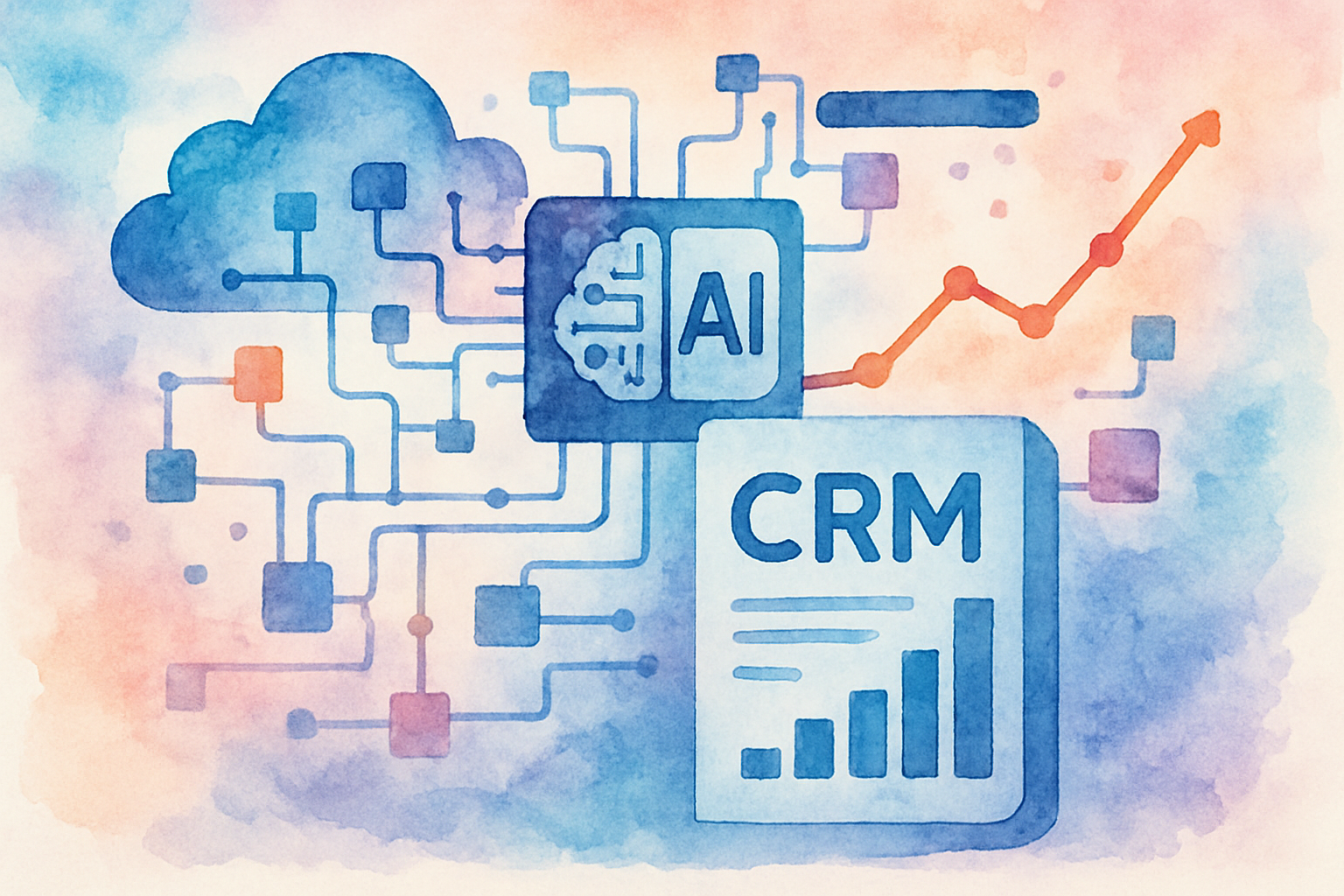
Salesforce Einstein GPT combines generative AI with the world’s leading CRM platform, delivering personalized customer experiences at scale. This tool analyzes customer interactions across all touchpoints, predicting needs before customers articulate them.
Key Benefits: Automated lead scoring increases conversion rates by 35%, predictive forecasting improves accuracy to 94%, and AI-generated email campaigns boost engagement by 42%.
2. Jasper AI: Content Creation and Marketing Automation
Jasper AI has evolved into a comprehensive marketing command center. Beyond generating blog posts and social media content, it now orchestrates entire marketing campaigns, optimizes messaging for different audience segments, and analyzes performance metrics in real-time.
Key Benefits: Content production speeds increase by 10x, brand consistency improves across all channels, and SEO optimization happens automatically with keyword integration and readability enhancements.
3. UiPath: Intelligent Process Automation
UiPath leads the robotic process automation space with AI-enhanced capabilities that handle complex workflows. From invoice processing to employee onboarding, UiPath robots work 24/7 without errors.
Key Benefits: Processing time reductions of 80%, error rates dropping to near-zero, and employee satisfaction improvements as teams focus on strategic work rather than repetitive tasks.
4. DataRobot: Enterprise AI and Machine Learning Platform
DataRobot democratizes machine learning by automating model development, deployment, and monitoring. Business analysts without data science backgrounds can now build predictive models that rival those created by expert teams.
Key Benefits: Time-to-insight decreases from months to days, predictive accuracy exceeds 90% for most use cases, and model maintenance happens automatically with continuous learning.
5. Zendesk AI: Customer Experience Transformation
Zendesk’s AI capabilities transform customer support from a cost center into a competitive advantage. Intelligent routing, automated responses, and sentiment analysis ensure every customer receives optimal service.
Key Benefits: First-response times drop by 60%, customer satisfaction scores increase by 28%, and support team productivity doubles through intelligent assistance.
Tableau Einstein brings AI-powered insights to data visualization. It automatically identifies trends, anomalies, and opportunities within your data, presenting findings in intuitive dashboards that drive action.
7. Workday Adaptive Planning: Financial Planning and Analysis
Workday’s AI-enhanced planning platform transforms financial forecasting from a quarterly exercise into a continuous strategic process. Machine learning models incorporate thousands of variables to generate accurate predictions.
Key Benefits: Forecasting accuracy improves to 95%, scenario planning happens in minutes rather than weeks, and financial teams shift focus from data collection to strategic analysis.
Implementing Business AI Software: A Strategic Roadmap
Successfully implementing business AI software requires more than purchasing licenses. Follow this proven framework to maximize your investment and minimize disruption.
Step 1: Assess Your Business Needs and Readiness
Begin with a comprehensive audit of your current processes. Identify bottlenecks, inefficiencies, and areas where human judgment adds limited value. Evaluate your data infrastructure—AI systems require quality data to deliver quality results.
Create a prioritized list of use cases based on potential impact and implementation complexity. Quick wins build momentum and demonstrate value to stakeholders who may be skeptical about AI adoption.
Step 2: Select the Right AI Tools for Your Context
Not all AI software suits every business. Consider these factors:
- Integration capabilities: Does the tool connect seamlessly with your existing systems?
- Scalability: Can it grow with your business without requiring complete replacement?
- User experience: Will your team actually use it, or is the learning curve too steep?
- Vendor stability: Is the provider financially sound with a track record of innovation?
- Customization options: Can you tailor the solution to your unique requirements?
Step 3: Develop a Phased Implementation Plan
Avoid the temptation to deploy AI across your entire organization simultaneously. Start with a pilot program in one department or for one specific use case. This approach allows you to:
Learn from initial challenges without widespread disruption. Build internal expertise and champions who can guide broader rollout. Demonstrate ROI to secure additional investment. Refine processes before scaling.
Most successful implementations follow a 90-day pilot, 180-day departmental rollout, and 12-month enterprise deployment timeline.
Step 4: Invest in Training and Change Management
Technology alone doesn’t drive transformation—people do. Allocate 30% of your AI budget to training and change management initiatives. Address concerns about job displacement directly, emphasizing how AI augments rather than replaces human capabilities.
Create role-specific training programs that demonstrate immediate value. A sales representative needs different AI skills than a financial analyst. Personalized learning paths increase adoption rates by 65%.
Step 5: Monitor, Measure, and Optimize
Establish clear KPIs before implementation begins. Track both quantitative metrics (cost savings, time reductions, revenue increases) and qualitative measures (employee satisfaction, customer feedback, decision quality).
Schedule monthly reviews during the first six months, then quarterly thereafter. AI systems improve with use, but only if you actively monitor performance and make adjustments based on real-world results.
Overcoming Common Business AI Software Challenges
Despite the tremendous benefits, implementing business AI software presents legitimate challenges. Understanding these obstacles and their solutions ensures smoother adoption.
Challenge 1: Data Quality and Availability Issues
AI systems are only as good as the data they process. Many organizations discover their data is incomplete, inconsistent, or siloed across incompatible systems.
Solution: Launch a data quality initiative before AI implementation. Establish data governance policies, implement master data management systems, and create processes for ongoing data hygiene. Consider starting with AI use cases that require less historical data while you improve your data infrastructure.
Challenge 2: Integration with Legacy Systems
Older technology stacks often lack APIs and modern integration capabilities, making AI implementation technically complex and expensive.
Solution: Utilize middleware platforms that bridge legacy systems and modern AI applications. Cloud-based integration platforms like MuleSoft or Dell Boomi can connect disparate systems without requiring complete infrastructure overhauls. Alternatively, consider AI tools specifically designed for legacy environment compatibility.
Challenge 3: Resistance to Change and Adoption
Employees may fear AI will eliminate their jobs or feel overwhelmed by new technology. This resistance can sabotage even the most technically sound implementations.
Solution: Communicate transparently about AI’s role in augmenting human capabilities. Involve employees in the selection and implementation process. Celebrate early wins publicly and recognize individuals who embrace the new tools. Provide ongoing support through help desks, peer mentors, and refresher training.
Challenge 4: Measuring ROI and Demonstrating Value
AI benefits often manifest across multiple dimensions, making traditional ROI calculations challenging. Intangible benefits like improved decision quality or enhanced customer satisfaction resist simple quantification.
Solution: Develop a comprehensive value framework that captures both tangible and intangible benefits. Use control groups to isolate AI impact from other variables. Document case studies and success stories that illustrate real-world value beyond spreadsheet calculations.
Challenge 5: Security and Compliance Concerns
AI systems process sensitive business and customer data, raising legitimate security and regulatory compliance questions.
Solution: Select vendors with robust security certifications (SOC 2, ISO 27001, GDPR compliance). Implement AI governance frameworks that define acceptable use, data handling procedures, and audit trails. Work with legal and compliance teams from the beginning rather than treating security as an afterthought.
Conclusion: Embracing the AI-Powered Future
The seven business AI software tools outlined in this guide represent the cutting edge of business technology in 2026. From Salesforce Einstein GPT’s customer relationship mastery to Workday’s financial planning precision, these platforms deliver measurable, transformative results.
The evidence is overwhelming: companies that embrace AI outperform competitors across every meaningful metric. They operate more efficiently, serve customers more effectively, and make better strategic decisions. The question isn’t whether AI will transform your industry—it’s whether you’ll lead that transformation or scramble to catch up.
Implementation requires thoughtful planning, adequate investment, and organizational commitment. But the rewards—increased revenue, reduced costs, enhanced competitiveness, and empowered employees—far exceed the challenges.
Start small, think big, and move quickly. Select one tool from this list that addresses your most pressing business challenge. Launch a pilot program. Measure results. Learn from the experience. Then scale what works.
The AI revolution isn’t coming—it’s here. Your competitors are already leveraging these tools to gain advantages. Every day you delay adoption is a day you fall further behind.
Ready to transform your business with AI? The experts at The Crunch specialize in helping companies navigate AI adoption, from strategy development to implementation support. Don’t navigate this journey alone. Contact The Crunch today to schedule your free consultation and discover how business AI software can skyrocket your growth in 2026 and beyond.
Frequently Asked Questions (FAQ)
1. What is business AI software?
2. How does business AI software work?
3. What are the main benefits of using AI software in business?
4. How do I choose the right AI software for my business?
5. How much does business AI software cost?
6. What are some common types of business AI software?
7. How does AI software compare to traditional business software?
8. Is business AI software secure?
9. What are some common concerns about adopting AI in business?
10. How can I get started with business AI software?
11. Do I need technical expertise to use business AI software?
12. Can AI software integrate with my existing business systems?