5 Ways Data AI Boosts CRM Trust & Customer Loyalty
In today’s digital landscape, customers are more skeptical than ever about how businesses handle their personal information. A recent study shows that 81% of consumers feel they have little control over their data, creating a significant trust gap between brands and their audiences. This is where the intersection of data AI CRM trust becomes not just important, but essential for business survival.
Artificial intelligence is revolutionizing how companies manage customer relationships, but with great power comes great responsibility. The question isn’t whether to use AI in your CRM strategy—it’s how to implement it in ways that build rather than erode customer confidence. When done right, AI-powered CRM systems can transform skeptical prospects into loyal brand advocates.
In this comprehensive guide, we’ll explore five powerful ways that data AI enhances CRM trust and drives customer loyalty. You’ll discover practical strategies, real-world examples, and actionable insights that you can implement immediately to strengthen your customer relationships and grow your business sustainably.
Understanding the Foundation of Data AI CRM Trust
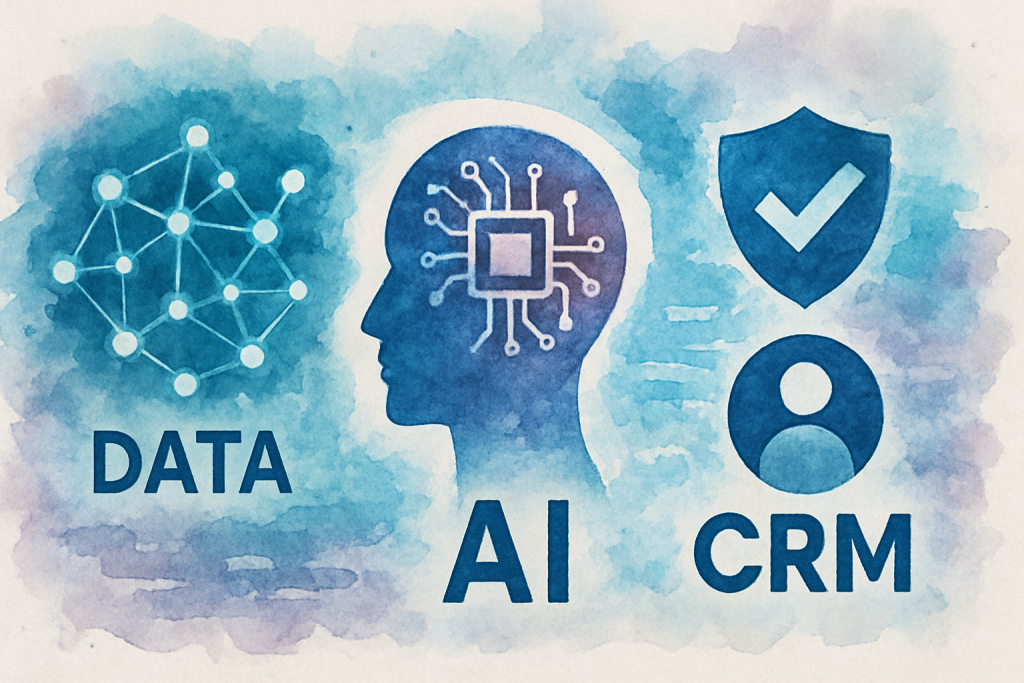
Before diving into specific strategies, it’s crucial to understand what data AI CRM trust actually means in today’s business environment. At its core, this concept represents the delicate balance between leveraging artificial intelligence to personalize customer experiences while maintaining transparency and respecting privacy boundaries.
What Makes AI-Powered CRM Different
Traditional CRM systems store customer information and track interactions, but AI-powered platforms take this several steps further. These intelligent systems analyze patterns, predict behaviors, and automate responses in ways that feel personal rather than robotic. The difference lies in the sophistication of data processing and the ability to learn from every interaction.
According to Salesforce research, 84% of customers say being treated like a person, not a number, is crucial to winning their business. AI makes this possible at scale by processing vast amounts of customer data to deliver individualized experiences that would be impossible for human teams alone.
The Trust Equation in Modern CRM
Trust in CRM isn’t built overnight. It requires consistent demonstration of four key elements: transparency in data usage, security of customer information, relevance of communications, and respect for customer preferences. When AI is integrated thoughtfully, it amplifies each of these elements rather than compromising them.
The challenge many businesses face is that customers often don’t understand how AI works, leading to fear and suspicion. Breaking down this barrier requires clear communication about what data you collect, how AI processes it, and what benefits customers receive in return.
Five Proven Ways Data AI Strengthens CRM Trust
1. Hyper-Personalization Without Creepiness
AI enables businesses to deliver personalized experiences that feel helpful rather than invasive. The key is using data to anticipate needs without crossing privacy boundaries. For example, an AI-powered CRM can analyze purchase history and browsing behavior to recommend products at the right time, but it should never reference data customers didn’t knowingly share.
Netflix provides an excellent example of this balance. Their recommendation engine uses sophisticated AI algorithms, but they’re transparent about how it works and give users control over their viewing history. This transparency builds trust while delivering value.
Best practices for hyper-personalization include: allowing customers to set preference centers, being explicit about data sources, providing easy opt-out options, and ensuring recommendations genuinely add value rather than just pushing sales.
2. Predictive Customer Service That Anticipates Problems
Nothing builds trust faster than solving problems before customers even know they exist. AI-powered CRM systems can analyze patterns to predict when customers might encounter issues and proactively reach out with solutions. This shifts the relationship from reactive to proactive, demonstrating that you genuinely care about customer success.
Amazon’s anticipatory shipping patent, while controversial, illustrates this concept. By predicting what customers will order and positioning inventory accordingly, they reduce delivery times and improve satisfaction. In CRM applications, this might mean identifying customers at risk of churning and intervening with personalized retention offers.
The trust factor increases exponentially when customers realize you’re using their data to help them, not just to extract more revenue. This requires careful balance and genuine customer-centric thinking in your AI implementation strategy.
3. Enhanced Data Security and Privacy Protection
Ironically, AI itself can be the solution to data security concerns. Machine learning algorithms excel at detecting unusual patterns that might indicate security breaches or unauthorized access. By implementing AI-powered security measures in your CRM, you demonstrate commitment to protecting customer information.
According to IBM’s Cost of a Data Breach Report, organizations using AI and automation saved an average of $3.05 million compared to those that didn’t. More importantly, customers notice when businesses take security seriously, and this awareness directly impacts trust levels.
Transparent communication about security measures matters too. Share how your AI systems protect data, what encryption methods you use, and how quickly you can detect and respond to threats. This openness transforms security from a background concern into a trust-building differentiator.
4. Consistent Omnichannel Experiences
Customers interact with brands across multiple channels—email, social media, phone, chat, and in-person. AI-powered CRM systems unify these touchpoints, ensuring consistent experiences regardless of where interactions occur. This consistency builds trust by eliminating the frustration of repeating information or receiving conflicting messages.
Starbucks exemplifies this approach with their mobile app integration. Customer preferences, purchase history, and rewards seamlessly transfer across all channels. Whether ordering through the app, at the counter, or via drive-through, the experience remains consistent and personalized.
The data AI CRM trust connection becomes evident when customers realize their information follows them intelligently across channels, making their lives easier rather than creating privacy concerns. The key is ensuring this data portability serves customer convenience, not just business efficiency.
5. Transparent AI Decision-Making Processes
One of the biggest trust barriers with AI is the “black box” problem—customers don’t understand how decisions are made. Forward-thinking companies are addressing this by implementing explainable AI in their CRM systems. This means customers can understand why they received certain recommendations, offers, or communications.
For instance, if your AI system denies a customer request or offers different pricing, being able to explain the reasoning (based on clear, fair criteria) maintains trust even in disappointing situations. This transparency demonstrates that AI decisions aren’t arbitrary or discriminatory.
Building trust through transparency also means admitting when AI makes mistakes and having human oversight for critical decisions. The most trusted brands use AI to enhance human judgment, not replace it entirely.
Implementing AI-Driven CRM Trust Strategies
Step 1: Audit Your Current Data Practices
Before implementing new AI capabilities, assess your current data collection, storage, and usage practices. Identify gaps in transparency, security vulnerabilities, and areas where customer consent might be unclear. This foundation ensures your AI implementation builds on solid ethical ground.
Create a comprehensive data map showing what information you collect, where it’s stored, who has access, and how it’s used. This exercise often reveals redundancies or unnecessary data collection that can be eliminated, immediately improving trust.
Step 2: Choose AI Tools with Built-In Ethics
Not all AI CRM platforms are created equal. Select tools that prioritize explainability, fairness, and privacy by design. Look for vendors who are transparent about their algorithms, provide audit trails, and offer robust security features. Ask potential vendors specific questions about how they handle bias, data protection, and customer consent.
Leading CRM platforms like Salesforce Einstein and HubSpot’s AI tools have invested heavily in ethical AI frameworks. These systems include features for data governance, consent management, and transparent decision-making that support trust-building objectives.
Step 3: Develop Clear Communication Protocols
Create customer-facing documentation that explains how your AI-powered CRM works in plain language. Avoid technical jargon and focus on benefits and protections. This might include privacy policies written for humans, FAQ sections about AI usage, and preference centers where customers control their data.
Consider creating video content or interactive tools that demonstrate how your AI protects and serves customers. Visual explanations often build trust more effectively than text alone, especially for complex technical concepts.
Step 4: Train Your Team on AI Ethics
Your employees are the bridge between AI systems and customers. Ensure they understand not just how to use AI tools, but why ethical implementation matters. Training should cover data privacy regulations, bias recognition, and how to explain AI decisions to customers in accessible terms.
Empower team members to override AI recommendations when human judgment suggests a different approach. This balance between automation and human touch is essential for maintaining authentic customer relationships.
Step 5: Establish Continuous Monitoring and Improvement
AI systems learn and evolve, which means your trust-building efforts must be ongoing. Implement regular audits of AI decisions, monitor customer feedback about personalization, and track trust metrics like Net Promoter Score and customer retention rates.
Create feedback loops where customer concerns about AI usage directly inform system improvements. This responsive approach demonstrates that you’re listening and adapting, which itself builds trust over time.
Overcoming Common Challenges in Data AI CRM Trust
Challenge 1: Customer Fear of AI
Many customers remain skeptical or fearful of AI, often due to misconceptions or negative media coverage. The solution isn’t to hide AI usage but to educate customers about benefits while being honest about limitations. Frame AI as a tool that enhances human service rather than replacing it.
Share success stories showing how AI has improved customer experiences. Use testimonials from real customers who’ve benefited from personalized recommendations or proactive service. Social proof is powerful in overcoming abstract fears.
Challenge 2: Balancing Personalization with Privacy
The line between helpful personalization and invasive surveillance is thin. Solve this by implementing progressive profiling—gradually collecting information as relationships deepen rather than demanding everything upfront. Always tie data collection to clear customer benefits.
Give customers granular control over what data they share and how it’s used. Paradoxically, offering more control often leads to customers sharing more information because they trust you’ll respect their boundaries.
Challenge 3: Maintaining Human Connection
As automation increases, customers may feel they’re losing human connection with brands. The solution is strategic automation—use AI for routine tasks and data analysis, but ensure meaningful interactions remain human-led. Train AI systems to recognize when human intervention is needed and seamlessly transfer complex situations to human agents.
Brands like Zappos have built legendary customer loyalty by combining efficient systems with empowered human representatives who can break rules to delight customers. This hybrid approach leverages AI efficiency while preserving authentic relationships.
Challenge 4: Keeping Pace with Regulations
Data privacy regulations like GDPR, CCPA, and emerging AI-specific laws create compliance challenges. Stay ahead by building privacy and ethics into your AI CRM strategy from the start rather than retrofitting compliance later. Work with legal experts to ensure your systems meet current and anticipated regulatory requirements.
View compliance not as a burden but as a competitive advantage. Companies that exceed regulatory requirements and communicate this proactively differentiate themselves in crowded markets where trust is increasingly rare.
Building Lasting Customer Loyalty Through Trusted AI
The intersection of data AI CRM trust represents more than a technological advancement—it’s a fundamental shift in how businesses build relationships with customers. When implemented thoughtfully, AI doesn’t create distance between brands and people; it enables deeper, more meaningful connections at scale.
The five strategies we’ve explored—hyper-personalization, predictive service, enhanced security, omnichannel consistency, and transparent decision-making—work together to create a trust ecosystem where customers feel valued, protected, and understood. This foundation transforms transactional relationships into loyal partnerships that withstand competitive pressures and market changes.
Remember that building trust is a marathon, not a sprint. Every interaction, every data point collected, and every AI-powered recommendation either deposits into or withdraws from your trust account with customers. Consistency, transparency, and genuine customer-centricity must guide every decision.
The businesses that thrive in the AI era won’t be those with the most sophisticated algorithms or the largest datasets. They’ll be the ones that use these powerful tools to serve customers better while respecting their autonomy and privacy. Data AI CRM trust isn’t just about technology—it’s about values, ethics, and the fundamental belief that customer relationships matter more than short-term gains.
As you implement these strategies, monitor not just business metrics but trust indicators. Are customers sharing more information voluntarily? Are they engaging more deeply with personalized content? Are retention rates improving? These signals tell you whether your AI implementation is building or eroding trust.
Ready to transform your customer relationships with AI-powered CRM that builds trust and drives loyalty? The experts at The Crunch specialize in implementing ethical, effective AI strategies that put customers first. Don’t navigate this complex landscape alone—schedule your free consultation today and discover how data AI can become your competitive advantage in building unshakeable customer trust.
Frequently Asked Questions (FAQ)
1. What is data AI CRM trust?
2. How does AI improve trust in CRM systems?
3. What are the main benefits of building trust in data AI CRM?
4. How can organizations ensure data privacy in AI-powered CRM platforms?
5. What are common concerns about using AI in CRM systems?
6. How does data AI CRM trust compare to traditional CRM trust?
7. What are the costs associated with implementing trusted AI in CRM?
8. How can a business get started with building trust in their data AI CRM?
9. What role does transparency play in data AI CRM trust?
10. Are there regulations that impact data AI CRM trust?
11. How can AI bias affect trust in CRM systems?
12. What are best practices for maintaining trust in data AI CRM over time?