How to Train Your Own AI Chatbot: The 1 Step-by-Step Guide for Business Owners and Marketing Managers
In today’s fast-paced digital landscape, businesses are constantly seeking innovative ways to enhance customer engagement and streamline operations. One technology that has gained significant traction is the AI chatbot. But did you know that you can train your own AI chatbot tailored to your specific business needs? This guide will walk you through the process, empowering you to harness the power of artificial intelligence for your organisation.
Whether you’re a business owner looking to improve customer service or a marketing manager aiming to boost lead generation, learning how to train your own AI chatbot can be a game-changer. We’ll explore the benefits, strategies, and step-by-step implementation process, as well as address common challenges you might face along the way.
Understanding AI Chatbots: The Future of Customer Interaction
Before we dive into the nitty-gritty of how to train your own AI chatbot, let’s establish a clear understanding of what these digital assistants are and why they’re becoming increasingly crucial for businesses.
What is an AI Chatbot?
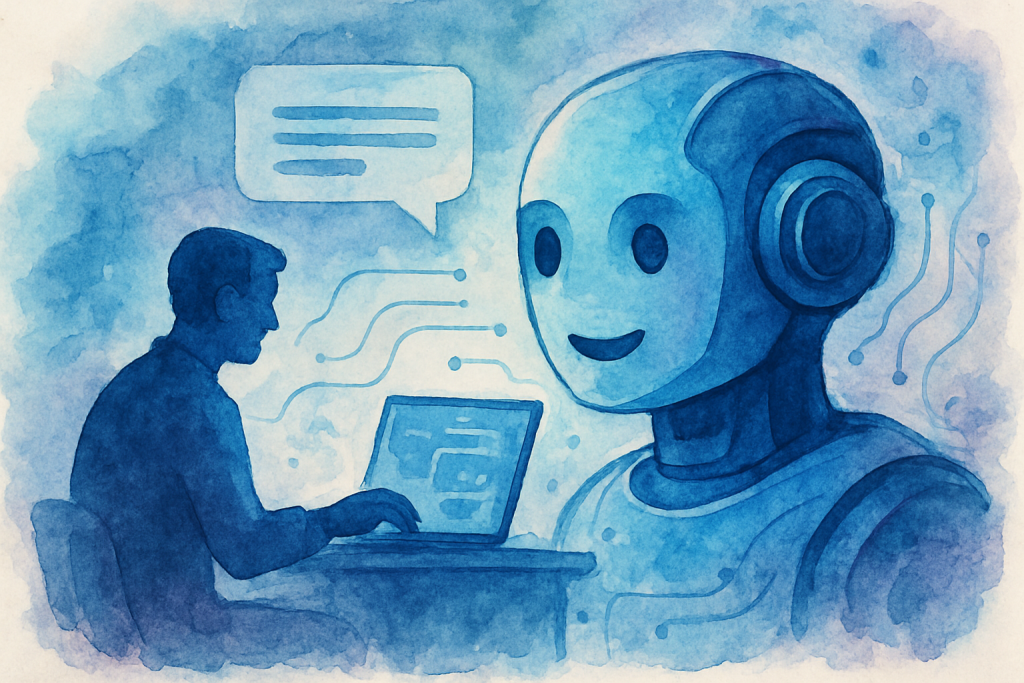
An AI chatbot is a computer program designed to simulate human conversation through text or voice interactions. Unlike traditional chatbots that rely on pre-programmed responses, AI chatbots use machine learning and natural language processing to understand and respond to user queries in a more natural, human-like manner.
The Growing Importance of AI Chatbots in Business
The adoption of AI chatbots has skyrocketed in recent years. According to a report by Grand View Research, the global chatbot market is expected to reach $1.25 billion by 2025, growing at a CAGR of 24.3%. This surge is driven by the numerous benefits chatbots offer, including:
- 24/7 customer support
- Instant response times
- Reduced operational costs
- Improved customer engagement
- Data collection and analysis capabilities
The Benefits of Training Your Own AI Chatbot
While off-the-shelf chatbot solutions exist, learning how to train your own AI chatbot offers several distinct advantages:
1. Customisation and Personalisation
By training your own AI chatbot, you can tailor its responses and capabilities to align perfectly with your brand voice and specific business needs. This level of customisation ensures a more seamless and on-brand customer experience.
2. Improved Accuracy and Relevance
Training your chatbot with your own data allows it to understand industry-specific terminology and nuances, resulting in more accurate and relevant responses to customer queries.
3. Integration with Existing Systems
A custom-trained AI chatbot can be more easily integrated with your existing CRM, ERP, or other business systems, allowing for smoother data flow and more comprehensive customer interactions.
4. Competitive Advantage
By developing a unique AI chatbot tailored to your business, you can differentiate yourself from competitors and offer a superior customer experience.
Step-by-Step Guide: How to Train Your Own AI Chatbot
Now that we understand the benefits, let’s dive into the process of how to train your own AI chatbot:
1. Define Your Chatbot’s Purpose and Scope
Before you begin training, clearly outline what you want your chatbot to achieve. Is it primarily for customer support, lead generation, or internal processes? Defining its purpose will guide your training process and help you measure its success.
2. Choose the Right Platform or Framework
Select a chatbot development platform or framework that aligns with your technical expertise and business needs. Options range from user-friendly platforms like Dialogflow or IBM Watson to more advanced frameworks like TensorFlow or PyTorch for custom development.
3. Collect and Prepare Training Data
Gather relevant data for training your chatbot. This may include:
- Frequently asked questions and their answers
- Customer service transcripts
- Product information and descriptions
- Common user queries and appropriate responses
Ensure your data is clean, properly formatted, and representative of the interactions you expect your chatbot to handle.
4. Design Conversation Flows
Map out the potential conversation paths your chatbot might encounter. This includes:
- Greeting and introduction
- Main menu or options
- Specific query flows
- Escalation to human support when necessary
5. Train Your AI Model
Use your prepared data to train your chatbot’s AI model. This process involves:
- Feeding the model with your training data
- Defining intents (user’s intentions) and entities (specific pieces of information)
- Configuring the model to recognise patterns and generate appropriate responses
6. Test and Refine
Thoroughly test your chatbot with various scenarios and user inputs. Analyse its performance and make necessary adjustments to improve accuracy and relevance.
7. Deploy and Monitor
Once satisfied with your chatbot’s performance, deploy it on your chosen platforms (website, messaging apps, etc.). Continuously monitor its interactions and gather user feedback for ongoing improvements.
Overcoming Common Challenges in AI Chatbot Training
As you embark on your journey to train your own AI chatbot, you may encounter some challenges. Here’s how to address them:
1. Handling Complex Queries
Solution: Implement a robust natural language understanding (NLU) system and continuously update your training data to cover a wider range of queries.
2. Maintaining Consistency Across Channels
Solution: Develop a centralised knowledge base and ensure your chatbot integrates seamlessly with all customer-facing platforms.
3. Balancing Automation with Human Touch
Solution: Design clear escalation pathways for your chatbot to transfer complex issues to human agents when necessary.
Conclusion: Embracing the Future of Customer Interaction
Learning how to train your own AI chatbot is a powerful way to enhance your business’s customer engagement and operational efficiency. By following this step-by-step guide, you can create a custom chatbot that truly represents your brand and meets your specific business needs.
As AI technology continues to evolve, the potential for chatbots to revolutionise customer interactions is boundless. By investing in this technology now, you’re not just keeping up with the trends – you’re positioning your business at the forefront of innovation.
Ready to take the next step in training your own AI chatbot? The Crunch is here to help. Our team of experts can guide you through the process, ensuring you develop a chatbot that drives real results for your business. Schedule a free consultation today and let’s bring your AI chatbot vision to life!
Frequently Asked Questions (FAQ)
1. What does it mean to train your own AI chatbot?
2. How do I start training my own AI chatbot?
3. What tools or platforms can I use to train an AI chatbot?
4. How much does it cost to train and run an AI chatbot?
5. What are the benefits of training my own AI chatbot instead of using a pre-built one?
6. How does training a chatbot compare to using a rule-based chatbot?
7. Do I need programming skills to train my own AI chatbot?
8. What kind of data do I need to train an AI chatbot?
9. How long does it take to train an AI chatbot?
10. What are common challenges when training your own AI chatbot?
11. Can I train my AI chatbot to support multiple languages?
12. Is it safe to use a custom-trained AI chatbot for my business?