7 Ways Voice AI Revolutionizes Patient Care & Medical Workflow
Imagine a world where doctors spend more time with patients and less time buried in paperwork. Where medical professionals can update patient records simply by speaking, and where healthcare accessibility extends to those who struggle with traditional interfaces. This isn’t science fiction—it’s the reality that voice AI for healthcare is creating right now.
The healthcare industry faces mounting pressure: administrative burdens consume up to 16 minutes of every hour clinicians spend with patients, medical errors claim thousands of lives annually, and staff burnout reaches crisis levels. Meanwhile, voice AI technology has matured from a novelty into a powerful tool that’s transforming how medical facilities operate, how clinicians document care, and how patients interact with healthcare systems.
Quick Answers: Voice AI in Healthcare
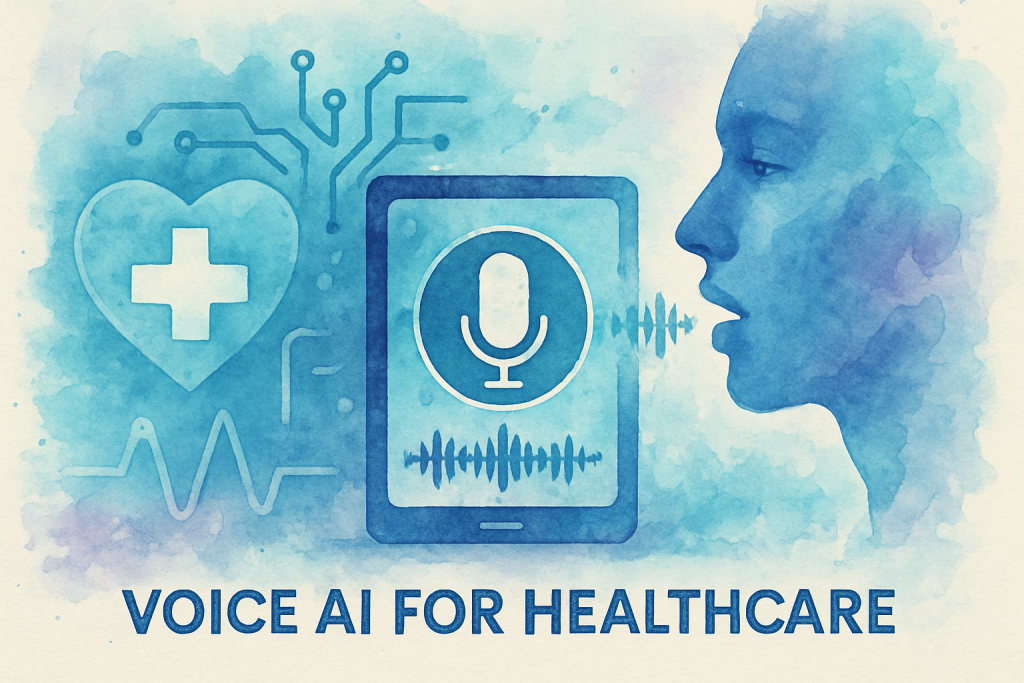
What is voice AI in healthcare? Voice AI refers to artificial intelligence-powered speech recognition and natural language processing systems designed specifically for medical environments, enabling hands-free documentation, patient interaction, and clinical workflow automation.
How does it improve patient care? By reducing documentation time by up to 70%, minimising medical errors, enabling faster clinical decision-making, and allowing healthcare providers to focus more attention on patient interaction rather than administrative tasks.
Is voice AI secure for medical data? Yes, when properly implemented. Medical-grade voice AI systems comply with regulations like HIPAA and GDPR, featuring end-to-end encryption and secure data handling protocols.
From emergency departments to outpatient clinics, voice AI is reshaping the healthcare landscape in remarkable ways. Let’s explore the seven transformative applications that are revolutionising patient care and medical workflows.
Understanding Voice AI Technology in Modern Healthcare
Voice AI for healthcare represents a sophisticated convergence of speech recognition, natural language processing, and machine learning algorithms specifically trained on medical terminology and clinical contexts. Unlike consumer voice assistants, medical voice AI systems understand complex anatomical terms, pharmaceutical names, and clinical abbreviations whilst maintaining the accuracy required for patient safety.
The technology works by converting spoken language into text, interpreting the clinical context, and integrating information directly into electronic health record (EHR) systems. Advanced systems can distinguish between different speakers, understand medical jargon across various specialties, and even detect urgency in voice patterns during critical situations.
According to research from Grand View Research, the global healthcare voice AI market was valued at approximately $1.8 billion in 2023 and is projected to grow at a compound annual growth rate of 23.8% through 2030. This explosive growth reflects the technology’s proven value in clinical settings.
The Evolution of Medical Voice Recognition
Medical voice recognition has travelled a remarkable journey. Early systems in the 1990s required extensive training, struggled with accuracy, and frustrated more clinicians than they helped. Today’s AI-powered solutions achieve accuracy rates exceeding 99% for medical terminology, require minimal training, and adapt to individual speaking patterns.
Modern voice AI systems leverage deep learning neural networks trained on millions of clinical conversations. They understand context—recognising that “right” might refer to a direction, a correctness, or a patient’s rights depending on the surrounding conversation. This contextual awareness makes contemporary systems genuinely useful rather than merely functional.
Key Components of Healthcare Voice AI Systems
Effective medical voice AI platforms incorporate several critical elements:
- Acoustic models trained specifically on healthcare environments, accounting for background noise in busy hospitals
- Medical language models containing extensive vocabularies of clinical terminology across specialties
- Natural language understanding that interprets clinical intent and extracts relevant information
- EHR integration capabilities that seamlessly populate patient records with structured data
- Security protocols ensuring patient data protection and regulatory compliance
Leading platforms like Nuance Dragon Medical, Suki AI, and DeepScribe have set industry standards for accuracy, usability, and integration capabilities.
Seven Transformative Applications of Voice AI in Healthcare
1. Clinical Documentation and EHR Management
Perhaps the most impactful application of voice AI for healthcare lies in clinical documentation. Physicians spend an average of 6 hours daily on paperwork and EHR tasks—often more time than they spend with patients. Voice-enabled documentation slashes this burden dramatically.
Clinicians can now dictate patient encounters naturally whilst maintaining eye contact with patients. The AI transcribes the conversation, identifies relevant clinical information, and populates appropriate EHR fields automatically. A study published in Nature Digital Medicine found that AI-powered voice documentation reduced documentation time by 72% whilst improving note completeness.
Dr. Sarah Mitchell, a family physician in Manchester, reports: “I’ve reclaimed nearly two hours every day. Instead of typing late into the evening, I’m documenting as I go, and the system handles the formatting. It’s transformed my work-life balance.”
2. Hands-Free Operation in Sterile Environments
Operating theatres and intensive care units demand sterile conditions where touching keyboards or screens risks contamination. Voice AI enables surgeons and critical care staff to access patient information, update records, and control medical equipment without breaking sterility protocols.
Surgical teams can verbally request patient imaging, laboratory results, or medication histories during procedures. Voice commands can adjust lighting, zoom on digital displays, or capture procedural notes—all without compromising the sterile field. This capability has proven particularly valuable during complex surgeries where every second matters.
The Association of periOperative Registered Nurses notes that voice-controlled systems have reduced surgical delays related to information access by approximately 40% in facilities that have implemented the technology.
3. Enhanced Patient Engagement and Communication
Voice AI isn’t just for clinicians—it’s revolutionising patient interaction too. AI-powered voice assistants can answer patient questions about medications, appointment scheduling, post-operative care instructions, and symptom management 24/7.
These systems provide consistent, accurate information whilst freeing nursing staff from repetitive inquiries. Patients can ask questions in natural language: “When should I take my blood pressure medication?” or “What foods should I avoid with my new prescription?” The AI provides personalised responses based on the patient’s specific treatment plan.
Healthcare systems implementing patient-facing voice AI report significant improvements in patient satisfaction scores and medication adherence rates. Mayo Clinic research indicates that patients using voice-enabled health assistants demonstrate 28% better adherence to treatment protocols.
4. Real-Time Clinical Decision Support
Voice AI systems can function as intelligent clinical assistants, providing real-time decision support during patient encounters. As clinicians discuss symptoms and examination findings, the AI can suggest differential diagnoses, flag potential drug interactions, or remind providers about evidence-based treatment guidelines.
This ambient intelligence operates unobtrusively, listening to clinical conversations and offering relevant information precisely when needed. If a physician mentions prescribing a medication, the system can instantly alert them to patient allergies or contraindications documented in the medical history.
A pilot programme at several NHS trusts demonstrated that voice-enabled clinical decision support reduced prescribing errors by 52% and improved adherence to clinical pathways by 34%.
5. Streamlined Medical Coding and Billing
Medical coding—translating clinical documentation into standardised billing codes—represents a significant administrative burden and source of revenue loss when done incorrectly. Voice AI systems can automatically identify billable procedures and diagnoses from clinical conversations, suggesting appropriate codes in real-time.
This capability reduces coding errors, accelerates billing cycles, and captures revenue that might otherwise be lost through incomplete documentation. Healthcare organisations report that AI-assisted coding improves coding accuracy by 30-40% whilst reducing the time between service delivery and claim submission.
3M Health Information Systems data suggests that automated coding assistance can increase revenue capture by 8-12% through more complete and accurate documentation of services provided.
6. Accessibility for Patients and Providers with Disabilities
Voice AI dramatically improves healthcare accessibility. Patients with visual impairments, limited mobility, or literacy challenges can interact with healthcare systems through voice interfaces. Similarly, healthcare providers with physical disabilities can practice medicine more effectively using voice-controlled systems.
This technology removes barriers that have historically limited both healthcare access and career opportunities in medicine. Voice interfaces enable more inclusive healthcare delivery whilst expanding the potential workforce to include talented individuals who might struggle with traditional computer interfaces.
7. Remote Patient Monitoring and Telehealth Enhancement
The expansion of telehealth has created new opportunities for voice AI application. During virtual consultations, AI can transcribe conversations, extract clinical information, and update records automatically—just as it does for in-person visits.
Beyond consultations, voice-enabled remote monitoring allows patients to report symptoms, vital signs, and medication adherence through simple voice interactions. The AI can identify concerning patterns and alert healthcare teams when intervention may be needed, enabling proactive rather than reactive care.
Research from Accenture indicates that voice-enabled remote monitoring reduces hospital readmissions by 25% for chronic disease patients through earlier identification of deteriorating conditions.
Implementing Voice AI: A Practical Guide for Healthcare Organisations
Successfully deploying voice AI for healthcare requires thoughtful planning and execution. Here’s a structured approach to implementation:
Step 1: Assess Organisational Needs and Readiness
Begin by identifying specific pain points that voice AI could address. Are clinicians drowning in documentation? Is sterile protocol compliance challenging in surgical areas? Are patients struggling to access information?
Evaluate your technical infrastructure. Voice AI requires reliable network connectivity, integration capabilities with existing EHR systems, and adequate computing resources. Assess your organisation’s change management capacity—technology succeeds only when people adopt it.
Conduct a pilot readiness assessment examining factors like staff technology comfort levels, leadership support, and available resources for training and support.
Step 2: Select the Right Voice AI Solution
Not all voice AI platforms suit every healthcare setting. Consider these factors when evaluating solutions:
- Specialty-specific capabilities: Does the system understand terminology relevant to your clinical specialties?
- EHR integration: How seamlessly does it work with your existing electronic health record system?
- Accuracy rates: What recognition accuracy does the vendor demonstrate in real-world healthcare settings?
- Compliance and security: Does the solution meet all relevant regulatory requirements?
- Scalability: Can the system grow with your organisation’s needs?
- Support and training: What implementation assistance and ongoing support does the vendor provide?
Request demonstrations with your actual clinical workflows. Involve end-users—the clinicians who’ll use the system daily—in the evaluation process.
Step 3: Develop a Phased Implementation Plan
Avoid organisation-wide rollouts that overwhelm staff and IT resources. Instead, implement in phases:
Phase 1: Pilot Programme – Select a small group of enthusiastic early adopters in one department. This controlled environment allows you to identify issues, refine workflows, and develop best practices before broader deployment.
Phase 2: Expanded Rollout – Based on pilot learnings, expand to additional departments or user groups. Use success stories from early adopters to build enthusiasm and address concerns.
Phase 3: Organisation-Wide Deployment – Roll out across the entire organisation with established support structures, training programmes, and optimised workflows.
Each phase should include clear success metrics, feedback mechanisms, and adjustment periods before proceeding to the next stage.
Step 4: Invest in Comprehensive Training
Technology fails when users don’t understand how to leverage it effectively. Develop multi-modal training approaches:
- Hands-on workshops where clinicians practice with the system
- Quick reference guides for common tasks
- Video tutorials accessible on-demand
- Super-users or champions within each department who provide peer support
- Regular refresher sessions highlighting advanced features
Training should address not just technical operation but also workflow integration—how voice AI fits into daily clinical routines.
Step 5: Monitor, Measure, and Optimise
Implementation doesn’t end at go-live. Establish metrics to track impact:
- Documentation time reduction
- Note completeness and quality scores
- User adoption rates and satisfaction
- Clinical productivity measures
- Error rates and safety indicators
- Return on investment calculations
Regularly collect user feedback and make iterative improvements. Voice AI systems improve with use as they learn from corrections and adaptations.
Overcoming Challenges in Voice AI Adoption
Despite its transformative potential, voice AI for healthcare faces several implementation challenges. Understanding and addressing these obstacles increases the likelihood of successful adoption.
Challenge 1: Accuracy Concerns and Trust Building
Clinicians understandably worry about transcription errors in medical documentation where accuracy is paramount. Early negative experiences with voice recognition technology create scepticism.
Solution: Modern medical voice AI achieves accuracy rates exceeding 99% for trained users—often more accurate than manual typing. Demonstrate this accuracy through pilot programmes with measurable results. Implement review workflows where clinicians can quickly verify and correct AI-generated documentation. As users experience consistent accuracy, trust builds naturally.
Transparency helps too. Systems that show confidence scores or flag uncertain transcriptions allow clinicians to focus verification efforts where needed most.
Challenge 2: Privacy and Security Concerns
Voice data containing sensitive patient information raises legitimate privacy concerns. Healthcare organisations must ensure compliance with regulations like HIPAA in the United States or GDPR in Europe.
Solution: Select voice AI solutions specifically designed for healthcare with built-in compliance features. These should include end-to-end encryption, secure data storage, audit trails, and clear data governance policies. Conduct thorough security assessments before implementation.
Educate staff and patients about security measures in place. Transparency about how voice data is captured, processed, stored, and eventually deleted builds confidence in the system’s security.
Challenge 3: Integration with Existing Systems
Healthcare organisations operate complex technology ecosystems. Voice AI must integrate seamlessly with EHR systems, practice management software, and other clinical tools.
Solution: Prioritise solutions with proven integration capabilities with your specific EHR platform. Work closely with your IT department and the voice AI vendor during implementation to ensure smooth data flow. Consider using integration platforms or APIs that facilitate communication between systems.
Plan for integration testing before full deployment. Identify and resolve data flow issues during pilot phases rather than after organisation-wide rollout.
Challenge 4: Resistance to Change
Healthcare professionals often resist new technologies, particularly when they’ve developed efficient workflows with existing tools. Change fatigue is real in healthcare settings that have experienced multiple technology implementations.
Solution: Involve end-users early in the selection and implementation process. When clinicians feel heard and see their concerns addressed, resistance diminishes. Identify and empower champions—respected colleagues who embrace the technology and help others see its value.
Demonstrate clear benefits rather than simply mandating adoption. When clinicians experience genuine time savings and reduced frustration, they become advocates rather than resisters.
Challenge 5: Ambient Noise and Environmental Factors
Healthcare environments can be noisy—alarms beeping, conversations happening, equipment running. These conditions challenge voice recognition accuracy.
Solution: Modern voice AI systems employ sophisticated noise cancellation and directional microphone technology. Select solutions tested in real healthcare environments rather than quiet offices. Provide appropriate hardware—quality microphones make significant differences in noisy settings.
Train users on optimal microphone positioning and speaking techniques that maximise accuracy even in challenging acoustic environments.
The Future of Voice AI in Healthcare
Voice AI for healthcare continues evolving rapidly. Emerging capabilities promise even greater transformation:
Emotion and stress detection: Advanced systems are learning to identify emotional states and stress levels in voices, potentially flagging patients in distress or clinicians experiencing burnout.
Multilingual capabilities: As healthcare serves increasingly diverse populations, voice AI systems are expanding language support, breaking down communication barriers.
Voice AI combined with predictive analytics can identify patterns in clinical conversations that suggest deteriorating patient conditions or emerging health trends.
Ambient clinical intelligence: Next-generation systems will understand entire clinical encounters contextually, automatically generating comprehensive documentation, identifying care gaps, and suggesting evidence-based interventions without explicit commands.
The technology’s trajectory points toward increasingly seamless, intelligent assistance that amplifies human capabilities rather than replacing them.
Conclusion: Embracing the Voice AI Revolution
Voice AI for healthcare represents far more than a technological novelty—it’s a fundamental reimagining of how healthcare professionals interact with information systems and how patients engage with healthcare services. By reducing administrative burdens, improving accuracy, enhancing accessibility, and enabling more human-centred care delivery, voice AI addresses some of healthcare’s most pressing challenges.
The seven applications explored—clinical documentation, hands-free operation, patient engagement, clinical decision support, medical coding, accessibility enhancement, and remote monitoring—demonstrate the technology’s versatility and impact across the care continuum.
Successful implementation requires thoughtful planning, appropriate solution selection, comprehensive training, and ongoing optimisation. Challenges exist, but they’re surmountable with proper strategies and commitment.
Healthcare organisations that embrace voice AI position themselves at the forefront of innovation, offering clinicians tools that reduce burnout whilst improving care quality. The question isn’t whether to adopt voice AI, but how quickly you can implement it to benefit your patients and staff.
The future of healthcare is conversational, intelligent, and increasingly human-centred. Voice AI is the technology making that future possible today.
Ready to explore how voice AI can transform your healthcare organisation? The Crunch specialises in helping healthcare providers implement cutting-edge AI solutions tailored to your specific needs. Our team understands the unique challenges of healthcare technology adoption and can guide you through every step of the journey—from needs assessment to full deployment and beyond. Schedule your free consultation today and discover how voice AI can revolutionise your patient care and clinical workflows.
Frequently Asked Questions (FAQ)
1. What is voice AI in healthcare?
2. How does voice AI work in healthcare environments?
3. What are the main benefits of using voice AI in healthcare?
4. How does voice AI compare to traditional medical transcription services?
5. Is voice AI secure and compliant with healthcare regulations?
6. What are common concerns about using voice AI in healthcare?
7. How much does voice AI for healthcare typically cost?
8. How can healthcare providers get started with voice AI?
9. Can voice AI be used for patient interactions and support?
10. What types of healthcare professionals benefit most from voice AI?
11. Does voice AI require special hardware or devices?
12. How accurate is voice AI in understanding medical terminology?