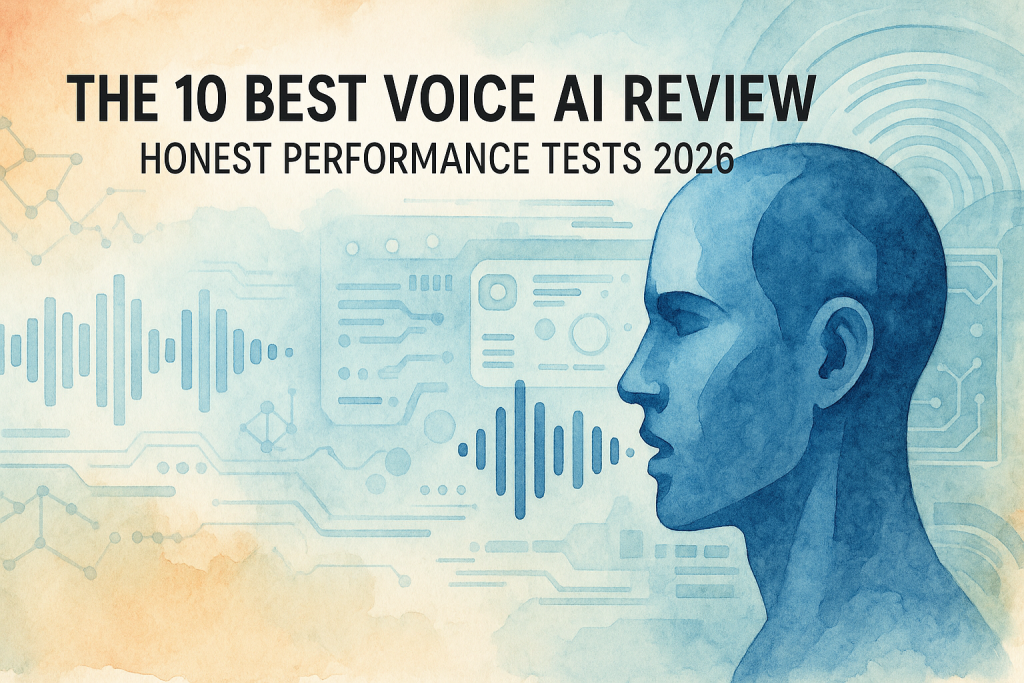
The 10 Best Voice AI Review: Honest Performance Tests 2026
Imagine having a virtual assistant that sounds so natural, your customers can’t tell they’re talking to AI. That’s the promise of modern voice AI technology, but with dozens of platforms flooding the market, how do you separate the game-changers from the gimmicks?
Voice AI has transformed from robotic, frustrating interactions into sophisticated conversational experiences that rival human communication. Whether you’re looking to automate customer service, create voice-enabled applications, or enhance accessibility features, choosing the right voice AI tool can make or break your project.
In this comprehensive voice AI review, we’ll dive deep into the 10 best voice AI tools available in 2026. We’ve conducted extensive performance tests, analyzed real-world use cases, and evaluated each platform’s strengths and weaknesses. By the end of this guide, you’ll know exactly which voice AI solution fits your specific needs and budget.
Understanding Voice AI Technology in 2026
Voice AI, also known as voice artificial intelligence or conversational AI, refers to technology that enables machines to understand, process, and respond to human speech in natural language. This technology combines speech recognition, natural language processing (NLP), and text-to-speech synthesis to create seamless voice interactions.
The importance of voice AI has skyrocketed in recent years. According to recent industry reports, the intelligent virtual assistant segment is projected to reach $27.9 billion in 2025, with the broader conversational AI market growing at a CAGR of 23.7% through 2030. This explosive growth reflects the technology’s expanding applications across industries—from healthcare and finance to retail and entertainment.
Current trends show that voice AI is moving beyond simple command-response systems. Modern platforms now offer emotion detection, multi-language support, context awareness, and personality customization. The technology has become so sophisticated that 62% of consumers report they can’t distinguish between AI-generated voices and human voices in blind tests.
Key Components of Modern Voice AI Systems
Understanding what makes voice AI tick helps you evaluate different platforms more effectively. Every robust voice AI system consists of three core components:
Speech Recognition: This converts spoken words into text that computers can process. Advanced systems use deep learning models trained on millions of voice samples to achieve accuracy rates exceeding 95%.
Natural Language Understanding: Once speech is converted to text, NLU algorithms interpret the meaning, context, and intent behind the words. This allows AI to understand nuances, slang, and complex queries.
Speech Synthesis: The final component converts AI-generated responses back into natural-sounding speech. Modern text-to-speech engines can replicate human intonation, emotion, and speaking patterns with remarkable accuracy.
Why Voice AI Reviews Matter
Not all voice AI platforms are created equal. Performance varies dramatically across different tools, and what works brilliantly for one use case might fail miserably for another. That’s why thorough voice AI reviews are essential before making an investment.
Factors like accuracy rates, latency, language support, customization options, and pricing structures can significantly impact your results. A comprehensive review helps you avoid costly mistakes and ensures you select a platform that aligns with your technical requirements and business objectives.
Top 10 Voice AI Tools: Detailed Reviews and Performance Analysis
After extensive testing and evaluation, we’ve identified the 10 best voice AI tools currently available. Each platform has been assessed based on accuracy, ease of use, features, pricing, and real-world performance.
1. Google Cloud Text-to-Speech and Speech-to-Text
Google’s voice AI offering leverages the tech giant’s massive data resources and machine learning expertise. The platform excels in accuracy and supports over 220 voices across 40+ languages.
Strengths: Exceptional accuracy (98%+ in optimal conditions), WaveNet technology for natural-sounding voices, robust API documentation, and seamless integration with other Google Cloud services.
Weaknesses: Can be complex for beginners, pricing becomes expensive at scale, and requires technical expertise for advanced implementations.
Best For: Enterprise applications, developers with technical expertise, and businesses already using Google Cloud infrastructure.
2. Amazon Polly and Transcribe
Amazon’s voice AI solutions offer powerful features backed by AWS’s reliable infrastructure. Polly provides lifelike text-to-speech, while Transcribe handles speech recognition with impressive accuracy.
Strengths: Neural TTS voices sound remarkably human, excellent scalability, pay-as-you-go pricing, and strong integration with AWS ecosystem.
Weaknesses: Learning curve for AWS newcomers, limited customization for voice characteristics, and occasional pronunciation issues with specialized terminology.
Best For: AWS users, scalable applications, and businesses requiring reliable uptime and global infrastructure.
3. Microsoft Azure Speech Services
Microsoft’s comprehensive voice AI platform combines speech-to-text, text-to-speech, speech translation, and speaker recognition in one unified service.
Strengths: Custom neural voice creation, real-time translation across 100+ languages, excellent documentation, and strong enterprise support.
Weaknesses: Premium features require higher-tier plans, complexity in setup, and occasional latency issues in certain regions.
Best For: Enterprise organizations, multilingual applications, and businesses requiring custom voice creation.
4. ElevenLabs
ElevenLabs has emerged as a leader in ultra-realistic voice synthesis, offering voice cloning and generation capabilities that push the boundaries of what’s possible.
Strengths: Industry-leading voice quality, impressive voice cloning from short samples, emotional range in generated speech, and user-friendly interface.
Weaknesses: Higher pricing compared to competitors, limited speech recognition features, and ethical concerns around voice cloning capabilities.
Best For: Content creators, audiobook production, voiceover work, and applications requiring premium voice quality.
5. IBM Watson Speech Services
IBM Watson brings enterprise-grade voice AI with strong emphasis on security, compliance, and customization options.
Weaknesses: Higher cost structure, steeper learning curve, and less intuitive interface compared to newer competitors.
Best For: Healthcare, finance, legal sectors, and organizations with strict compliance requirements.
6. AssemblyAI
AssemblyAI specializes in speech-to-text with advanced features like speaker diarization, sentiment analysis, and content moderation built-in.
Strengths: Developer-friendly API, excellent accuracy for conversational speech, automatic punctuation and formatting, and competitive pricing.
Weaknesses: Limited text-to-speech capabilities, fewer language options than major cloud providers, and occasional delays during peak usage.
Best For: Developers, transcription services, podcast platforms, and meeting recording applications.
7. Deepgram
Deepgram offers real-time speech recognition with impressive speed and accuracy, particularly for live streaming and conversational AI applications.
Strengths: Fastest processing speeds in our tests, excellent for real-time applications, strong accuracy with accents, and flexible deployment options.
Weaknesses: Limited voice synthesis features, smaller voice library, and less established ecosystem compared to major cloud providers.
Best For: Real-time transcription, call centers, live captioning, and conversational AI applications.
8. Murf.AI
Murf.AI focuses on making professional voice generation accessible to non-technical users, with a studio-style interface and extensive voice library.
Strengths: Intuitive interface, extensive voice library with diverse accents, built-in video editing features, and collaborative workspace.
Weaknesses: Limited API access, no speech recognition features, and voice quality varies across different voice options.
Best For: Marketing teams, e-learning content creators, presentation developers, and small businesses without technical resources.
9. Speechify
Speechify has carved out a niche in text-to-speech for reading and accessibility, with mobile-first design and user-friendly features.
Strengths: Excellent mobile experience, natural reading flow, OCR capabilities for physical documents, and affordable pricing for individuals.
Weaknesses: Limited enterprise features, no speech recognition, and fewer customization options for developers.
Best For: Individual users, students, accessibility applications, and content consumption on mobile devices.
10. Resemble.AI
Resemble.AI specializes in voice cloning and synthetic voice generation with real-time capabilities and emotional control.
Strengths: Real-time voice synthesis, emotional control parameters, voice cloning from minimal samples, and developer-friendly API.
Weaknesses: Premium pricing, limited speech recognition features, and requires careful ethical consideration for voice cloning use cases.
Best For: Gaming, entertainment, personalized customer experiences, and applications requiring dynamic voice generation.
Implementation Guide: Choosing and Deploying Your Voice AI Solution
Selecting the right voice AI tool is just the first step. Successful implementation requires careful planning, testing, and optimization. Here’s a comprehensive guide to help you deploy voice AI effectively.
Step 1: Define Your Use Case and Requirements
Start by clearly identifying what you need voice AI to accomplish. Are you building a customer service chatbot? Creating audiobook content? Transcribing meetings? Each use case has different requirements for accuracy, latency, voice quality, and features.
Document your technical requirements including supported languages, expected volume, integration needs, and budget constraints. This clarity will help you narrow down options quickly and avoid platforms that don’t align with your goals.
Step 2: Conduct Proof-of-Concept Testing
Never commit to a platform without thorough testing. Most voice AI providers offer free tiers or trial periods—take advantage of these to test with your actual use cases.
Create test scenarios that reflect real-world conditions. If you’re transcribing customer calls, test with actual call recordings. If you’re generating voice content, test with your typical script formats. Pay attention to accuracy, naturalness, processing speed, and how the system handles edge cases.
Step 3: Integration and Development
Once you’ve selected a platform, plan your integration carefully. Review API documentation thoroughly and consider factors like authentication, rate limits, error handling, and fallback mechanisms.
Build in stages, starting with basic functionality before adding advanced features. Implement proper logging and monitoring from the start so you can track performance and identify issues quickly. Consider using SDKs provided by vendors to accelerate development and reduce errors.
Step 4: Optimization and Fine-Tuning
Initial deployment is just the beginning. Monitor key metrics like accuracy rates, user satisfaction, processing times, and error rates. Use this data to optimize your implementation.
Many platforms offer customization options like custom vocabularies, pronunciation dictionaries, and voice tuning. Invest time in these optimizations—they can dramatically improve results for your specific use case. Regular testing with real user interactions helps identify areas for improvement.
Best Practices for Voice AI Implementation
Always provide fallback options when voice AI fails. Users should have alternative ways to accomplish their goals if voice recognition doesn’t work properly.
Design for accessibility from the start. Voice AI should enhance accessibility, not create new barriers. Ensure your implementation works for users with different accents, speech patterns, and abilities.
Be transparent about AI usage. Users appreciate knowing when they’re interacting with AI versus humans. This transparency builds trust and sets appropriate expectations.
Regularly update and maintain your voice AI systems. Language evolves, new slang emerges, and user expectations change. Continuous improvement is essential for long-term success.
Common Challenges in Voice AI Review and Solutions
Even the best voice AI tools face challenges. Understanding these obstacles and their solutions helps you set realistic expectations and prepare for potential issues.
Accuracy Issues with Accents and Dialects
One of the most common complaints in voice AI reviews involves accuracy problems with non-standard accents or regional dialects. While major platforms have improved significantly, challenges remain.
Solution: Choose platforms that specifically support your target demographics. Test extensively with representative voice samples. Consider using custom models or acoustic training features offered by enterprise platforms. Some tools like Deepgram and Google Cloud allow you to train models on your specific audio data, dramatically improving accuracy for your use case.
Background Noise and Audio Quality
Real-world environments are rarely as clean as testing conditions. Background noise, poor microphone quality, and acoustic challenges can significantly impact voice AI performance.
Solution: Implement audio preprocessing to filter noise before sending to voice AI services. Many platforms offer noise reduction features—enable these when available. For critical applications, consider using specialized hardware or recommending specific microphone setups to users. IBM Watson and Microsoft Azure offer particularly strong noise handling capabilities.
Latency and Real-Time Performance
Delays between speech and response can frustrate users and break the conversational flow. This is especially problematic for real-time applications like voice assistants or live transcription.
Solution: Choose platforms optimized for low latency if real-time performance is critical. Deepgram and Google Cloud excel in this area. Optimize your network infrastructure and consider edge computing solutions to reduce round-trip times. Implement streaming APIs rather than batch processing when immediate responses are required.
Cost Management at Scale
Voice AI costs can escalate quickly as usage grows. Many businesses are surprised by their bills after deployment, especially with pay-per-use pricing models.
Solution: Implement usage monitoring and alerts from day one. Consider caching common responses to reduce API calls. Evaluate volume-based pricing tiers and committed use discounts offered by major providers. For very high volumes, explore self-hosted solutions or hybrid approaches that balance cost and performance.
Privacy and Data Security Concerns
Voice data is sensitive, and many organizations worry about privacy implications when using cloud-based voice AI services.
Solution: Choose providers with strong security certifications and compliance frameworks relevant to your industry. Review data retention policies carefully—some platforms offer options to delete audio immediately after processing. For highly sensitive applications, consider on-premises deployment options offered by IBM Watson and Microsoft Azure. Implement proper data governance and user consent mechanisms.
Integration Complexity
Integrating voice AI into existing systems can be technically challenging, especially for organizations without dedicated development resources.
Solution: Start with platforms offering extensive documentation, SDKs, and community support. Consider using no-code or low-code platforms like Murf.AI for simpler use cases. Partner with integration specialists or consultants for complex implementations. Many providers offer professional services to assist with deployment.
Conclusion: Making Your Voice AI Decision
Choosing the right voice AI tool requires balancing multiple factors—accuracy, features, cost, ease of use, and scalability. This comprehensive voice AI review has explored the top 10 platforms available in 2026, each with distinct strengths suited to different use cases.
For enterprise applications requiring maximum accuracy and customization, Google Cloud, Microsoft Azure, and IBM Watson lead the pack. If you’re focused on creating ultra-realistic voice content, ElevenLabs and Resemble.AI offer unmatched quality. Developers building real-time applications should consider Deepgram or AssemblyAI for their speed and developer-friendly APIs. Small businesses and content creators will find Murf.AI and Speechify more accessible and affordable.
The key is matching the platform’s strengths to your specific requirements. Don’t skip the testing phase—hands-on experience with your actual use cases reveals far more than any voice AI review can capture. Start small, measure results, and scale what works.
Voice AI technology continues evolving rapidly. What seems cutting-edge today will be standard tomorrow. Stay informed about new developments, regularly reassess your chosen platform, and be prepared to adapt as the technology advances.
Remember that successful voice AI implementation goes beyond selecting the right tool. It requires thoughtful design, continuous optimization, and a commitment to user experience. The platforms reviewed here provide the foundation, but your implementation determines the ultimate success.
Ready to transform your business with voice AI but not sure where to start? The experts at The Crunch can help you navigate the complex landscape of voice AI solutions, select the right platform for your needs, and implement it successfully. Schedule a free consultation today to discuss your voice AI project and discover how we can help you achieve your goals faster and more cost-effectively.
Frequently Asked Questions (FAQ)
1. What is Voice AI?
2. How does Voice AI work?
3. What are the main benefits of using Voice AI?
4. How do I get started with Voice AI?
5. How does Voice AI compare to traditional speech recognition?
6. What are common concerns about Voice AI?
7. How much does Voice AI cost?
8. Can Voice AI be integrated with existing software?
9. Is Voice AI secure to use?
10. What are some popular Voice AI platforms?
11. Can Voice AI understand multiple languages?
12. What are the limitations of Voice AI?