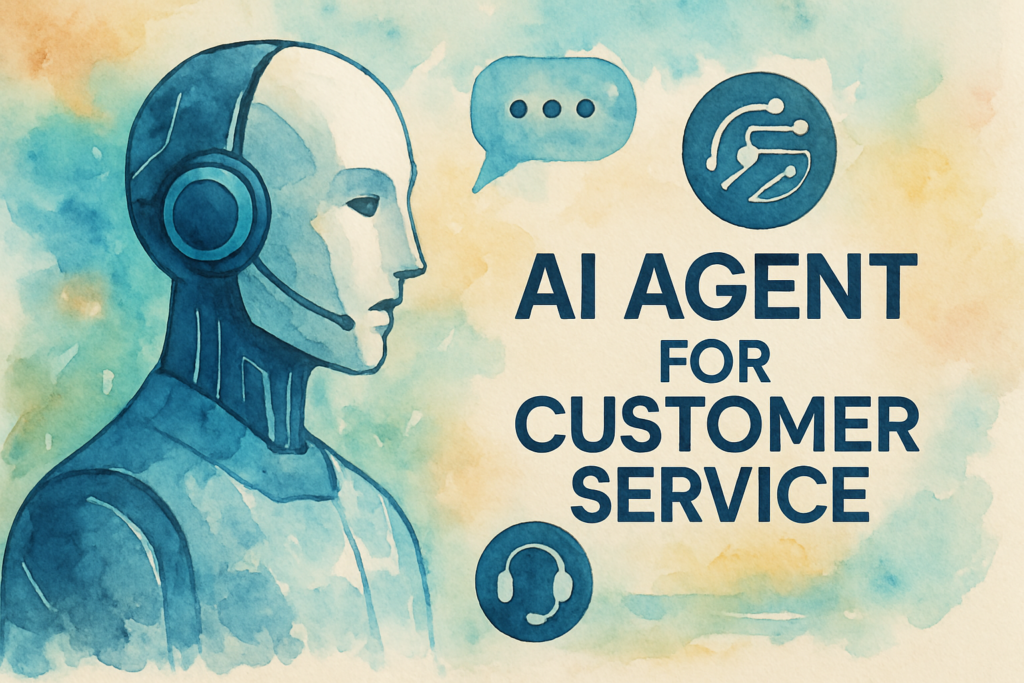
Imagine this: It’s 3 AM, and a customer halfway across the world needs urgent help with your product. Your support team is asleep, but your business never stops. This is where an AI agent for customer service transforms from a luxury into a necessity. In 2026, businesses are no longer asking whether they need AI-powered customer support—they’re asking which solution will give them the competitive edge.
Customer expectations have skyrocketed. According to recent industry research, 73% of customers expect companies to understand their unique needs and expectations, whilst 64% expect real-time assistance regardless of the channel they use. Traditional customer service models simply can’t keep pace with these demands without burning out teams or inflating operational costs.
AI agents for customer service are revolutionising how businesses interact with their customers. These intelligent systems handle enquiries 24/7, resolve issues instantly, and learn from every interaction to improve continuously. They’re not replacing human agents—they’re empowering them to focus on complex, high-value interactions whilst AI handles the routine.
Quick Answer: What You’ll Learn
- What AI agents are: Intelligent systems that automate customer interactions using natural language processing and machine learning
- Top 7 solutions: Comprehensive reviews of the leading AI agent platforms for 2026
- Implementation strategies: Step-by-step guidance to deploy AI agents successfully
- ROI expectations: Real metrics showing cost savings and efficiency gains
- Common challenges: Practical solutions to overcome implementation obstacles
Whether you’re a startup looking to scale support without scaling costs, or an enterprise seeking to enhance customer satisfaction scores, this guide will help you navigate the AI agent landscape and choose the solution that fits your unique needs.
Understanding AI Agents for Customer Service in 2026
An AI agent for customer service is far more sophisticated than the chatbots of yesteryear. These are intelligent systems powered by advanced natural language processing (NLP), machine learning algorithms, and increasingly, large language models (LLMs) that can understand context, sentiment, and intent with remarkable accuracy.
Unlike traditional rule-based chatbots that follow predetermined scripts, modern AI agents learn from interactions, adapt to customer behaviour, and provide personalised responses. They integrate seamlessly with your existing tech stack—CRM systems, knowledge bases, ticketing platforms, and communication channels—creating a unified customer experience.
Why AI Agents Matter More Than Ever
The customer service landscape has fundamentally shifted. Research from leading industry analysts indicates that businesses using AI-powered customer service solutions report up to 40% reduction in support costs whilst simultaneously improving customer satisfaction scores by 25% or more. These aren’t marginal gains—they’re transformative improvements that directly impact your bottom line.
Today’s AI agents can handle multiple languages, understand colloquialisms and slang, detect emotional cues, and escalate complex issues to human agents with full context. They work across channels—web chat, email, social media, messaging apps, and even voice—providing consistent support wherever your customers are.
Current Trends Shaping AI Customer Service
Several key trends are defining the AI agent landscape in 2026:
- Generative AI integration: Solutions now leverage GPT-4 and similar models for more natural, contextual conversations
- Proactive support: AI agents anticipate customer needs and reach out before problems escalate
- Emotional intelligence: Advanced sentiment analysis allows AI to detect frustration and adjust responses accordingly
- Omnichannel consistency: Seamless experiences across all customer touchpoints with conversation continuity
- Self-learning capabilities: Systems that improve autonomously without constant manual training
The market for AI in customer service is projected to reach substantial growth, with adoption rates accelerating across industries from retail and finance to healthcare and technology. Companies that implement AI agents early are establishing significant competitive advantages in customer retention and operational efficiency.
The 7 Best AI Agent for Customer Service Solutions
After extensive research and analysis of features, pricing, user reviews, and real-world performance, we’ve identified the seven leading AI agent platforms that are setting the standard in 2026. Each solution offers unique strengths tailored to different business needs and scales.
1. Zendesk AI
Best for: Mid-sized to enterprise businesses seeking comprehensive support automation
Zendesk has evolved its AI capabilities significantly, integrating advanced automation across its entire customer service platform. Their AI agents can resolve common enquiries instantly, route complex issues intelligently, and provide agents with suggested responses based on historical data and best practices.
Key features:
- Intent detection and automated ticket routing
- Multi-language support across 40+ languages
- Seamless integration with existing Zendesk workflows
- Advanced analytics and performance tracking
- Customisable AI training with your specific data
Pricing: Starts from approximately £49 per agent per month, with AI features available on higher-tier plans.
2. Intercom
Best for: SaaS companies and tech startups prioritising conversational support
Intercom’s Fin AI agent represents a significant leap forward in conversational AI. Built on large language models, Fin provides accurate, natural responses whilst maintaining your brand voice. It’s particularly effective for product-led growth companies that need to scale support without scaling headcount.
Key features:
- Instant answers from your knowledge base and help documentation
- Conversational AI that sounds genuinely human
- Seamless handoff to human agents with full context
- Proactive messaging based on user behaviour
- Built-in A/B testing for optimising responses
Pricing: Custom pricing based on resolution volume, typically starting around £0.99 per resolution.
3. Salesforce Einstein
Best for: Large enterprises with existing Salesforce ecosystems
Einstein AI brings powerful automation to Salesforce Service Cloud, leveraging the platform’s extensive CRM data to provide highly personalised customer interactions. It’s ideal for organisations that need AI deeply integrated with their sales and service operations.
Key features:
- Predictive case classification and routing
- Automated response recommendations
- Deep CRM integration for personalised service
- Voice-enabled AI for phone support
- Comprehensive reporting and AI performance metrics
Pricing: Included with Service Cloud plans starting from approximately £75 per user per month.
4. Ada
Best for: E-commerce and retail businesses requiring scalable automation
Ada specialises in automated customer service for consumer-facing brands. Their platform is designed for non-technical teams to build and deploy sophisticated AI agents without coding, making it accessible for marketing and support teams to manage directly.
Key features:
- No-code bot builder with intuitive interface
- Personalisation based on customer data and behaviour
- Multi-channel deployment (web, mobile, social, messaging)
- Automated multilingual support
- Robust analytics showing automation rates and customer satisfaction
Pricing: Custom pricing based on conversation volume and features required.
5. Kustomer
Best for: Businesses prioritising omnichannel customer experience
Kustomer’s AI-powered platform focuses on providing a unified customer view across all channels. Their AI agents work within a timeline-based interface that shows the complete customer journey, enabling more contextual and effective support.
Key features:
- Unified customer timeline across all interactions
- Intelligent routing based on agent skills and availability
- Automated workflows triggered by customer actions
- Real-time sentiment analysis
- Extensive integration marketplace
Pricing: Starts from approximately £89 per user per month.
6. Drift
Best for: B2B companies focusing on conversational marketing and sales
Whilst Drift is known for conversational marketing, their AI capabilities extend powerfully into customer service. Their platform excels at qualifying leads, answering pre-sales questions, and providing post-purchase support, all within a conversational framework.
Key features:
- Conversational AI for both marketing and support
- Intelligent lead qualification and routing
- Meeting scheduling automation
- Playbooks for different customer scenarios
- Video and screen sharing capabilities
Pricing: Premium plans start from approximately £2,500 per month.
7. Freshdesk
Best for: Small to medium businesses seeking affordable AI automation
Freshdesk offers robust AI capabilities at accessible price points, making it ideal for growing businesses. Their Freddy AI can automate responses, predict customer issues, and assist agents with suggested solutions, all within an easy-to-use interface.
Key features:
- Affordable pricing with AI included in standard plans
- Automated ticket categorisation and prioritisation
- AI-powered chatbot for instant responses
- Agent assist features for faster resolution
- Predictive support to identify potential issues
Pricing: Plans start from £15 per agent per month, with AI features available on Growth plan and above.
Implementing Your AI Agent for Customer Service: A Practical Guide
Selecting the right AI agent is only the beginning. Successful implementation requires careful planning, proper configuration, and ongoing optimisation. Here’s your step-by-step roadmap to deploying an AI agent for customer service that delivers measurable results.
Step 1: Audit Your Current Customer Service Operations
Before implementing any AI solution, understand your baseline. Analyse your current support tickets, identify the most common enquiries, and calculate your average resolution times. Look for patterns in customer questions—typically, 60-80% of enquiries fall into repeatable categories that AI can handle effectively.
Document your key metrics: first response time, resolution time, customer satisfaction scores (CSAT), Net Promoter Score (NPS), and support costs per ticket. These benchmarks will help you measure the impact of your AI implementation.
Step 2: Define Clear Objectives and Success Metrics
What do you want your AI agent to achieve? Common objectives include:
- Reducing average response time by a specific percentage
- Automating resolution of routine enquiries (target: 40-60% automation rate)
- Decreasing support costs whilst maintaining or improving satisfaction
- Extending support availability to 24/7 coverage
- Reducing agent workload to focus on complex issues
Set specific, measurable targets for each objective. For example: “Achieve 50% automation rate for Tier 1 enquiries within three months” or “Reduce average first response time from 4 hours to 30 minutes.”
Step 3: Prepare Your Knowledge Base
Your AI agent is only as good as the information it can access. Audit and update your knowledge base, FAQs, and help documentation. Ensure content is:
- Accurate and current
- Written in clear, conversational language
- Comprehensive, covering common scenarios
- Properly structured with clear headings and categories
- Regularly reviewed and updated
Many businesses discover gaps in their documentation during this process. Address these gaps before launch—your AI agent will perform significantly better with comprehensive source material.
Step 4: Configure and Train Your AI Agent
Most modern AI platforms offer intuitive setup processes, but proper configuration is crucial. Start by:
- Defining your brand voice and tone guidelines
- Setting up intent recognition for common enquiry types
- Creating conversation flows for typical scenarios
- Establishing escalation rules for complex issues
- Configuring integrations with your CRM, helpdesk, and other tools
Train your AI agent using historical ticket data. Most platforms can learn from past interactions to understand how your team typically handles enquiries. Review and refine the AI’s responses before going live.
Step 5: Launch with a Phased Rollout
Don’t switch everything to AI overnight. Implement a phased approach:
Phase 1 (Weeks 1-2): Deploy AI for simple, high-volume enquiries only. Monitor closely and gather feedback.
Phase 2 (Weeks 3-4): Expand to additional enquiry types based on performance. Refine responses and conversation flows.
Phase 3 (Weeks 5-8): Gradually increase automation scope whilst maintaining quality standards. Train your team on working alongside AI.
This approach minimises risk and allows you to optimise performance before full deployment.
Step 6: Monitor, Measure, and Optimise Continuously
AI agents improve through continuous learning and optimisation. Establish regular review cycles:
- Daily: Monitor automation rates, escalation patterns, and customer feedback
- Weekly: Review unresolved queries and update knowledge base accordingly
- Monthly: Analyse performance against objectives and adjust strategies
- Quarterly: Conduct comprehensive reviews and plan enhancements
Pay particular attention to conversations where AI struggled or customers expressed frustration. These represent opportunities for improvement.
Overcoming Common Challenges with AI Customer Service Agents
Whilst AI agents offer tremendous benefits, implementation isn’t without challenges. Understanding these obstacles and their solutions will help you navigate the journey more smoothly.
Challenge 1: Customer Resistance to AI Interactions
Some customers prefer human interaction and may resist AI-powered support. This resistance often stems from past experiences with poorly implemented chatbots that couldn’t understand their needs.
Solution: Transparency and quality are key. Clearly indicate when customers are interacting with AI, but ensure the experience is so seamless they don’t mind. Provide easy access to human agents when needed—customers are more accepting of AI when they know human help is readily available. Focus on making your AI agent genuinely helpful rather than just deflecting enquiries.
Challenge 2: Maintaining Brand Voice and Personality
AI responses can sometimes feel generic or inconsistent with your brand identity, creating a disconnect in customer experience.
Solution: Invest time in defining your brand voice guidelines specifically for AI interactions. Most platforms allow extensive customisation of tone, language style, and personality. Review and refine AI responses regularly to ensure they align with your brand. Consider having your marketing or brand team involved in AI training to maintain consistency.
Challenge 3: Handling Complex or Emotional Situations
AI agents can struggle with nuanced situations requiring empathy, judgement, or creative problem-solving. Frustrated customers may become more upset when they feel they’re not being understood.
Solution: Implement robust escalation protocols. Use sentiment analysis to detect frustration early and route these conversations to human agents promptly. Train your AI to recognise its limitations and gracefully hand off complex issues. Your human agents should receive full context when taking over, ensuring customers don’t need to repeat themselves.
Challenge 4: Integration with Legacy Systems
Many organisations struggle to integrate AI agents with older CRM systems, databases, or custom-built platforms, limiting the AI’s effectiveness.
Solution: Prioritise platforms with extensive integration capabilities and APIs. Consider middleware solutions that can bridge gaps between your AI agent and legacy systems. In some cases, updating critical systems may be necessary to fully leverage AI capabilities. Start with integrations that provide the most value and expand gradually.
Challenge 5: Keeping AI Knowledge Current
Products change, policies update, and new issues emerge. AI agents can provide outdated information if not properly maintained, damaging customer trust.
Solution: Establish clear ownership and processes for knowledge base maintenance. Assign team members responsibility for updating AI training data when changes occur. Implement version control for your knowledge base and set up alerts when AI provides answers that may be outdated. Many platforms offer analytics showing which topics generate the most confusion—use this data to prioritise updates.
Challenge 6: Measuring True ROI
Whilst AI agents clearly reduce costs, quantifying the full return on investment—including customer satisfaction impacts and revenue effects—can be challenging.
Solution: Establish comprehensive measurement frameworks that go beyond simple cost savings. Track customer satisfaction scores specifically for AI interactions, measure impact on customer lifetime value, and monitor how AI affects conversion rates for support-to-sales scenarios. Calculate both direct savings (reduced agent hours) and indirect benefits (increased capacity for proactive support, improved response times leading to higher retention).
Maximising the Benefits of Your AI Customer Service Agent
Once your AI agent for customer service is operational, focus on these strategies to maximise its impact and ensure long-term success.
Empower Your Human Agents
AI should enhance your team’s capabilities, not replace them. Use AI to handle routine enquiries, freeing your human agents to focus on complex problems, relationship building, and high-value interactions. Provide training on working alongside AI, including how to review AI interactions and when to intervene. Many organisations find that AI implementation actually improves job satisfaction by eliminating repetitive tasks.
Leverage AI Insights for Business Intelligence
Your AI agent collects valuable data about customer needs, pain points, and behaviour patterns. Use these insights to inform product development, identify training needs, and improve your overall customer experience. AI can reveal trends and issues before they become widespread problems, enabling proactive solutions.
Personalise at Scale
Modern AI agents can access customer history, preferences, and behaviour to provide personalised support at scale. Ensure your AI leverages available data to tailor responses, recommend relevant solutions, and create more meaningful interactions. Personalisation significantly improves customer satisfaction and resolution rates.
Expand Gradually Across Channels
Once your AI agent performs well on one channel, expand to others. Deploy across web chat, email, social media, messaging apps, and even voice channels. Ensure consistency across all touchpoints whilst adapting to channel-specific expectations and limitations.
The Future of AI Agents in Customer Service
Looking ahead, AI agents will become even more sophisticated and integral to customer service operations. Emerging trends include:
- Predictive support: AI that anticipates customer needs before they reach out
- Emotional AI: Systems that detect and respond appropriately to customer emotions
- Voice-first experiences: Natural voice interactions indistinguishable from human agents
- Autonomous problem-solving: AI that can take actions beyond just providing information
- Hyper-personalisation: Experiences tailored to individual customer preferences and history
Organisations that invest in AI customer service capabilities now are positioning themselves for sustained competitive advantage as these technologies mature.
Transform Your Customer Service with AI
The evidence is clear: AI agents for customer service are no longer experimental technology—they’re essential tools for businesses that want to meet modern customer expectations whilst controlling costs. The seven solutions we’ve explored represent the leading edge of what’s possible in 2026, each offering unique strengths for different business contexts.
Success with AI customer service requires more than just selecting the right platform. It demands thoughtful implementation, continuous optimisation, and a commitment to maintaining the human touch where it matters most. The businesses thriving with AI are those that view it as a tool to empower their teams and enhance customer relationships, not simply as a cost-cutting measure.
Start by clearly defining your objectives, understanding your customers’ needs, and choosing a solution that aligns with your technical capabilities and growth plans. Implement gradually, measure rigorously, and optimise continuously. The results—reduced costs, improved satisfaction, and scalable support operations—will justify the investment many times over.
Remember that AI customer service is an evolving field. The platforms and capabilities available today will continue advancing rapidly. Stay informed about new developments, be willing to adapt your approach, and maintain focus on what truly matters: delivering exceptional customer experiences efficiently.
Ready to transform your customer service with AI? The team at The Crunch specialises in helping businesses select, implement, and optimise AI customer service solutions tailored to their unique needs. We’ll help you navigate the options, avoid common pitfalls, and achieve measurable results faster. Schedule your free consultation today and discover how AI can revolutionise your customer support operations.
Frequently Asked Questions (FAQ)
1. What is an AI agent for customer service?
2. How does an AI customer service agent work?
3. What are the benefits of using AI agents in customer service?
4. How do AI agents compare to human customer service representatives?
5. Are AI customer service agents expensive to implement?
6. Can AI agents handle complex customer issues?
7. How do I get started with an AI agent for my customer service team?
8. What are common concerns about using AI in customer service?
9. Can AI agents integrate with my existing customer service software?
10. How do AI agents learn and improve over time?
11. Is customer data safe with AI agents?
12. What types of businesses can benefit from AI customer service agents?