10 Ways AI Analytics CRM Boosts ROI Today: The Ultimate Guide
Your sales team is likely drowning in customer data but starving for insights. In the modern business landscape, the “data deluge” is a real threat to productivity. Companies collect massive amounts of customer information daily—web visits, email opens, social interactions, and purchase history—yet most fail to extract the actionable insights that drive revenue growth.
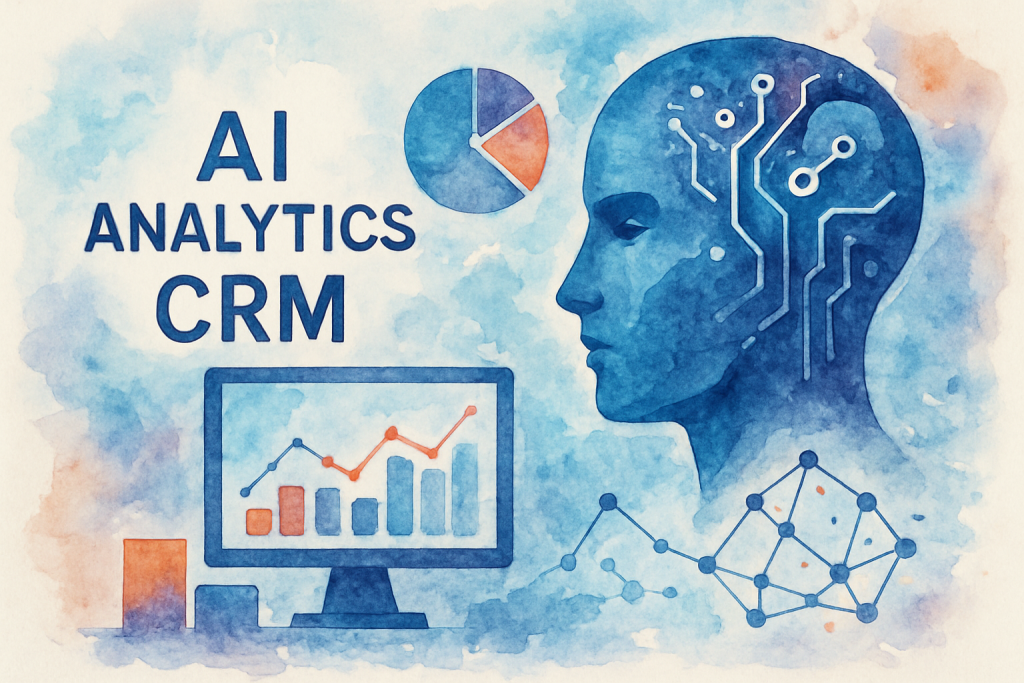
Traditional Customer Relationship Management (CRM) systems were designed as “Systems of Record”—digital filing cabinets to store contact information. However, the rise of Artificial Intelligence has transformed the CRM into a “System of Intelligence.” According to Salesforce research, 84% of customers say being treated like a person, not a number, is crucial to winning their business. AI analytics is the only way to achieve this personalization at scale.
The Fundamental Shift: Traditional vs. AI-Powered CRM
The distinction between conventional and AI-powered systems is profound. While conventional CRMs tell you what happened yesterday (descriptive analytics), AI-powered systems predict what will happen tomorrow (predictive analytics) and suggest what you should do about it (prescriptive analytics).
| Feature | Traditional CRM | AI-Powered CRM |
|---|---|---|
| Data Processing | Manual entry and static reporting. | Machine learning and automated data ingestion. |
| Lead Management | Rules-based filtering (e.g., “is the lead in New York?”). | Predictive Lead Scoring based on thousands of variables. |
| Personalization | Generic templates with “First Name” tags. | Hyper-personalized messaging based on behavior. |
| Workflows | Fixed, manual triggers. | Dynamic, self-optimizing workflows. |
10 Ways AI Analytics CRM Boosts Your ROI
1. Predictive Lead Scoring and Qualification
In a traditional setup, sales reps often waste 50% of their time on leads that will never close. AI eliminates this guesswork. By analyzing historical conversion data, demographic profiles, and real-time behavioral signals, AI assigns a score to every lead.
Actionable Step: Implement a system like HubSpot’s Predictive Lead Scoring. Focus your sales “Power Hour” exclusively on leads with a score of 80 or above. This ensures high-value human talent is spent on high-probability opportunities.
2. Hyper-Personalized Customer Journey Mapping
The modern customer journey is no longer linear. A prospect might see an ad on Instagram, read a blog post, ignore three emails, and then suddenly search for a demo. AI tracks these fragmented touchpoints to create a unified profile.
Actionable Step: Use AI to trigger “Next Best Action” emails. If a lead visits your pricing page twice in 24 hours but hasn’t responded to sales, automate a personalized case study delivery relevant to their industry.
3. Automated Dynamic Customer Segmentation
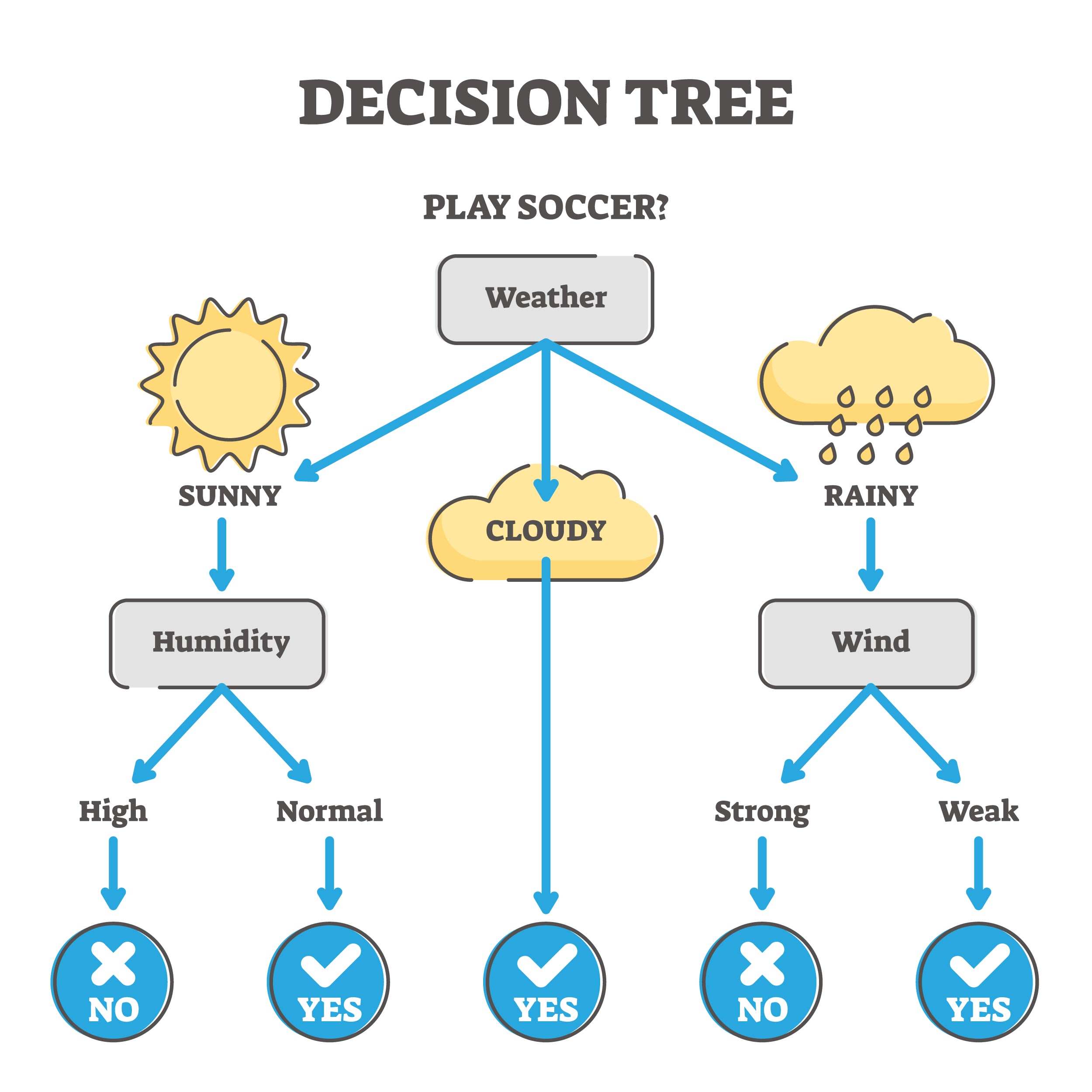
Manual segmentation is usually limited to broad categories like “Geography” or “Company Size.” AI uses clustering algorithms to find hidden patterns, creating micro-segments such as “High-Value/Low-Engagement” or “Discount-Driven Seasonal Buyers.”
Actionable Step: Run an AI cluster analysis to identify your “Champions”—customers with high lifetime value (LTV) but low recent activity. Target them with an exclusive loyalty offer to prevent churn before it starts.
4. Intelligent Sales Forecasting
Sales forecasting is notoriously inaccurate because it relies on subjective “gut feelings” from sales reps. AI looks at the actual velocity of deals, historical win rates, and external market trends to provide a realistic number.
Actionable Step: Compare your manual sales forecast against an AI-generated forecast for one quarter. Use the discrepancy to identify “stalled” deals that sales reps are overly optimistic about, and intervene early.
5. Churn Prediction and Attrition Prevention
It costs five times more to acquire a new customer than to retain an existing one. AI detects “silent churn”—subtle changes in behavior like decreased login frequency, slower response times to emails, or negative sentiment in support tickets.
Actionable Step: Set up an automated “Red Flag” alert. When a customer’s engagement score drops by 30% over a 14-day period, trigger an automated task for the Account Manager to schedule a “Pulse Check” call.
6. Conversational AI and Intelligent Chatbots
Modern buyers expect instant responses. AI chatbots, powered by Natural Language Processing (NLP), can handle up to 80% of routine inquiries, schedule meetings, and even process orders 24/7 without human intervention.
Actionable Step: Integrate a tool like Intercom’s Fin or Drift. Program it to qualify leads via chat before passing them to a live agent, ensuring your sales team only talks to “sales-ready” prospects.
7. Real-Time Sentiment Analysis
AI can “read between the lines” of customer communications. By analyzing the tone and word choice in emails, social media mentions, and support tickets, it provides a “Sentiment Score.”
Actionable Step: Use sentiment analysis to route tickets. Ensure that any email with a “Negative/Frustrated” sentiment score is automatically escalated to a senior manager to prevent a public negative review.
8. Automated Task Prioritization and Workflow Optimization
Administrative work kills sales productivity. AI acts as a “Virtual Assistant,” automatically logging calls, summarizing meetings via tools like Otter.ai, and suggesting which follow-up emails are most urgent.
Actionable Step: Audit your team’s CRM usage. If they spend more than 2 hours a day on data entry, implement an AI sales assistant to automate activity logging and focus them back on selling.
9. Dynamic Pricing and Offer Optimization
Static pricing is a missed revenue opportunity. AI analyzes competitor pricing, seasonal demand, and a specific customer’s purchase history to recommend the optimal price point or discount level that will trigger a purchase without eroding margins.
Actionable Step: For e-commerce businesses, use AI to offer “Exit-Intent” discounts. If a high-value segment user is about to leave the cart, offer a personalized 10% discount to close the deal immediately.
10. Intelligent Cross-Sell and Upsell Recommendations
AI uses “Product Affinity” analysis—similar to Amazon’s “Customers who bought this also bought…”—to identify the most likely next purchase for every individual customer.
Actionable Step: Review your “Frequently Bought Together” data. Automate a post-purchase email sequence that recommends a complementary product exactly 15 days after the initial purchase, when the customer’s brand affinity is highest.
AI Analytic CRM Implementation Guide: A Strategic Roadmap
Step 1: Clean Your Data (The Foundation)
AI is a “Garbage In, Garbage Out” system. Before turning on AI features, perform a data audit. Deduplicate records, standardize address formats, and ensure your lead sources are correctly tracked. Clean data is the fuel for ROI.
Step 2: Define Success Metrics (KPIs)
Don’t just “implement AI.” Define what success looks like. Are you trying to reduce the sales cycle by 10%? Or increase Average Order Value (AOV) by 15%? Set these benchmarks before you begin.
Step 3: Start with a Pilot Use Case
Instead of an enterprise-wide rollout, pick one department (e.g., Customer Support) and one AI tool (e.g., Sentiment Analysis). Measure the impact over 90 days before scaling to Sales or Marketing.
Step 4: Focus on Human-AI Collaboration
The biggest hurdle to AI adoption is fear of job replacement. Train your team to view AI as a “Co-pilot” that removes the boring parts of their job, allowing them to focus on the human relationships that actually close deals.
Overcoming Challenges
- Data Privacy: Ensure your CRM provider is GDPR and CCPA compliant. AI requires access to data, but it must be handled ethically.
- Integration Complexity: Use middleware like Zapier or Make to connect legacy tools to your AI CRM if native integrations aren’t available.
- The Learning Curve: Invest in professional training. An AI CRM is a Ferrari; it’s only as fast as the person driving it.
Conclusion: The Future is Intelligent
The competitive advantage of the next decade will be held by companies that can turn their data into a strategic asset. By implementing an AI-powered CRM, you aren’t just buying software; you are investing in a system that learns, predicts, and grows with your business.
Take the first step today. Contact The Crunch for a comprehensive audit of your current CRM and a custom roadmap for AI integration.
Frequently Asked Questions
1. What is the difference between a traditional CRM and an AI CRM?
A traditional CRM is a database for storage. An AI CRM uses machine learning to analyze that stored data to predict future behaviors, automate complex tasks, and provide recommendations to users.
2. Is AI CRM only for large enterprises?
No. Platforms like Zoho Zia and HubSpot offer AI features specifically designed for small and medium-sized businesses at an affordable price point.
3. How does AI improve sales ROI?
It improves ROI by increasing the “Win Rate” (through better lead scoring), reducing “Customer Acquisition Cost” (through automation), and increasing “Lifetime Value” (through personalized retention strategies).
4. Is my data secure in an AI-powered CRM?
Reputable vendors use enterprise-grade encryption and comply with global privacy standards. Always verify that your vendor has SOC2 certification.