7 Game-Changing AI CRM Use Cases to Boost ROI in 2026
Customer relationship management has evolved dramatically over the past few years. Traditional CRM systems that once served as glorified contact databases are now intelligent platforms powered by artificial intelligence. Yet, many businesses still struggle to leverage AI CRM use cases effectively, leaving significant revenue opportunities on the table.
The numbers tell a compelling story. Companies implementing AI-powered CRM solutions report up to 50% increases in lead conversion rates and 40% improvements in customer retention. These aren’t just incremental gains—they’re transformative results that directly impact your bottom line.
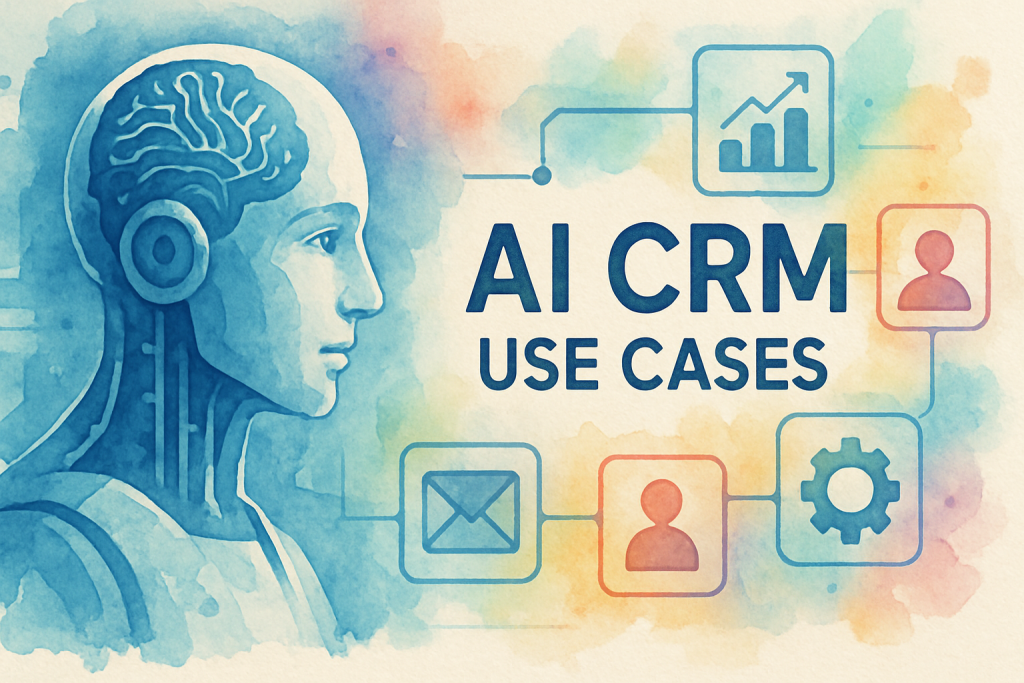
In this comprehensive guide, we’ll explore seven game-changing AI CRM use cases that are reshaping how businesses interact with customers, streamline operations, and drive measurable ROI. Whether you’re considering your first AI CRM implementation or looking to maximize your existing system, you’ll discover practical strategies and actionable insights to stay ahead in 2026.
Understanding AI CRM Technology and Its Growing Importance
Artificial intelligence in CRM represents a fundamental shift from reactive to proactive customer management. Unlike traditional systems that simply store customer data, AI-powered CRM platforms analyze patterns, predict behaviors, and automate complex decision-making processes.
The market reflects this transformation. According to Gartner, global spending on AI-powered CRM solutions is projected to reach $85 billion by 2025, with adoption rates accelerating across industries. Salesforce reports that 72% of business leaders consider AI essential for their CRM strategy, up from just 29% three years ago.
Why AI CRM Matters More Than Ever
Customer expectations have reached unprecedented heights. Today’s consumers demand personalized experiences, instant responses, and seamless interactions across multiple channels. Manual processes and human intuition alone can no longer keep pace with these demands.
AI CRM bridges this gap by processing vast amounts of customer data in real-time, identifying opportunities that would otherwise remain hidden, and enabling your team to deliver exceptional experiences at scale. The technology empowers businesses to be more responsive, more predictive, and ultimately more profitable.
7 Powerful AI CRM Use Cases Transforming Business Performance
1. Intelligent Lead Scoring and Prioritization
AI-powered lead scoring revolutionizes how sales teams allocate their time and resources. Traditional lead scoring relies on static rules and manual updates, often missing nuanced signals that indicate purchase intent.
Machine learning algorithms analyze hundreds of data points—including website behavior, email engagement, social media activity, and demographic information—to assign dynamic lead scores. These scores update in real-time as prospects interact with your brand, ensuring your sales team always focuses on the hottest opportunities.
Companies using AI lead scoring report 30% higher conversion rates and 25% shorter sales cycles. The technology identifies patterns invisible to human analysts, such as specific content combinations that signal buying readiness or behavioral sequences that predict churn risk.
2. Predictive Customer Churn Prevention
Losing customers costs significantly more than acquiring new ones. AI CRM systems excel at identifying at-risk customers before they leave, giving your team time to intervene with targeted retention strategies.
Predictive churn models analyze historical data, usage patterns, support ticket frequency, payment behaviors, and engagement metrics to calculate churn probability for each customer. The system flags high-risk accounts and recommends specific retention actions based on what has worked for similar customers in the past.
One telecommunications company reduced customer churn by 15% within six months of implementing AI-powered churn prediction, saving millions in revenue. The key was acting on insights before customers made the decision to leave.
3. Automated Personalized Communication
Personalization at scale remains one of the most valuable AI CRM use cases. AI analyzes customer preferences, purchase history, browsing behavior, and communication patterns to craft personalized messages that resonate with individual recipients.
Natural language generation creates email content, product recommendations, and marketing messages tailored to each customer’s interests and stage in the buyer journey. The technology determines optimal send times, preferred channels, and message frequency for maximum engagement.
Businesses leveraging AI-powered personalization see 20% increases in email open rates and 35% improvements in click-through rates compared to generic campaigns. The technology ensures every customer interaction feels relevant and timely.
4. Intelligent Sales Forecasting
Accurate revenue forecasting drives better business decisions across departments. AI transforms sales forecasting from educated guesswork into data-driven science.
Machine learning models analyze historical sales data, pipeline velocity, seasonal trends, market conditions, and individual rep performance to generate precise revenue predictions. The system accounts for variables that traditional forecasting methods overlook, such as economic indicators, competitor activities, and changing customer behaviors.
Organizations using AI sales forecasting achieve 95% accuracy rates, compared to 70-80% with traditional methods. This precision enables better resource allocation, inventory management, and strategic planning.
5. Conversational AI and Chatbot Integration
AI-powered chatbots and virtual assistants handle routine customer inquiries 24/7, freeing human agents to focus on complex issues requiring empathy and creative problem-solving.
Modern conversational AI understands context, sentiment, and intent, providing responses that feel natural and helpful. These systems learn from every interaction, continuously improving their ability to resolve customer issues without human intervention.
Companies implementing AI chatbots report 40% reductions in support costs while simultaneously improving customer satisfaction scores. The technology handles thousands of simultaneous conversations, ensuring no customer waits for assistance.
6. Automated Data Entry and Enrichment
Sales professionals spend up to 17% of their time on data entry—time that could be spent building relationships and closing deals. AI eliminates this administrative burden through automated data capture and enrichment.
The technology extracts information from emails, meeting notes, phone calls, and documents, automatically updating CRM records with relevant details. AI also enriches existing data by pulling information from external sources, ensuring your customer profiles remain complete and current.
Teams using AI-powered data automation report 30% increases in selling time and 50% improvements in data accuracy. Clean, comprehensive data also enhances the effectiveness of other AI CRM use cases.
7. Next-Best-Action Recommendations
AI analyzes customer data, interaction history, and business objectives to recommend the optimal next step for each customer relationship. These recommendations might include product suggestions, outreach timing, communication channels, or specific talking points.
The system considers multiple factors simultaneously—customer lifetime value, purchase probability, competitive threats, and resource availability—to prioritize actions that maximize ROI. Sales and service teams receive real-time guidance on how to advance each customer relationship most effectively.
Organizations implementing next-best-action AI see 25% increases in cross-sell and upsell revenue, along with improved customer satisfaction from more relevant interactions.
Implementing AI CRM: A Practical Step-by-Step Guide
Step 1: Assess Your Current CRM Capabilities and Needs
Begin by evaluating your existing CRM system and identifying specific pain points. Where do manual processes slow your team down? Which customer insights are you missing? What opportunities are slipping through the cracks?
Document your current workflows, data quality issues, and integration requirements. This assessment creates a baseline for measuring AI implementation success and helps prioritize which use cases to tackle first.
Step 2: Define Clear Objectives and Success Metrics
Successful AI CRM implementation requires specific, measurable goals. Rather than vague aspirations like “improve customer relationships,” set concrete targets such as “increase lead conversion rates by 20%” or “reduce customer churn by 15%.”
Establish key performance indicators for each AI use case you plan to implement. These metrics guide your technology selection, implementation approach, and ongoing optimization efforts.
Step 3: Ensure Data Quality and Accessibility
AI systems are only as good as the data they analyze. Before implementing AI CRM capabilities, invest time in cleaning existing data, establishing data governance policies, and creating processes for maintaining data quality.
Consolidate customer data from disparate sources into your CRM system. AI requires comprehensive, accurate data to generate reliable insights and recommendations. Many organizations discover that data preparation represents 60-70% of their AI implementation effort.
Step 4: Choose the Right AI CRM Platform
Evaluate AI CRM solutions based on your specific use cases, technical requirements, and budget constraints. Leading platforms include Salesforce Einstein, Microsoft Dynamics 365 AI, HubSpot AI, and Zoho Zia, each offering different strengths and capabilities.
Consider factors like ease of integration with existing systems, scalability, customization options, and vendor support. Request demonstrations focused on your priority use cases and ask for customer references from similar organizations.
Step 5: Start with a Pilot Program
Rather than attempting a full-scale rollout immediately, begin with a focused pilot program targeting one or two high-impact use cases. This approach allows you to demonstrate value quickly, learn from early challenges, and build organizational confidence in AI technology.
Select a pilot team that’s enthusiastic about innovation and willing to provide honest feedback. Use their experiences to refine your implementation approach before expanding to other teams.
Step 6: Train Your Team and Foster Adoption
Technology alone doesn’t drive results—people do. Invest in comprehensive training that helps your team understand not just how to use AI CRM features, but why they matter and how they make jobs easier.
Address concerns about AI replacing human roles by emphasizing how the technology augments human capabilities rather than replacing them. Share early wins and success stories to build momentum and encourage adoption.
Step 7: Monitor, Measure, and Optimize
AI CRM implementation is an ongoing journey, not a one-time project. Continuously monitor performance against your defined success metrics, gathering feedback from users and customers.
Use these insights to refine AI models, adjust workflows, and expand to additional use cases. The most successful organizations treat AI CRM as an evolving capability that improves over time through continuous learning and optimization.
Overcoming Common AI CRM Implementation Challenges
Challenge 1: Data Privacy and Security Concerns
AI systems require access to sensitive customer data, raising legitimate privacy and security concerns. Organizations must balance AI capabilities with regulatory compliance requirements like GDPR, CCPA, and industry-specific regulations.
Solution: Implement robust data governance frameworks that define who can access what data and for what purposes. Choose AI CRM vendors with strong security credentials and compliance certifications. Be transparent with customers about how you use AI to analyze their data, and provide opt-out options where appropriate.
Challenge 2: Integration Complexity
Many organizations struggle to integrate AI CRM capabilities with existing systems, creating data silos that limit AI effectiveness.
Solution: Prioritize AI CRM platforms with pre-built integrations for your existing technology stack. Work with experienced implementation partners who understand both your business processes and technical architecture. Consider middleware solutions that facilitate data flow between systems.
Challenge 3: Resistance to Change
Sales and service teams accustomed to traditional workflows may resist AI-powered tools, viewing them as threats rather than enablers.
Solution: Involve end users early in the selection and implementation process. Demonstrate quick wins that make their jobs easier and more productive. Provide ongoing support and training, and celebrate individuals who embrace AI tools effectively. Leadership must model enthusiasm for AI adoption.
Challenge 4: Unrealistic Expectations
Some organizations expect AI to deliver transformative results immediately, leading to disappointment when reality doesn’t match the hype.
Solution: Set realistic timelines and expectations from the start. Communicate that AI models improve over time as they learn from more data. Focus on incremental improvements rather than overnight transformation. Share both successes and learnings transparently throughout the implementation journey.
Challenge 5: Insufficient Data Quality
Poor data quality undermines AI effectiveness, producing unreliable insights and recommendations that erode user trust.
Solution: Invest in data quality improvement before implementing AI capabilities. Establish data governance policies and assign clear ownership for data accuracy. Use AI-powered data cleansing tools to identify and correct issues systematically. Make data quality a continuous priority, not a one-time project.
Maximizing Your AI CRM Investment in 2026 and Beyond
The seven AI CRM use cases we’ve explored represent just the beginning of what’s possible when you combine artificial intelligence with customer relationship management. From intelligent lead scoring to predictive churn prevention, from automated personalization to next-best-action recommendations, these capabilities transform how businesses understand and serve their customers.
The organizations that thrive in 2026 and beyond will be those that embrace AI not as a futuristic concept, but as a practical tool for delivering exceptional customer experiences at scale. They’ll use AI to augment human capabilities, freeing their teams to focus on strategic thinking, creative problem-solving, and building genuine relationships.
Success with AI CRM requires more than just technology implementation. It demands a commitment to data quality, a willingness to evolve processes, and a culture that embraces continuous learning and improvement. The investment pays dividends through increased revenue, improved efficiency, and stronger customer relationships.
As you consider which AI CRM use cases to prioritize, remember that the goal isn’t to implement every possible feature—it’s to solve specific business challenges and create measurable value. Start with use cases that address your most pressing pain points, demonstrate success, and expand from there.
The future of customer relationship management is intelligent, predictive, and personalized. The question isn’t whether to adopt AI CRM capabilities, but how quickly you can implement them to stay competitive in an increasingly AI-driven marketplace.
Ready to transform your customer relationships with AI-powered CRM? The experts at The Crunch specialize in helping businesses implement AI CRM solutions that drive real results. Don’t navigate this journey alone—schedule a free consultation today to discover how AI can boost your ROI in 2026. Contact The Crunch now to get started with your personalized AI CRM strategy.
Frequently Asked Questions (FAQ)
1. What is an AI-powered CRM?
2. How does AI improve traditional CRM systems?
3. What are the main use cases for AI in CRM?
4. How do I get started with an AI CRM?
5. What are the benefits of using AI in CRM?
6. How does AI CRM compare to traditional CRM?
7. Is AI CRM expensive?
8. Can AI CRM integrate with my existing tools?
9. What are common concerns about using AI in CRM?
10. How does AI help with customer segmentation?
11. Can small businesses benefit from AI CRM?
12. What should I look for when choosing an AI CRM?