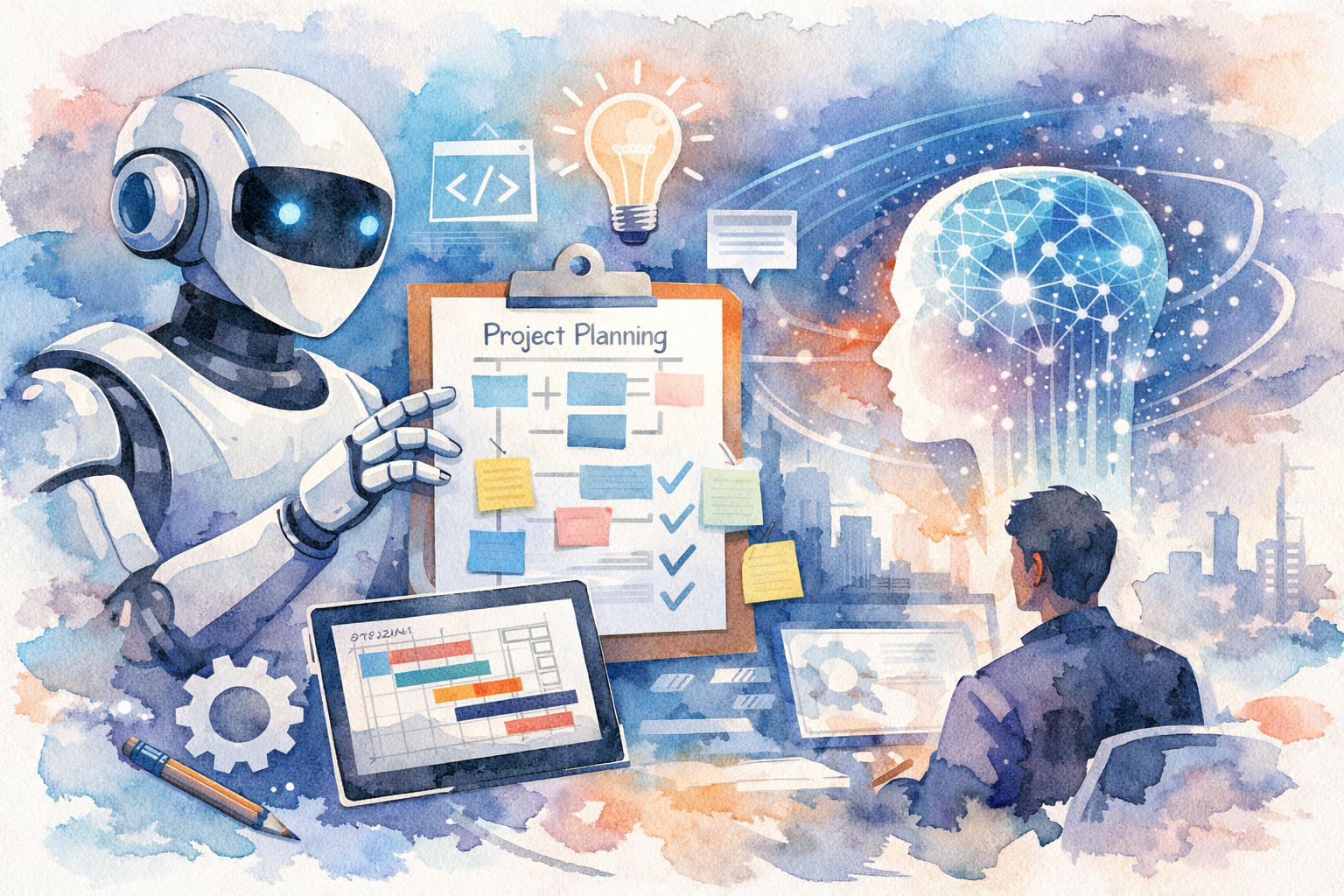
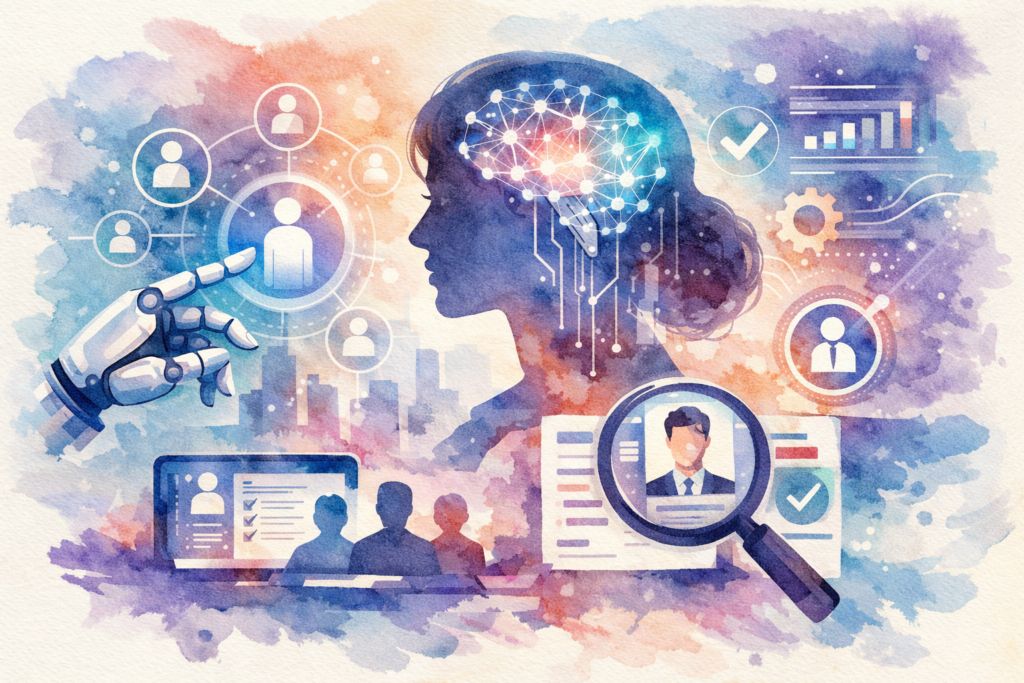
Picture this: Your HR team is drowning in a sea of CVs, spending countless hours screening candidates, scheduling interviews, and answering the same questions repeatedly. Meanwhile, top talent slips through your fingers because your competitors are moving faster. Sound familiar? The good news is that AI for HR is revolutionising how organisations attract, assess, and hire talent—and it’s more accessible than you might think.
Artificial intelligence isn’t just a buzzword anymore; it’s become an essential component of modern human resources management. From automating repetitive tasks to uncovering hidden talent patterns, AI-powered tools are helping HR professionals work smarter, not harder. In fact, research from Gartner indicates that 76% of HR leaders believe that if their organisation doesn’t adopt AI solutions in the next 12 to 24 months, they’ll be lagging behind in organisational success.
In this comprehensive guide, we’ll explore seven transformative AI tools that are reshaping the recruitment landscape, helping you make better hiring decisions whilst saving valuable time and resources.
Quick Answer: What is AI for HR?
AI for HR refers to artificial intelligence technologies that automate and enhance human resources processes, particularly in recruitment and talent management. These tools use machine learning, natural language processing, and predictive analytics to screen candidates, reduce bias, automate scheduling, improve candidate matching, and provide data-driven insights—ultimately making hiring faster, more efficient, and more objective.
Understanding AI for HR: The New Recruitment Paradigm
Artificial intelligence in human resources represents a fundamental shift in how organisations approach talent acquisition and management. At its core, AI for HR encompasses a range of technologies—including machine learning, natural language processing, and predictive analytics—that work together to streamline recruitment processes and improve decision-making.
The importance of AI in HR cannot be overstated. Traditional recruitment methods are time-consuming, often biased, and increasingly inadequate for today’s competitive talent market. According to research from the Society for Human Resource Management (SHRM), the average cost per hire is approximately £3,500, and it takes an average of 42 days to fill a position. AI-powered tools are dramatically reducing both these metrics.
Current Trends Shaping AI in Human Resources
The AI recruitment landscape is evolving rapidly. Recent data from LinkedIn‘s Global Talent Trends report reveals that 67% of hiring managers and recruiters say AI helps them save time, whilst 43% believe it removes human bias from the process. These aren’t just incremental improvements—they’re transformative changes that are redefining what’s possible in talent acquisition.
Another significant trend is the democratisation of AI technology. What once required substantial investment and technical expertise is now available through user-friendly platforms that integrate seamlessly with existing HR systems. This accessibility means that organisations of all sizes can leverage AI for HR to compete for top talent.
The Business Case for AI-Powered Recruitment
Beyond the obvious time savings, AI for HR delivers measurable business value. Research from McKinsey suggests that companies using AI in their recruitment processes have seen a 35% reduction in employee turnover and a 50% decrease in time-to-hire. These improvements translate directly to bottom-line benefits, with better quality hires leading to increased productivity and reduced recruitment costs.
Moreover, AI tools help organisations build more diverse and inclusive workforces by identifying and mitigating unconscious bias in job descriptions, candidate screening, and interview processes. This isn’t just ethically sound—it’s good business, with diverse teams consistently outperforming homogeneous ones.
7 Game-Changing AI Tools Transforming HR and Recruitment
Now that we understand the landscape, let’s explore seven powerful AI tools that are revolutionising how HR professionals approach hiring. Each tool offers unique capabilities designed to address specific recruitment challenges.
1. HireVue
HireVue pioneered video interviewing technology and has evolved into a comprehensive AI-powered assessment platform. The tool uses natural language processing and machine learning to analyse candidate responses, facial expressions, and speech patterns during video interviews. This provides recruiters with objective data to complement their subjective assessments.
What sets HireVue apart is its ability to predict candidate success based on competencies rather than traditional credentials. Companies like Unilever have used HireVue to screen over 250,000 candidates, reducing their hiring time from four months to just four weeks whilst simultaneously improving diversity metrics.
2. Pymetrics
Pymetrics takes a neuroscience-based approach to candidate assessment. The platform uses gamified assessments to measure cognitive and emotional attributes, creating detailed candidate profiles that match individuals to roles where they’re most likely to succeed. The AI algorithms learn from your top performers, identifying the traits that correlate with success in specific positions.
This tool is particularly effective at reducing bias, as it focuses on innate abilities rather than background or experience. Major organisations including Accenture and LinkedIn use Pymetrics to build more diverse talent pipelines whilst improving quality of hire.
3. Textio
Before you can hire great candidates, you need to attract them with compelling job descriptions. Textio uses augmented writing technology to help HR professionals craft job postings that appeal to diverse candidates and drive higher application rates. The platform analyses millions of job listings to identify language patterns that correlate with successful hiring outcomes.
Textio provides real-time feedback as you write, suggesting improvements to tone, inclusivity, and clarity. Companies using Textio report filling positions 23% faster on average, with significant improvements in candidate diversity.
4. Eightfold AI
Eightfold AI offers a comprehensive talent intelligence platform that goes beyond recruitment to encompass the entire employee lifecycle. The platform’s deep learning algorithms analyse billions of data points to match candidates with opportunities, predict career trajectories, and identify skills gaps within your organisation.
What makes Eightfold particularly powerful is its ability to surface hidden talent—both external candidates who might not have traditional qualifications and internal employees who could transition into new roles. This holistic approach to talent management helps organisations build more agile, future-ready workforces.
5. Paradox (Olivia)
Paradox’s conversational AI assistant, Olivia, handles the time-consuming administrative tasks that bog down recruiters. From screening candidates and answering FAQs to scheduling interviews and sending reminders, Olivia automates the entire candidate communication process through natural, conversational interactions.
The tool integrates with popular applicant tracking systems and can handle thousands of conversations simultaneously, ensuring candidates receive immediate responses regardless of when they apply. Companies like McDonald’s and Unilever use Olivia to create seamless candidate experiences whilst freeing recruiters to focus on strategic activities.
6. SeekOut
SeekOut is an AI-powered talent sourcing platform that helps recruiters find candidates across multiple channels, including social media, professional networks, and open-source communities. The platform’s algorithms can identify passive candidates who aren’t actively job hunting but might be open to the right opportunity.
SeekOut’s diversity search capabilities are particularly noteworthy, allowing recruiters to build inclusive talent pipelines without introducing bias into the selection process. The tool also provides contact information and engagement insights, making outreach more effective and personalised.
7. Phenom
Phenom offers an AI-powered talent experience platform that personalises every interaction candidates and employees have with your organisation. From intelligent chatbots that guide candidates through the application process to personalised job recommendations based on skills and interests, Phenom creates engaging experiences that improve conversion rates at every stage of the talent journey.
The platform’s analytics capabilities provide deep insights into recruitment funnel performance, helping HR teams identify bottlenecks and optimise their processes. Companies using Phenom report a 30% increase in qualified applicants and a 25% reduction in time-to-fill.
Implementing AI for HR: A Practical Roadmap
Understanding the potential of AI tools is one thing; successfully implementing them is another. Here’s a step-by-step guide to integrating AI for HR into your recruitment processes effectively.
Step 1: Assess Your Current Recruitment Challenges
Begin by conducting a thorough audit of your existing recruitment processes. Where are the bottlenecks? Which tasks consume the most time? What are your quality-of-hire metrics telling you? Understanding your specific pain points will help you select the right AI tools to address them.
Engage with your recruitment team, hiring managers, and recent candidates to gather diverse perspectives. You might discover that whilst you think screening is your biggest challenge, candidates are actually dropping out due to poor communication or lengthy application processes.
Step 2: Define Clear Objectives and Success Metrics
Before investing in any AI solution, establish what success looks like. Are you primarily trying to reduce time-to-hire? Improve quality of hire? Increase diversity? Reduce recruitment costs? Your objectives will guide both tool selection and implementation strategy.
Set specific, measurable targets. For example: “Reduce time-to-hire by 30% within six months” or “Increase the diversity of our candidate pipeline by 25% within one year.” These concrete goals will help you evaluate ROI and make data-driven decisions about your AI investments.
Step 3: Choose the Right Tools for Your Needs
Not every organisation needs every tool. A high-volume recruiter in retail will have different needs than a specialised tech company hiring for niche roles. Consider factors like:
- Integration capabilities with your existing HR technology stack
- Scalability to accommodate future growth
- User-friendliness for both recruiters and candidates
- Vendor support and training resources
- Compliance with data protection regulations like GDPR
- Transparency in how AI algorithms make decisions
Most vendors offer trial periods or demonstrations. Take advantage of these to test tools with real use cases before committing.
Step 4: Prepare Your Team and Stakeholders
Successful AI implementation requires buy-in from everyone involved in the recruitment process. Some team members may feel threatened by automation or sceptical about AI’s capabilities. Address these concerns proactively through education and involvement.
Emphasise that AI for HR is designed to augment human decision-making, not replace it. These tools handle repetitive tasks and provide data-driven insights, but humans remain essential for relationship-building, cultural assessment, and final hiring decisions.
Step 5: Start Small and Scale Gradually
Rather than overhauling your entire recruitment process overnight, begin with a pilot programme. Choose one tool or one part of your recruitment funnel to test AI implementation. This approach allows you to learn, adjust, and demonstrate value before expanding.
For example, you might start by implementing an AI chatbot to handle initial candidate enquiries, or use AI-powered screening for one high-volume role. Monitor results closely, gather feedback, and refine your approach before rolling out more broadly.
Step 6: Monitor, Measure, and Optimise
AI systems improve over time, but only if you actively monitor their performance and provide feedback. Regularly review your success metrics and compare them against your baseline. Are you achieving your objectives? Where are there unexpected challenges or opportunities?
Pay particular attention to fairness and bias metrics. Whilst AI can reduce human bias, poorly designed or trained algorithms can perpetuate or even amplify existing biases. Regular audits ensure your AI tools are delivering equitable outcomes across all candidate demographics.
Navigating Challenges in AI-Powered Recruitment
Despite its tremendous potential, implementing AI for HR isn’t without challenges. Understanding these obstacles and how to address them will increase your chances of success.
Challenge 1: Data Privacy and Compliance Concerns
AI tools require substantial data to function effectively, raising important questions about candidate privacy and regulatory compliance. Under GDPR and similar regulations, organisations must be transparent about how they collect, use, and store candidate data.
Solution: Work closely with your legal and compliance teams to ensure your AI tools meet all regulatory requirements. Choose vendors who prioritise data security and provide clear documentation about their data handling practices. Always inform candidates when AI is being used in the recruitment process and give them the option to request human review of AI-driven decisions.
Challenge 2: Algorithmic Bias and Fairness
AI systems learn from historical data, which may contain embedded biases. If your past hiring decisions favoured certain demographics, an AI trained on that data might perpetuate those patterns. Research from Brookings Institution highlights numerous cases where AI recruitment tools have shown bias against women, minorities, and other underrepresented groups.
Solution: Regularly audit your AI tools for bias using diverse test cases. Many modern AI platforms include built-in fairness checks and bias mitigation features—ensure these are activated and monitored. Maintain human oversight in the decision-making process, and never rely solely on AI recommendations for hiring decisions. Consider working with vendors who undergo third-party audits for algorithmic fairness.
Challenge 3: Candidate Experience and the Human Touch
Whilst automation improves efficiency, candidates still value human interaction and personalised communication. Over-reliance on AI can make your recruitment process feel impersonal, potentially deterring top talent who have multiple options.
Solution: Use AI to enhance rather than replace human interaction. Automate administrative tasks and initial screening, but ensure candidates have opportunities to engage with real people throughout the process. Personalise automated communications using the data your AI tools collect. Be transparent about when candidates are interacting with AI versus humans, and always provide a pathway to human support when needed.
Challenge 4: Integration with Legacy Systems
Many organisations operate with outdated HR technology that doesn’t easily integrate with modern AI tools. This can create data silos, duplicate work, and frustration for users.
Solution: Prioritise AI tools that offer robust integration capabilities with popular HR platforms. Many vendors provide pre-built connectors for systems like Workday, SAP SuccessFactors, and Oracle HCM. If direct integration isn’t possible, consider middleware solutions that can bridge the gap. In some cases, the efficiency gains from AI may justify upgrading your core HR systems.
Challenge 5: Measuring True ROI
Whilst AI vendors tout impressive statistics, determining the actual return on investment for your specific organisation can be challenging. Benefits like “improved quality of hire” are difficult to quantify, and implementation costs extend beyond software licensing to include training, change management, and ongoing optimisation.
Solution: Establish comprehensive measurement frameworks before implementation. Track both quantitative metrics (time-to-hire, cost-per-hire, application completion rates) and qualitative indicators (candidate satisfaction, hiring manager feedback, new hire performance). Calculate total cost of ownership, including hidden costs like staff time for training and system maintenance. Be patient—meaningful ROI often takes 6-12 months to materialise as systems learn and teams adapt.
The Future of AI in Human Resources
The AI revolution in HR is just beginning. As these technologies mature, we can expect even more sophisticated capabilities that further transform how organisations attract, assess, and retain talent.
Emerging trends include predictive analytics that forecast candidate success with increasing accuracy, virtual reality assessments that simulate real work environments, and AI-powered career pathing that helps employees navigate internal opportunities. The integration of AI across the entire employee lifecycle—from recruitment through onboarding, development, and retention—will create seamless, personalised experiences that benefit both organisations and individuals.
However, the most successful organisations will be those that view AI for HR as a tool to empower their people, not replace them. The human elements of recruitment—empathy, cultural assessment, relationship-building, and strategic thinking—remain irreplaceable. AI’s role is to handle the routine and provide insights, freeing HR professionals to focus on these uniquely human capabilities.
Transform Your Recruitment with AI for HR
The evidence is clear: AI for HR isn’t just a competitive advantage—it’s rapidly becoming a necessity for organisations that want to attract and retain top talent in an increasingly competitive market. From reducing time-to-hire and improving candidate quality to building more diverse workforces and creating better candidate experiences, AI-powered tools deliver measurable benefits across every aspect of recruitment.
The seven tools we’ve explored—HireVue, Pymetrics, Textio, Eightfold AI, Paradox, SeekOut, and Phenom—represent the cutting edge of recruitment technology, each offering unique capabilities to address specific challenges. By following the implementation roadmap outlined in this guide and proactively addressing common challenges, you can successfully integrate AI into your recruitment processes and realise these benefits for your organisation.
Remember, successful AI implementation isn’t about adopting every available tool—it’s about strategically selecting solutions that address your specific needs, preparing your team for change, and continuously optimising based on results. Start small, measure rigorously, and scale what works.
Ready to transform your recruitment process with AI? The team at The Crunch specialises in helping organisations navigate the AI landscape and implement solutions that deliver real results. We offer free consultations to assess your current recruitment challenges and recommend tailored AI strategies that align with your goals and budget.
Don’t let your competitors gain the AI advantage. Contact The Crunch today to schedule your free consultation and discover how AI for HR can revolutionise your talent acquisition strategy.
Frequently Asked Questions (FAQ)
1. What is AI for HR?
2. How does AI improve the recruitment process?
3. What are the main benefits of using AI in HR?
4. How much does AI for HR typically cost?
5. How do I get started with AI in my HR department?
6. What are the risks or challenges of using AI in HR?
7. How does AI for HR compare to traditional HR software?
8. Can AI help reduce bias in hiring?
9. What HR tasks can be automated with AI?
10. Is AI for HR suitable for small businesses?
11. How secure is employee data when using AI in HR?
12. What should I look for when choosing an AI HR solution?