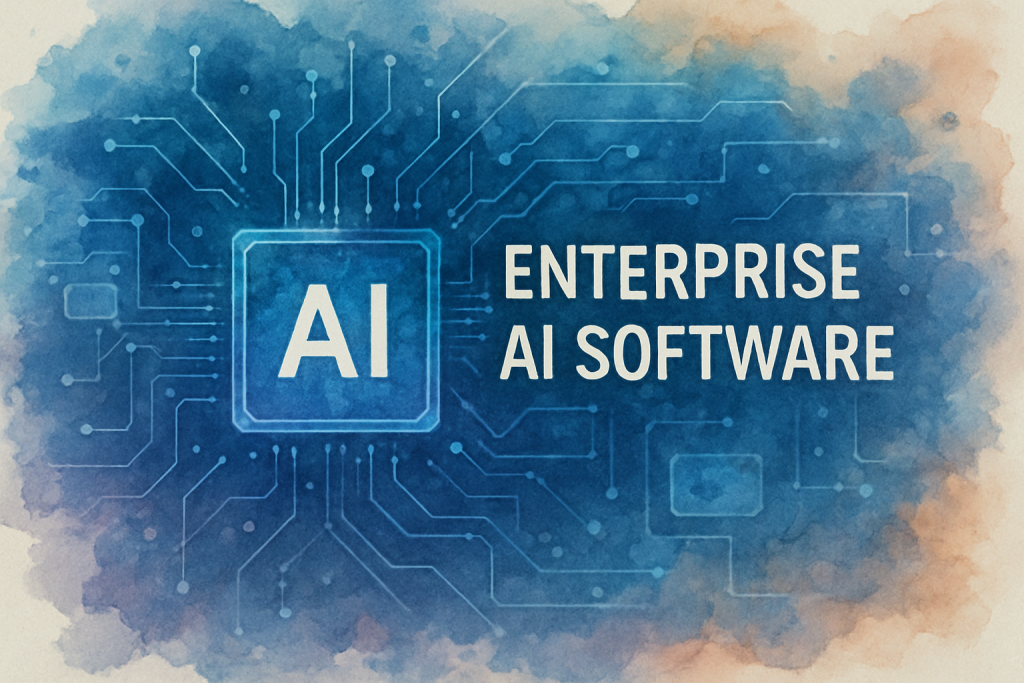
In today’s hyper-competitive business landscape, companies that fail to leverage artificial intelligence risk falling behind. Enterprise AI software has transformed from a futuristic concept into a critical business necessity, with organizations across industries reporting up to 40% productivity gains and millions in cost savings.
The challenge? Many business leaders struggle to identify which AI solutions truly deliver ROI and how to implement them effectively. With countless platforms promising revolutionary results, the decision-making process can feel overwhelming.
This comprehensive guide cuts through the noise to reveal the top 7 enterprise AI software solutions that are genuinely transforming businesses in 2026. You’ll discover practical implementation strategies, real-world benefits, and proven methods to overcome common obstacles. Whether you’re just beginning your AI journey or looking to optimize existing systems, this article provides the actionable insights you need to drive measurable business growth.
Understanding Enterprise AI Software and Its Business Impact
Enterprise AI software refers to sophisticated artificial intelligence platforms designed specifically for large-scale business operations. Unlike consumer-facing AI tools, these solutions integrate deeply with existing enterprise systems to automate complex processes, analyze massive datasets, and generate actionable insights that drive strategic decision-making.
The global enterprise AI market has exploded, reaching $184 billion in 2025 and projected to exceed $500 billion by 2030. This exponential growth reflects a fundamental shift in how businesses operate. Companies implementing AI solutions report average efficiency improvements of 35-45%, while reducing operational costs by 20-30%.
Why Enterprise AI Software Matters Now More Than Ever
The business environment has become increasingly data-driven and customer-centric. Traditional software simply cannot process the volume and complexity of information modern enterprises generate. AI fills this gap by:
- Processing millions of data points in real-time to identify patterns humans would miss
- Automating repetitive tasks that consume valuable employee time
- Predicting market trends and customer behavior with unprecedented accuracy
- Personalizing customer experiences at scale across multiple touchpoints
- Optimizing supply chains and resource allocation dynamically
Current Trends Shaping Enterprise AI Adoption
Several key trends are accelerating enterprise AI software adoption. Generative AI has moved beyond content creation into strategic business applications, with 78% of enterprises now piloting or deploying generative AI solutions. Edge AI computing is enabling real-time decision-making without cloud dependency, critical for manufacturing and logistics operations.
Additionally, AI governance and ethical AI frameworks have become non-negotiable. Organizations are prioritizing transparent, explainable AI systems that comply with emerging regulations while maintaining competitive advantages. The integration of AI with Internet of Things (IoT) devices is creating intelligent ecosystems that self-optimize based on environmental conditions and usage patterns.
The Top 7 Enterprise AI Software Solutions Transforming Business
1. Salesforce Einstein: AI-Powered CRM Excellence
Salesforce Einstein integrates artificial intelligence directly into the world’s leading CRM platform, enabling sales teams to predict customer needs, automate routine tasks, and personalize engagement at scale. The platform analyzes historical data to score leads, recommend next-best actions, and forecast revenue with remarkable accuracy.
Companies using Einstein report 38% higher lead conversion rates and 35% increases in sales productivity. The AI automatically surfaces insights from customer interactions, helping teams focus on high-value opportunities while automating follow-ups and data entry.
2. IBM Watson: Comprehensive AI for Enterprise Operations
IBM Watson offers a suite of enterprise AI software tools spanning natural language processing, machine learning, and computer vision. Watson’s strength lies in its ability to understand unstructured data—analyzing documents, emails, and customer feedback to extract meaningful insights.
Financial services firms use Watson to detect fraud patterns, while healthcare organizations leverage it for diagnostic support. The platform’s industry-specific models accelerate deployment, with some enterprises achieving full implementation in under six months.
3. Microsoft Azure AI: Cloud-Native Intelligence
Microsoft Azure AI provides a comprehensive ecosystem of AI services that integrate seamlessly with existing Microsoft infrastructure. From Azure Machine Learning for custom model development to Cognitive Services for pre-built AI capabilities, the platform offers flexibility for organizations at any AI maturity level.
4. Google Cloud AI Platform: Advanced Machine Learning at Scale
Retailers use Google Cloud AI for visual search and inventory optimization, while manufacturers implement it for predictive maintenance. The platform’s AutoML capabilities allow organizations to build custom models without machine learning expertise, democratizing AI across business units.
5. SAP AI Business Services: Intelligent ERP Integration
SAP has embedded artificial intelligence throughout its enterprise resource planning ecosystem, creating intelligent workflows that adapt to business conditions. SAP AI Business Services automate invoice processing, optimize inventory levels, and predict equipment failures before they occur.
The tight integration with SAP’s ERP systems means organizations can implement AI without disrupting existing processes. Companies report 50% reductions in invoice processing time and 25% improvements in inventory turnover after implementing SAP’s AI capabilities.
6. UiPath: Intelligent Process Automation
UiPath combines robotic process automation with artificial intelligence to create intelligent automation solutions. The platform identifies automation opportunities, builds bots to execute repetitive tasks, and continuously optimizes processes based on performance data.
Financial institutions use UiPath to automate compliance reporting, while healthcare organizations streamline patient intake and billing. The platform’s AI-powered document understanding extracts data from unstructured documents with 95%+ accuracy, eliminating manual data entry.
7. DataRobot: Automated Machine Learning for Business Users
DataRobot democratizes machine learning by automating the entire model development lifecycle. Business analysts can build, deploy, and maintain predictive models without coding, while data scientists can accelerate their workflows and focus on strategic initiatives.
The platform automatically tests hundreds of algorithms to identify the best approach for each use case, then generates production-ready models with built-in monitoring and governance. Organizations report 10x faster time-to-value compared to traditional machine learning approaches.
Strategic Benefits of Implementing Enterprise AI Software
Operational Efficiency and Cost Reduction
Enterprise AI software dramatically reduces operational costs by automating time-consuming manual processes. Organizations typically see 30-40% reductions in process completion times and 20-25% decreases in operational expenses within the first year of implementation.
AI-powered automation handles routine tasks like data entry, report generation, and customer inquiries, freeing employees to focus on strategic, creative work that drives innovation. This shift not only reduces costs but also improves employee satisfaction and retention.
Companies leveraging AI-driven insights report 25% improvements in forecast accuracy and 35% better resource allocation. The ability to simulate scenarios and predict outcomes reduces risk in strategic planning and capital investment decisions.
Personalized Customer Experiences at Scale
AI enables hyper-personalization across customer touchpoints, analyzing individual preferences, behaviors, and contexts to deliver tailored experiences. This personalization drives measurable results—companies report 20-30% increases in customer satisfaction scores and 15-25% improvements in customer lifetime value.
Chatbots and virtual assistants powered by enterprise AI software handle routine customer inquiries 24/7, while intelligent routing systems connect complex issues to the most qualified human agents. This combination delivers faster resolution times and higher customer satisfaction.
Competitive Advantage Through Innovation
Organizations implementing enterprise AI software gain significant competitive advantages. AI accelerates product development cycles, identifies new market opportunities, and enables business models that weren’t previously possible.
Early AI adopters in each industry are capturing disproportionate market share, with studies showing AI leaders growing revenue 50% faster than competitors. The technology creates barriers to entry as AI systems improve with data accumulation, making it increasingly difficult for late adopters to catch up.
Implementation Guide: Deploying Enterprise AI Software Successfully
Step 1: Assess Your AI Readiness and Define Clear Objectives
Begin by evaluating your organization’s data infrastructure, technical capabilities, and cultural readiness for AI adoption. Conduct a comprehensive audit of existing data sources, quality, and accessibility. Identify specific business problems where AI can deliver measurable impact rather than implementing technology for its own sake.
Define clear, quantifiable objectives tied to business outcomes. Instead of vague goals like “improve efficiency,” target specific metrics such as “reduce customer service response time by 40%” or “increase forecast accuracy by 25%.” These concrete objectives guide platform selection and provide benchmarks for measuring success.
Step 2: Select the Right Enterprise AI Software for Your Needs
Choose platforms that align with your technical infrastructure, industry requirements, and use cases. Consider factors like integration capabilities with existing systems, scalability to handle growing data volumes, and vendor support for implementation and ongoing optimization.
Evaluate total cost of ownership beyond initial licensing fees, including implementation costs, training requirements, and ongoing maintenance. Request proof-of-concept projects to validate that the enterprise AI software delivers promised results in your specific environment before committing to full deployment.
Step 3: Build Cross-Functional Implementation Teams
Successful AI implementation requires collaboration between IT, business units, and executive leadership. Assemble teams that include data scientists, business analysts, process owners, and change management specialists. Designate executive sponsors who can remove organizational barriers and secure necessary resources.
Invest in training programs that build AI literacy across the organization. Employees need to understand AI capabilities, limitations, and how to work effectively with AI-powered tools. This cultural foundation is as critical as the technology itself.
Step 4: Start with High-Impact Pilot Projects
Launch pilot projects in areas where AI can deliver quick wins and demonstrate clear value. Focus on well-defined use cases with available data and measurable outcomes. Successful pilots build organizational confidence and momentum for broader AI adoption.
Document lessons learned, refine implementation approaches, and celebrate successes to build enthusiasm. Use pilot results to secure additional investment and expand AI initiatives to other business areas.
Step 5: Scale Strategically with Governance Frameworks
As you expand AI deployment, establish governance frameworks that ensure ethical use, data privacy compliance, and model accuracy. Implement monitoring systems that track AI performance, detect bias, and flag anomalies requiring human review.
Create centers of excellence that standardize best practices, share learnings across business units, and accelerate new AI initiatives. This centralized approach prevents redundant efforts while maintaining flexibility for department-specific needs.
Best Practices for Maximizing Enterprise AI Software ROI
Focus on data quality—AI systems are only as good as the data they process. Invest in data cleaning, standardization, and governance before deploying AI solutions. Establish feedback loops that continuously improve model accuracy based on real-world performance.
Overcoming Common Enterprise AI Software Challenges
Challenge 1: Data Silos and Integration Complexity
Many organizations struggle with data scattered across disconnected systems, making it difficult for enterprise AI software to access the comprehensive information needed for accurate insights. Legacy systems often lack APIs or use incompatible data formats.
Solution: Implement data integration platforms that create unified data layers accessible to AI systems. Prioritize API development for critical legacy systems, and consider cloud-based data warehouses that consolidate information from multiple sources. Start with high-value data sources rather than attempting complete integration immediately.
Challenge 2: Skill Gaps and Talent Shortages
The demand for AI expertise far exceeds supply, making it difficult to recruit and retain qualified data scientists and AI engineers. This talent shortage slows implementation and limits organizations’ ability to maximize their AI investments.
Solution: Leverage enterprise AI software platforms with low-code/no-code capabilities that enable business users to build AI applications. Partner with implementation consultants for initial deployment while building internal capabilities. Invest in upskilling existing employees through training programs and certifications rather than relying solely on external hiring.
Challenge 3: Change Management and User Adoption
Employees often resist AI implementations due to fears about job security or skepticism about AI capabilities. Without user adoption, even the most sophisticated enterprise AI software fails to deliver value.
Solution: Communicate transparently about AI’s role in augmenting rather than replacing human workers. Involve end-users in the design and testing process to ensure AI tools address real needs. Provide comprehensive training and ongoing support to build confidence. Celebrate early wins and share success stories that demonstrate AI’s positive impact on daily work.
Challenge 4: Measuring ROI and Demonstrating Value
AI benefits often manifest across multiple areas, making it challenging to quantify total impact. Long implementation timelines can test stakeholder patience, especially when results aren’t immediately visible.
Solution: Establish baseline metrics before implementation and track improvements consistently. Break large initiatives into phases with measurable milestones that demonstrate progress. Calculate both direct financial benefits and indirect value like improved decision quality or enhanced customer satisfaction. Use dashboards that visualize AI impact in terms executives and stakeholders understand.
Challenge 5: Ensuring AI Ethics and Regulatory Compliance
As AI regulations evolve globally, organizations must ensure their enterprise AI software complies with data privacy laws, industry regulations, and ethical standards. Biased AI models can damage reputation and create legal liability.
Solution: Implement AI governance frameworks that include bias testing, explainability requirements, and regular audits. Choose enterprise AI software vendors with strong compliance track records and built-in governance tools. Establish ethics committees that review AI applications for potential risks before deployment. Document decision-making processes to demonstrate responsible AI use to regulators and stakeholders.
Conclusion: Embracing the AI-Powered Future
Enterprise AI software has evolved from experimental technology to essential business infrastructure. The seven solutions highlighted in this guide—Salesforce Einstein, IBM Watson, Microsoft Azure AI, Google Cloud AI Platform, SAP AI Business Services, UiPath, and DataRobot—represent proven platforms that deliver measurable business growth across industries.
The key to success lies not in the technology itself, but in strategic implementation aligned with clear business objectives. Organizations that start with high-impact use cases, invest in data quality and employee training, and maintain realistic expectations about timelines consistently achieve impressive results.
The competitive landscape is shifting rapidly. Companies that embrace enterprise AI software today position themselves as industry leaders, while those that delay risk falling irreversibly behind. The question is no longer whether to implement AI, but how quickly you can deploy it effectively.
Start your AI transformation journey with a clear strategy, the right technology partners, and commitment to continuous learning. The benefits—improved efficiency, enhanced decision-making, personalized customer experiences, and sustainable competitive advantages—make the investment worthwhile.
Ready to transform your business with enterprise AI software? The experts at The Crunch specialize in helping organizations navigate AI implementation from strategy through deployment. Schedule your free consultation today to discover how AI can drive growth in your specific business context. Don’t let your competitors gain the AI advantage—take the first step toward an intelligent, automated future now.
Frequently Asked Questions (FAQ)
1. What is enterprise AI software?
2. How does enterprise AI software work?
3. What are the main benefits of using enterprise AI software?
4. How do I choose the right enterprise AI software for my business?
5. How much does enterprise AI software cost?
6. What are common challenges when implementing enterprise AI software?
7. How does enterprise AI software compare to traditional business software?
8. Is enterprise AI software secure?
9. Can enterprise AI software integrate with existing business systems?
10. What industries benefit most from enterprise AI software?
11. How can my organization get started with enterprise AI software?
12. What are some common misconceptions about enterprise AI software?