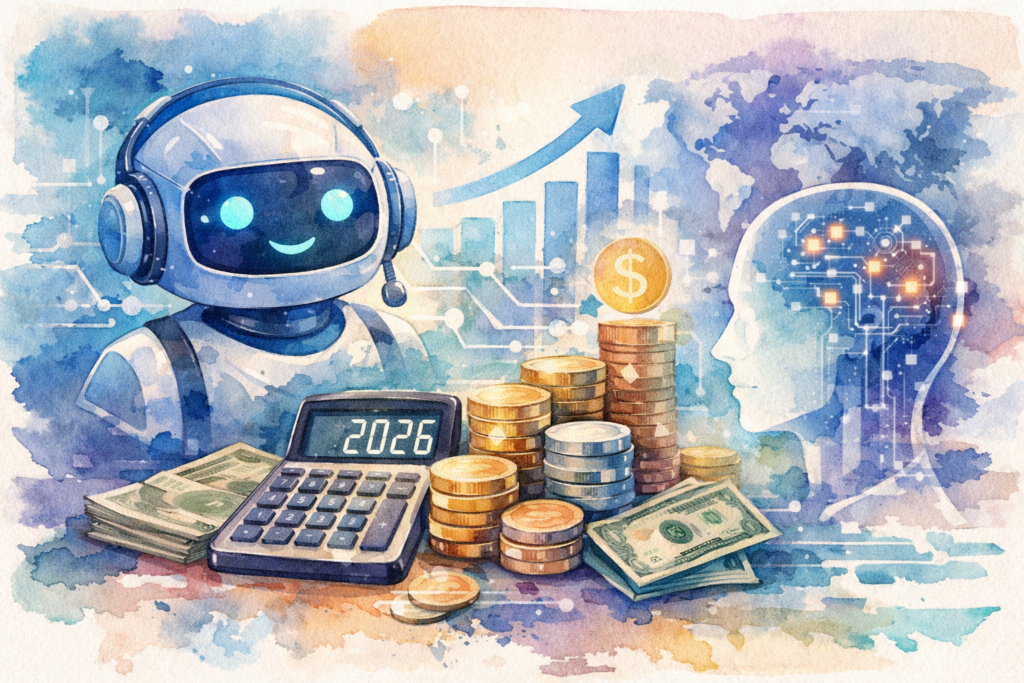
AI chatbot development cost ranges from $2,000 to $30,000 for rule-based bots, $15,000 to $80,000 for NLP chatbots, $30,000 to $150,000 for generative/RAG chatbots, and $80,000 to $1M+ for enterprise agentic systems in 2026. Ongoing LLM API costs add $1 to $6 per resolution. Building in Southeast Asia at $20 to $45 per hour reduces total cost 2 to 4 times versus North American rates.
This guide breaks the AI chatbot development cost question into hard numbers: price by chatbot type, the nine factors that move the bill up or down, hourly rates across four regions, hidden ongoing costs most quotes skip, and seven ways to cut spend without losing quality. The figures are sourced from Crescendo, Cleveroad, Master of Code, public LLM pricing pages, and TheCrunch’s 7+ years deploying chatbots across Malaysian, Singapore, and Hong Kong SMBs across healthcare, retail, property, and education.
How We Sourced These Numbers
Price ranges combine three inputs:
(1) published pricing pages from the top ten ranking chatbot-development agencies as of May 2026.
(2) public LLM and infrastructure pricing from OpenAI, Anthropic, and Pinecone.
(3) anonymised project data from TheCrunch deployments across Malaysian, Singapore, and Hong Kong SMBs since 2019.
SEA hourly rates reflect actual offers, not aspirational rate-card numbers.
Information last checked: 21 August 2026. Vendor pricing and model rates change frequently, and the SEA hourly bands move with the market. Where a figure is not published, we say so rather than estimate it. If you represent a company named here and something is inaccurate, contact us and we will correct it within 48 hours.
How much does an AI chatbot cost in 2026?
AI chatbot development cost in 2026 falls into five tiers based on architecture and capability. The table below is the fastest way to anchor a budget conversation before you talk to vendors.
| Chatbot Type | Price Range (USD) | Build Time | Typical Use Case |
|---|---|---|---|
| Rule-based / decision-tree | $2,000 – $30,000 | 2 – 6 weeks | FAQ deflection, simple lead capture |
| NLP / intent-classified | $15,000 – $80,000 | 6 – 12 weeks | Support deflection, appointment scheduling |
| Generative / RAG | $30,000 – $150,000 | 8 – 16 weeks | Knowledge-base bot, sales assistant |
| Agentic (tool-calling) | $80,000 – $300,000 | 12 – 24 weeks | Multi-step workflows, system actions |
| Enterprise / multi-channel | $300,000 – $1,000,000+ | 6 – 12 months | Omnichannel, regulated industry |
The single biggest cost driver is which tier you actually need. A coffee chain that wants to answer store-hours questions does not need a generative chatbot. A bank running PDPA-compliant claims triage cannot get away with rule-based. Tier mismatch is the single most common reason chatbot projects come in 3 times over budget.
Cost by chatbot type: deep dive
Rule-based chatbot: $2,000 – $30,000
$2,000 – $30,000 build · 2-6 weeks
Rule-based bots run on hard-coded decision trees with no language understanding. They handle 60-80% of FAQ volume for SMBs at the lowest cost point. A $2K build covers a 15-node tree on a no-code platform like Botpress or Tidio. A $30K build covers a 200-node tree with CRM lookup, multi-language UI, and a styled web widget. Build time runs 2 to 6 weeks. Maintenance is minimal at 5-10% of build cost per year because there is no model drift.
Use a rule-based bot when intent volume is below 30 distinct flows, response variation is low, and stakes per conversation are low. Use anything else when you need fuzzy intent matching or generative responses.
NLP-driven chatbot: $15,000 – $80,000
$15,000 – $80,000 build · 6-12 weeks
NLP chatbots classify user intent against a trained intent library, then route to a scripted response or backend action. Dialogflow CX, Rasa, Amazon Lex, and Microsoft Bot Framework are the dominant frameworks. Build cost scales with intent count: a 20-intent bot lands around $15K to $25K; a 100-intent bot with custom entity extraction and CRM integration runs $50K to $80K.
The hidden cost in NLP builds is training data. Each intent needs 30 to 100 labelled utterances. Labeling runs $0.05 to $0.50 per utterance via Scale AI or in-house. A 100-intent bot needs 5,000 to 10,000 utterances, adding $250 to $5,000 to the project before any code is written.
Generative / RAG chatbot: $30,000 – $150,000
$30,000 – $150,000 build · 8-16 weeks
Retrieval-augmented generation chatbots index a knowledge base in a vector database, retrieve relevant chunks at query time, and generate responses with an LLM. This is the dominant 2026 architecture for support, sales, and internal-knowledge bots. LLM choice moves the bill more than any other variable.
| LLM | Input / 1M tokens | Output / 1M tokens | Cost per resolution (est.) |
|---|---|---|---|
| GPT-4o | $2.50 | $10.00 | $0.04 – $0.12 |
| Claude Sonnet 4 | $3.00 | $15.00 | $0.05 – $0.15 |
| Claude Haiku | $0.80 | $4.00 | $0.01 – $0.04 |
| Llama 3 8B (self-hosted) | ~$0.10 | ~$0.10 | $0.002 – $0.01 |
At 10,000 resolutions per month on GPT-4o, monthly LLM run-rate alone is $400 to $1,200. At 100,000 resolutions per month on Claude Sonnet, you are looking at $5,000 to $15,000 per month before infrastructure. Vector database costs add $70 to $500 per month for Pinecone or Weaviate at SMB scale, $2K+ at enterprise.
Agentic chatbot: $80,000 – $300,000
$80,000 – $300,000 build · 12-24 weeks
Agentic chatbots call tools, query APIs, and chain reasoning steps. They book appointments, process refunds, look up order status, and run multi-system workflows. Build cost is dominated by tool integration depth and evaluation infrastructure. Expect $5K to $25K per external API integration (CRM, helpdesk, payment, calendar). Evaluation and monitoring infrastructure via LangSmith or Braintrust adds $200 to $2K per month plus 80 to 200 hours of eval engineering.
Enterprise chatbot: $300,000 – $1M+
$300,000 – $1,000,000+ build · 6-12 months
Enterprise builds layer in omnichannel deployment (web, WhatsApp, voice, SMS, in-app), regulated-industry compliance, custom SLAs, dedicated DevOps, and 24/7 monitoring. Gartner’s Magic Quadrant Leaders in conversational AI typically price reference implementations at $500K to $1.5M including first-year support.
The 9 factors that drive AI chatbot development cost
Every chatbot quote breaks down along these nine axes. Compare quotes by mapping each line item to one of these factors.
1. Complexity (intent count)
BEST FOR SCOPING
Single-intent bot: $2K to $8K. 20-intent NLP bot: $15K to $30K. 200-intent enterprise bot: $80K to $250K. Cost scales sub-linearly above 50 intents because tooling matures.
2. NLU framework
BEST FOR ARCHITECTURE
Dialogflow CX, Rasa, Amazon Lex, Microsoft Bot Framework, and LangChain each carry different licence, hosting, and engineer-availability profiles. Self-hosted Rasa saves licence cost but adds 40-80 DevOps hours.
3. LLM choice
BEST FOR RUN-RATE
GPT-4o, Claude Sonnet, Gemini Pro, and Llama 3 differ by 20x in token cost. Smart routing (Haiku for routine, Sonnet for complex) cuts run-rate 50-70% with no quality loss.
4. Integrations
BEST FOR SCOPE PADDING
CRM, helpdesk, payment, WhatsApp Business API, Salesforce, HubSpot, Zendesk, Intercom, Shopify each add $5K to $25K. Integrations typically add 20-50% to the base build cost.
5. Channels
BEST FOR OMNICHANNEL
Web-only is baseline. Adding WhatsApp adds $5K to $15K. Voice (Twilio, Vapi) adds $15K to $40K. Full omnichannel adds 30-60% to the build.
6. Compliance
BEST FOR REGULATED INDUSTRIES
Malaysian PDPA: $5K to $15K. GDPR: $10K to $25K. HIPAA: $20K to $50K. PCI-DSS: $15K to $40K. Each requires a separate audit pass and ongoing review cycle.
7. Training data
BEST FOR NLP BUILDS
Annotation runs $0.05 to $0.50 per utterance. Synthetic data generation via LLMs cuts this 60-80% but needs human review. A mid-tier NLP bot needs $500 to $5K in annotation.
8. Scalability
BEST FOR HIGH VOLUME
Sub-second response SLAs and 1,000+ concurrent users add infrastructure cost (auto-scaling, redis caching, model sharding). Budget $200 to $2K extra per month at SMB scale, $5K to $20K at enterprise scale.
9. Team location and seniority
BEST FOR BUDGET DISCIPLINE
SEA developers cost $20 to $45 per hour for the same skill set North American developers charge $100 to $200 per hour for. A 600-hour build is the difference between $25K and $90K labour cost.
Hourly rates by region: where to build your chatbot
Regional rate differentials are the single largest lever on total chatbot development cost. The table below reflects mid-2026 market rates for chatbot engineers (NLU, LLM integration, orchestration) negotiated directly, not agency-marked-up. The Malaysia/SEA row is verifiable through MDEC‘s tech talent reports.
| Region | Junior | Mid | Senior | Notes |
|---|---|---|---|---|
| Malaysia / SEA | $20 – $30 | $30 – $45 | $45 – $80 | TheCrunch zone. 2 to 4x cost saving, similar quality. |
| Eastern Europe | $30 – $50 | $50 – $80 | $80 – $120 | EU compliance, EU time-zone overlap. |
| Latin America | $35 – $55 | $55 – $85 | $85 – $130 | US time-zone overlap. |
| N. America / W. Europe | $80 – $120 | $120 – $170 | $170 – $300+ | Premium for onshore. |
The quality gap that justified premium rates a decade ago has narrowed significantly. SEA engineering teams routinely ship production chatbots for Fortune 500 clients via partners. The remaining considerations are time-zone overlap and onsite stakeholder access, both addressable through async workflows and quarterly in-person sprints.
For Malaysian SMBs evaluating local versus offshore, the rate gap also runs in your favour. See our AI software cost guide for adjacent benchmarks on full AI software builds.
Hidden and ongoing AI chatbot costs most quotes miss
Build cost is roughly half of year-one total cost of ownership. The other half lives in these line items, most of which are absent from vendor quotes.
LLM API run-rate
Worked example for a generative RAG chatbot doing 10,000 customer-support resolutions per month, with an average of 8,000 input tokens and 600 output tokens per resolution on GPT-4o: monthly cost is roughly (10,000 x 8,000 x $2.50/1M) + (10,000 x 600 x $10/1M) = $200 + $60 = $260 per month for the LLM alone. Scale to 100,000 resolutions and you are at $2,600 per month. Scale to 1M resolutions and you cross $25,000 per month, at which point self-hosted Llama 3 starts paying for the infrastructure team.
Vector database
Pinecone starter tier runs $70 per month. Standard production runs $200 to $500 per month for a 1M-vector index. Weaviate and pgvector self-hosted save licence cost but add 20-40 DevOps hours per quarter.
Maintenance and prompt drift
Budget 15-20% of build cost per year for maintenance. A $50K chatbot needs $7,500 to $10,000 per year in retainer to handle prompt drift, knowledge-base refresh, intent additions, and model updates. Skipping maintenance is the most common reason a chatbot’s deflection rate halves within 12 months.
Evaluation and monitoring
LangSmith, Braintrust, and Helicone run $200 to $2,000 per month at SMB scale. They are not optional. Without eval infrastructure, you cannot tell whether a prompt change improved or regressed quality.
Compliance review cycles
PDPA, GDPR, and HIPAA all require annual audit cycles plus incident-response capacity. Budget $5K to $20K per year for compliance maintenance on top of the one-time setup cost.
Build vs buy vs hybrid: decision matrix
?Ask these four questions before deciding
(1) Do you need deep integration with proprietary systems? Custom wins.
(2) Is the conversation surface a competitive differentiator? Custom wins.
(3) Are you below 5,000 conversations per month? SaaS wins.
(4) Is your knowledge base stable and document-based? Low-code wins.
SaaS chatbots: $0 – $1,000 per month
Intercom Fin, Tidio, Drift, and Ada are the dominant SaaS options. They ship a working chatbot in days, not months. The trade-off is integration depth, brand control, and per-conversation cost (typically $0.50 to $0.99 per resolution at Intercom Fin pricing). SaaS makes sense when volume is below 5,000 conversations per month and integration needs are shallow.
Low-code platforms: $500 – $3,000 per month
Voiceflow and Botpress sit between SaaS and custom. You build flows visually, hook in LLMs and APIs, and deploy to multiple channels. Build time runs 3 to 8 weeks. Cost scales with conversation volume, not seats. Most Malaysian, Singapore, and Hong Kong SMBs we work with land here when first migrating off SaaS.
Custom build: $30,000 – $300,000+
Custom wins when conversation surface is strategic, integrations are deep, compliance is regulated, or volume exceeds 50,000 conversations per month. Custom AI chatbot development is where most enterprise spending lands by 2026 because per-conversation SaaS cost compounds faster than amortised custom-build cost above a threshold.
Hybrid: start SaaS, migrate to custom
The most common 2026 pattern is starting on Intercom Fin or Tidio for 3 to 6 months to validate intent volume and customer-conversation patterns, then migrating to a custom build once data justifies it. The SaaS spend during validation is research budget, not waste.
7 ways to reduce AI chatbot development cost without losing quality
These seven moves cut typical chatbot development cost 40-70% without measurable quality loss. They are ordered by impact.
1. Start with a single high-value intent. Pick the one customer question that consumes the most agent time. Ship a bot that handles only that. Measure deflection. Then add the next intent. A 5-intent bot shipped in 6 weeks beats a 50-intent bot shipped in 9 months that no one ever launches.
2. Use SEA or nearshore teams. 40-70% labour cost saving at production-quality output. The remaining gap closes through async workflows, recorded standups, and quarterly in-person sprints.
3. Use pre-built NLU for common patterns. Dialogflow CX ships with 40+ pre-built intents (booking, ordering, FAQ). Use them. Build custom intents only where your business is genuinely different.
4. Route smaller models for routine intents. Llama 3 8B handles 80% of FAQ traffic at one-twentieth the cost of GPT-4o. Use an intent classifier to route routine queries to small models, escalate complex queries to large models. Run-rate drops 50-70%.
5. Prefer RAG over fine-tuning. Fine-tuning rarely pays back below a $50K project budget. RAG with strong retrieval matches fine-tuned performance for 90% of use cases at one-tenth the iteration cost.
6. Reuse existing CRM data. Most chatbot projects waste budget building parallel knowledge bases. Your CRM, helpdesk, and product documentation already contain the answers. Index them in place.
7. Phase the build. Chatbot MVP first (single intent, single channel). Integrations next. Advanced features last. Big-bang builds carry 3 to 5x the budget risk of phased builds.
Industry-specific AI chatbot pricing
Pricing varies meaningfully by vertical because compliance, integration depth, and conversation complexity differ. The ranges below reflect typical mid-tier deployments across SEA and global markets.
| Industry | Typical Range | Cost Drivers |
|---|---|---|
| E-commerce | $10,000 – $60,000 | Cart recovery, product Q&A, Shopify or WooCommerce integration |
| Healthcare | $40,000 – $200,000 | HIPAA compliance, clinical validation, EMR integration |
| Financial services | $50,000 – $300,000 | PCI-DSS, KYC integration, transaction-grade audit logging |
| Education / edtech | $15,000 – $80,000 | LMS integration, multilingual content, student-record privacy |
| Real estate / property | $10,000 – $50,000 | Listing Q&A, scheduling, WhatsApp integration |
In TheCrunch’s 7+ years deploying chatbots across Malaysian, Singapore, and Hong Kong SMBs in healthcare, retail, property, and education, the pattern that holds is this: compliance overhead dominates healthcare and financial services pricing; integration depth dominates e-commerce and property pricing; multilingual content (English, Bahasa Malaysia, Mandarin, Cantonese) dominates education pricing.
Chatbot ROI: when does it pay back?
Typical payback windows for mid-tier chatbot deployments run 6 to 18 months. The shorter end applies to support deflection use cases where every deflected ticket saves measurable agent time. The longer end applies to sales-assist use cases where attribution is fuzzier but lifetime-value lift is larger.
Worked ROI example. A Malaysian retailer pays MYR 35,000 for an NLP chatbot. The bot deflects 60% of 2,000 monthly support tickets. Each deflected ticket saves 8 minutes of agent time at MYR 25 per hour fully loaded. Monthly saving: 1,200 tickets x (8/60) x MYR 25 = MYR 4,000. Payback: 8.75 months. After payback, the chatbot is net positive MYR 48,000 per year.
For a deeper ROI breakdown including per-vertical deflection benchmarks, see our AI agent ROI calculator. For sister-page pricing context, see AI chatbot pricing and the best AI chatbot platforms.
How to choose an AI chatbot development partner
Skills checklist
A capable chatbot development partner demonstrates production experience across these five areas:
(1) NLU framework selection and intent design.
(2) LLM integration and prompt engineering.
(3) orchestration via LangChain or equivalent.
(4) deep integration with CRM/helpdesk/payment systems.
(5) eval and monitoring methodology.
Red flags
Avoid vendors who cannot describe their RAG architecture, have no eval methodology, quote without specifying LLM choice, dismiss compliance questions, or commit to fixed-price builds without a discovery phase. Vague pricing usually signals vague delivery.
Five vetting questions
Ask every shortlisted partner:
(1) Show me a production chatbot you’ve deployed and the metric improvement it delivered.
(2) How do you evaluate prompt changes?
(3) Which LLM do you recommend for my use case and why?
(4) What is your compliance posture for PDPA / GDPR / HIPAA?
(5) What happens to the codebase if we terminate the contract?
When to hire TheCrunch versus SaaS versus offshore freelancer
Hire SaaS (Intercom Fin, Tidio) when volume is below 5,000 conversations per month and integration needs are shallow. Hire an offshore freelancer when scope is well-defined, one-off, and you have in-house engineering oversight. Hire TheCrunch when you need a deployment for a Malaysian, Singapore, or Hong Kong SMB, want trilingual support across English, Bahasa Malaysia, and Chinese (Mandarin + Cantonese), need PDPA compliance, and want a 30-day chatbot deployment for mid-tier scope. TheCrunch has been deploying chatbots since 2019, with engagements starting from USD 1,500–USD 2,000 (approximately RM 6,500–RM 8,700). Learn more about our AI chatbot development services.
Need a custom AI chatbot for your Malaysian, Singapore, or Hong Kong business? TheCrunch builds production chatbots in 30 days for mid-tier scope, with engagements starting from USD 1,500–USD 2,000 (approximately RM 6,500–RM 8,700). Trilingual support across English, Bahasa Malaysia, and Chinese (Mandarin + Cantonese). Get a proposal or talk to our team.
Frequently asked questions about AI chatbot development cost
01How much does a custom AI chatbot cost?+
A custom AI chatbot costs $30,000 to $150,000 for a generative or RAG-based build in 2026, depending on intent count, LLM choice, integration depth, and compliance requirements.
(1) Rule-based custom bots run $2,000 to $30,000.
(2) NLP-driven custom bots run $15,000 to $80,000.
(3) Agentic custom bots with tool calling run $80,000 to $300,000.
For Malaysian SMBs working with SEA-based teams like TheCrunch, expect 40 to 60% cost savings versus North American agencies on equivalent scope. The most cost-efficient path is a phased build: ship a single-intent MVP in 6 to 8 weeks, validate deflection rate, then expand intents and channels in subsequent phases.
02How much does it cost to develop an AI chatbot from scratch?+
Developing an AI chatbot from scratch costs $15,000 to $300,000 in 2026, with most production deployments landing in the $30,000 to $80,000 range.
(1) Discovery and intent design (40 to 80 hours).
(2) NLU or RAG architecture build (200 to 600 hours).
(3) Integration engineering at $5,000 to $25,000 per external API.
(4) Eval and monitoring setup (40 to 120 hours).
Build-from-scratch makes sense when off-the-shelf SaaS cannot meet integration, compliance, or brand-experience requirements. For most SMBs, starting on SaaS and migrating to custom after 3 to 6 months of validation data is more cost-efficient than building from day one.
03What are the ongoing costs of running an AI chatbot?+
Ongoing AI chatbot costs typically run 30 to 50% of build cost per year. Major line items include:
(1) LLM API costs at $1 to $6 per resolution depending on model and prompt size.
(2) Vector database hosting at $70 to $500 per month for Pinecone or Weaviate at SMB scale.
(3) Maintenance retainer at 15 to 20% of build cost per year.
(4) Evaluation and monitoring tooling at $200 to $2,000 per month.
(5) Compliance review cycles at $5,000 to $20,000 per year for PDPA, GDPR, or HIPAA scope.
A $50,000 chatbot build typically incurs $15,000 to $25,000 per year in ongoing costs. Budget for these in year-one planning, not as afterthoughts.
04Are AI chatbots cost-effective compared to human agents?+
AI chatbots are cost-effective at the per-resolution level once monthly conversation volume exceeds roughly 1,000 to 2,000 interactions. A chatbot resolution costs $0.04 to $6.00 depending on architecture. A human agent resolution costs $5 to $25 fully loaded across most markets.
Payback windows for mid-tier deployments run 6 to 18 months. The cost-effectiveness depends heavily on deflection rate: a chatbot deflecting 40% of tickets pays back twice as fast as one deflecting 20%.
Chatbots are not cost-effective when conversation volume is below 500 per month, when conversations require nuanced empathy, or when the cost of a wrong answer exceeds the cost of human review.
05How can I reduce chatbot development cost?+
Reduce chatbot development cost by combining these moves:
(1) Use SEA or nearshore teams for 40 to 70% labour savings.
(2) Start with a single high-value intent and expand iteratively.
(3) Route routine queries to small models like Claude Haiku or Llama 3 8B and reserve large models for complex queries.
(4) Prefer RAG over fine-tuning below the $50,000 project threshold.
(5) Reuse existing CRM and documentation data instead of building parallel knowledge bases.
(6) Use pre-built NLU intents in Dialogflow CX or Lex where they fit.
(7) Phase the build rather than attempting a big-bang launch.
Combined, these typically cut total cost 50 to 70% without measurable quality loss.
06How much does a generative AI chatbot cost vs rule-based?+
A generative AI chatbot costs $30,000 to $150,000 to build versus $2,000 to $30,000 for a rule-based chatbot. The gap reflects three things:
(1) Generative bots require RAG architecture with vector database indexing.
(2) Generative bots incur per-resolution LLM API costs of $0.04 to $0.15 versus zero for rule-based.
(3) Generative bots need evaluation infrastructure to detect prompt drift.
Generative bots are worth the premium when conversations require open-ended language understanding, when the knowledge base changes frequently, or when response variation improves user experience. Rule-based bots remain the right choice when intent count is below 30, conversations are highly structured, and response variation adds no value.
07What is the cost of a WhatsApp chatbot in 2026?+
A WhatsApp chatbot costs $10,000 to $80,000 to build in 2026, with most SMB deployments landing in the $15,000 to $35,000 range. The base bot cost follows the chatbot-type tiers (rule-based, NLP, or generative).
(1) WhatsApp Business API integration adds $5,000 to $15,000 in engineering.
(2) Ongoing WhatsApp messaging costs run $0.003 to $0.08 per conversation depending on country and conversation category (utility, marketing, authentication, service).
(3) Trilingual support across English, Bahasa Malaysia, and Chinese (Mandarin + Cantonese) typically adds 15 to 25% to the build cost.
For Malaysian SMBs, WhatsApp is the dominant chatbot channel. Total year-one cost for a mid-tier WhatsApp chatbot in Malaysia typically runs USD 8,000 to USD 28,000.
08How long does it take to develop an AI chatbot?+
AI chatbot development timelines run 2 weeks to 12 months depending on complexity.
(1) Rule-based bots: 2 to 6 weeks.
(2) NLP chatbots: 6 to 12 weeks.
(3) Generative or RAG chatbots: 8 to 16 weeks.
(4) Agentic chatbots with tool calling: 12 to 24 weeks.
(5) Enterprise omnichannel deployments: 6 to 12 months.
The single biggest timeline accelerator is scope discipline: ship a single-intent MVP first, then expand. TheCrunch delivers production chatbot deployments for Malaysian, Singapore, and Hong Kong SMBs on a 30-day timeline for mid-tier scope, with phased expansion in subsequent sprints. Beware vendors who promise sub-30-day timelines for generative or agentic builds without seeing your integration requirements.
09What hidden costs should I plan for in chatbot development?+
The most commonly missed chatbot cost line items are:
(1) LLM API run-rate, which can exceed build cost within 12 months at high volumes.
(2) Vector database hosting at $70 to $500 per month at SMB scale.
(3) Annual maintenance at 15 to 20% of build cost.
(4) Evaluation and monitoring tooling like LangSmith or Braintrust at $200 to $2,000 per month.
(5) Compliance review cycles at $5,000 to $20,000 per year.
(6) Training data annotation at $0.05 to $0.50 per utterance.
(7) Integration engineering at $5,000 to $25,000 per external API.
(8) Knowledge-base refresh and prompt drift management.
Plan year-one total cost of ownership at roughly 1.5 to 2 times the build quote.
10How much does a chatbot cost in Malaysia or Southeast Asia?+
A chatbot in Malaysia or Southeast Asia costs roughly USD 1,500 to USD 180,000 depending on architecture and scope. Local SEA hourly rates run $20 to $80 per hour versus $80 to $300 per hour in North America, giving 2 to 4 times cost savings on equivalent builds.
(1) TheCrunch starts engagements from USD 1,500–USD 2,000 (approximately RM 6,500–RM 8,700) for entry-tier scope.
(2) Mid-tier NLP chatbots with WhatsApp integration run USD 8,000 to USD 28,000.
(3) Generative RAG chatbots run USD 30,000 to USD 150,000.
TheCrunch has been deploying chatbots across Malaysian, Singapore, and Hong Kong SMBs in healthcare, retail, property, and education since 2019, with trilingual support across English, Bahasa Malaysia, and Chinese (Mandarin + Cantonese), and a 30-day deployment timeline for mid-tier scope.
Last updated: May 2026. Pricing reflects mid-2026 market rates from published agency pricing pages, LLM provider rate cards, and TheCrunch deployment data. Figures will move as model pricing and exchange rates shift; revalidate before final budget approval.