Imagine cutting your content creation time in half while doubling the quality of your output. Sounds impossible? Welcome to the era of generative AI software.
In 2026, professionals across industries are facing an unprecedented challenge: doing more with less time. The pressure to produce high-quality content, code, designs, and solutions faster than ever has never been more intense. Traditional methods simply can’t keep pace with modern demands.
Generative AI software has emerged as the game-changing solution that’s revolutionizing how we work. These intelligent tools don’t just automate tasks—they augment human creativity, enabling professionals to achieve results that were previously unimaginable. From writing compelling copy to generating complex code, these AI-powered platforms are reshaping productivity standards.
In this comprehensive guide, we’ll explore the seven best generative AI tools available in 2026, examining their unique capabilities, practical applications, and how they can transform your daily workflow. Whether you’re a content creator, developer, marketer, or business owner, you’ll discover actionable insights to leverage these powerful technologies effectively.
Understanding Generative AI Software and Its Growing Importance
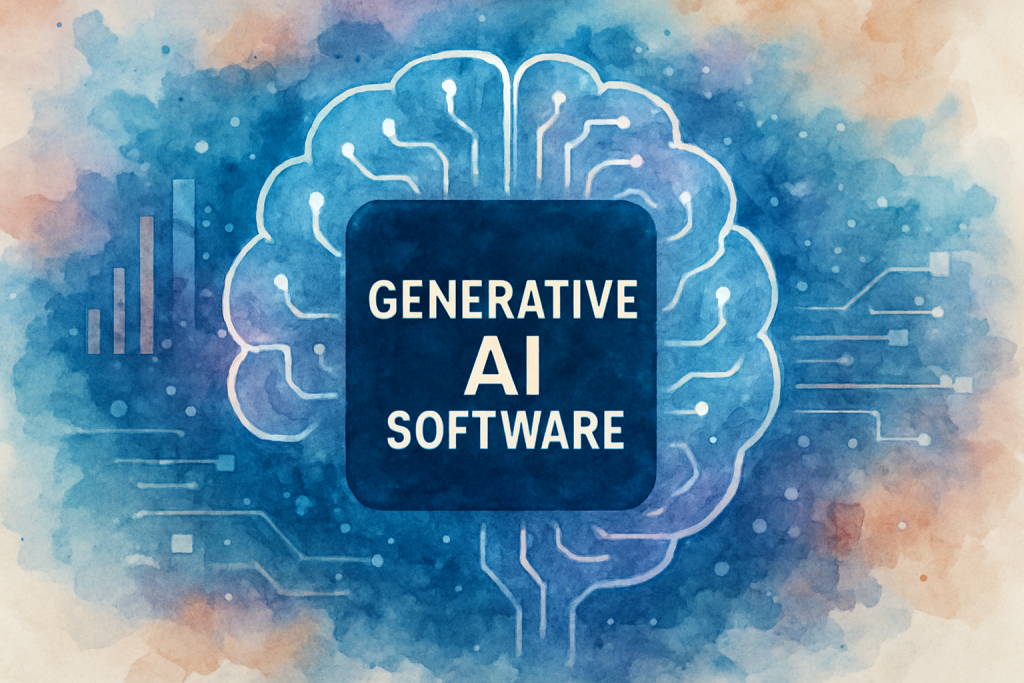
Generative AI software represents a revolutionary category of artificial intelligence that creates new content, code, images, or solutions based on learned patterns from vast datasets. Unlike traditional AI that simply analyzes or classifies information, generative AI actually produces original outputs that mimic human creativity.
The technology has evolved dramatically since its inception. According to recent industry reports, the generative AI market is projected to reach $110.8 billion by 2030, growing at a compound annual growth rate of 34.3%. This explosive growth reflects the technology’s transformative impact across sectors.
Why Generative AI Matters in 2026
The importance of generative AI software extends far beyond simple automation. These tools are fundamentally changing how businesses operate and compete. Companies implementing AI-driven solutions report an average productivity increase of 40%, with some organizations seeing even more dramatic improvements.
Moreover, generative AI democratizes expertise. Small teams can now accomplish what previously required large departments. A single marketer can produce content at scale, a solo developer can build complex applications faster, and entrepreneurs can compete with established enterprises on more level ground.
Current Trends Shaping the Industry
Several key trends are defining the generative AI landscape in 2026. Multimodal AI systems that seamlessly work across text, images, audio, and video are becoming standard. Personalization capabilities have reached new heights, with AI tools adapting to individual user preferences and work styles.
Additionally, ethical AI development has moved to the forefront, with leading platforms implementing robust safeguards against bias and misuse. Integration capabilities have also improved significantly, allowing generative AI software to work harmoniously within existing technology stacks.
The 7 Best Generative AI Tools for Maximum Productivity
Let’s dive into the most powerful generative AI software solutions that are transforming productivity in 2026:
1. ChatGPT-5 Pro: The Ultimate Conversational AI
OpenAI’s latest iteration has set new standards for natural language processing. ChatGPT-5 Pro excels at complex reasoning, maintains context across lengthy conversations, and generates remarkably human-like text. It’s particularly valuable for content creation, research assistance, and problem-solving.
Key benefits: Advanced reasoning capabilities, real-time web access, multimodal input/output, and customizable behavior patterns.
2. Midjourney V7: Visual Content Creation Mastery
For visual content creators, Midjourney V7 represents the pinnacle of AI image generation. This generative AI software produces photorealistic images, illustrations, and designs from simple text descriptions. The latest version offers unprecedented control over style, composition, and detail.
Key benefits: Exceptional image quality, style consistency, commercial licensing options, and intuitive prompt engineering.
3. GitHub Copilot X: Your AI Programming Partner
Developers have embraced GitHub Copilot X as an indispensable coding companion. This tool suggests entire functions, debugs code, writes documentation, and even explains complex algorithms in plain language. It supports dozens of programming languages and integrates seamlessly with popular IDEs.
Key benefits: Context-aware code suggestions, automated testing generation, security vulnerability detection, and natural language code explanations.
4. Jasper AI: Enterprise-Grade Content Marketing
Jasper AI has evolved into a comprehensive content marketing platform. It generates blog posts, social media content, email campaigns, and ad copy while maintaining brand voice consistency. The platform’s SEO optimization features ensure content ranks well in search results.
Key benefits: Brand voice customization, SEO integration, multi-language support, and team collaboration features.
5. Runway Gen-3: Video Production Revolution
Video content creation has been democratized by Runway Gen-3. This generative AI software enables users to create, edit, and enhance videos using text prompts and simple interfaces. From generating B-roll footage to creating animated sequences, it handles complex video tasks effortlessly.
Key benefits: Text-to-video generation, advanced editing tools, motion tracking, and green screen replacement.
Key benefits: Extended context windows, superior accuracy, ethical guardrails, and document analysis capabilities.
7. Synthesia: AI Video Avatar Platform
Synthesia transforms how businesses create video content by generating realistic AI avatars that deliver scripted content in multiple languages. This eliminates the need for cameras, studios, and actors while maintaining professional quality.
Key benefits: Multilingual support, custom avatar creation, rapid video production, and cost-effective scaling.
Implementing Generative AI Software: A Practical Guide
Successfully integrating generative AI tools into your workflow requires strategic planning and thoughtful execution. Here’s how to maximize your investment in these powerful technologies.
Step 1: Assess Your Needs and Goals
Begin by identifying specific pain points in your current workflow. Are you spending too much time on content creation? Struggling with code development? Facing design bottlenecks? Understanding your primary challenges helps you select the right generative AI software for your situation.
Document your productivity goals with measurable metrics. For example, aim to reduce content creation time by 50% or increase output volume by 200%. Clear objectives enable you to evaluate tool effectiveness accurately.
Step 2: Start with Pilot Projects
Rather than overhauling your entire workflow immediately, begin with small pilot projects. Choose a single use case and thoroughly test your selected AI tool. This approach minimizes risk while providing valuable insights into the technology’s capabilities and limitations.
For instance, if you’re testing content generation software, start by creating blog outlines or social media posts before moving to long-form content. Monitor quality, time savings, and user satisfaction throughout the pilot phase.
Step 3: Develop Effective Prompting Skills
The quality of outputs from generative AI software depends heavily on input quality. Invest time in learning prompt engineering—the art of crafting instructions that yield optimal results. Effective prompts are specific, provide context, and clearly define desired outcomes.
Consider this example: Instead of “Write about marketing,” try “Write a 500-word blog introduction about email marketing best practices for B2B SaaS companies, focusing on personalization strategies and including recent statistics.”
Step 4: Establish Quality Control Processes
AI-generated content requires human oversight. Create review workflows that ensure accuracy, brand alignment, and quality standards. Designate team members responsible for reviewing and refining AI outputs before publication or implementation.
Develop checklists specific to each use case. For written content, verify factual accuracy, check for plagiarism, ensure brand voice consistency, and confirm SEO optimization. For code, conduct thorough testing and security reviews.
Step 5: Integrate with Existing Tools
Maximize efficiency by connecting your generative AI software with existing platforms. Most modern AI tools offer APIs and integrations with popular business applications. Connect your AI writing assistant to your content management system, or integrate your AI coding tool with your version control system.
This seamless integration eliminates manual data transfer, reduces errors, and creates a more cohesive workflow. The time saved on administrative tasks compounds the productivity gains from AI assistance itself.
Step 6: Train Your Team
Technology adoption succeeds or fails based on user competency. Invest in comprehensive training programs that help team members understand AI capabilities, limitations, and best practices. Create internal documentation with examples and templates specific to your use cases.
Encourage experimentation and knowledge sharing. Establish channels where team members can share successful prompts, discuss challenges, and collaborate on optimization strategies.
Overcoming Common Challenges with Generative AI Software
While generative AI tools offer tremendous benefits, implementation isn’t without obstacles. Understanding and addressing these challenges ensures successful adoption.
Challenge 1: Quality Inconsistency
AI outputs can vary significantly in quality, sometimes producing brilliant results and other times generating subpar content. This inconsistency frustrates users and undermines confidence in the technology.
Solution: Develop detailed prompt templates for recurring tasks. Document what works and what doesn’t. Use iterative refinement—generate multiple versions and select the best elements from each. Implement scoring systems to objectively evaluate output quality over time.
Challenge 2: Learning Curve and Adoption Resistance
Team members may resist adopting generative AI software due to fear of job displacement, skepticism about capabilities, or simply discomfort with new technology.
Solution: Frame AI as an augmentation tool rather than a replacement. Demonstrate how it eliminates tedious tasks, allowing team members to focus on strategic, creative work. Share success stories and quick wins early in the adoption process. Provide ongoing support and celebrate improvements in productivity and job satisfaction.
Challenge 3: Data Privacy and Security Concerns
Feeding sensitive information into AI platforms raises legitimate security concerns. Organizations worry about data breaches, unauthorized access, and compliance violations.
Solution: Choose enterprise-grade generative AI software with robust security features, including data encryption, compliance certifications, and clear data usage policies. Implement internal guidelines about what information can be shared with AI tools. Consider on-premises or private cloud deployments for highly sensitive applications.
Challenge 4: Cost Management
AI tool subscriptions can become expensive, especially when multiple team members need access to various platforms. Costs can spiral without proper management.
Solution: Conduct regular ROI analyses to ensure tools deliver value proportional to their cost. Consolidate where possible—choose platforms offering multiple capabilities rather than subscribing to numerous single-purpose tools. Negotiate enterprise agreements for better pricing. Monitor usage patterns to identify underutilized subscriptions.
Challenge 5: Maintaining Human Creativity and Authenticity
Over-reliance on generative AI software can lead to generic, formulaic outputs that lack the unique perspective and creativity that distinguishes exceptional work.
Solution: Use AI as a starting point or assistant rather than the final authority. Encourage team members to inject personal insights, experiences, and creativity into AI-generated drafts. Establish brand guidelines that ensure outputs reflect your unique voice and values. Regularly audit content to ensure it maintains authenticity and originality.
Conclusion
Generative AI software has fundamentally transformed the productivity landscape in 2026. The seven tools we’ve explored—ChatGPT-5 Pro, Midjourney V7, GitHub Copilot X, Jasper AI, Runway Gen-3, Claude 3 Opus, and Synthesia—represent the cutting edge of what’s possible when artificial intelligence augments human capability.
These platforms aren’t just about working faster; they’re about working smarter. They eliminate repetitive tasks, accelerate creative processes, and enable professionals to focus on high-value activities that require uniquely human skills like strategic thinking, emotional intelligence, and innovative problem-solving.
The key to success lies not in the technology itself but in how thoughtfully you implement it. By following the practical implementation guide, addressing common challenges proactively, and maintaining a balance between AI assistance and human creativity, you can unlock unprecedented productivity gains.
The organizations and professionals who thrive in 2026 and beyond will be those who embrace generative AI software as a collaborative partner rather than viewing it as either a threat or a magic solution. Start small, experiment boldly, and continuously refine your approach based on results.
Ready to transform your productivity with generative AI software? The experts at The Crunch can help you navigate the AI landscape, select the right tools for your specific needs, and implement them effectively. Schedule your free consultation today and discover how AI can revolutionize your workflow.
Frequently Asked Questions (FAQ)
1. What is generative AI software?
2. How does generative AI software work?
3. What are the main benefits of using generative AI software?
4. How can I get started with generative AI software?
5. What are some popular generative AI software tools?
6. How does generative AI software compare to traditional AI tools?
7. Is generative AI software expensive?
8. What are common concerns about using generative AI software?
9. Can generative AI software be used for business applications?
10. Do I need programming skills to use generative AI software?
11. How accurate or reliable are the outputs from generative AI software?
12. Are there ethical considerations when using generative AI software?