Picture this: Your sales team is juggling multiple platforms, switching between WhatsApp conversations and your CRM system, manually copying customer details, and losing valuable leads in the process. Sound familiar? You’re not alone. In 2026, businesses are discovering that the solution to this chaos lies in WhatsApp CRM integration—a game-changing approach that’s transforming how companies communicate with customers.
With over 2.78 billion active users globally, WhatsApp has evolved from a simple messaging app into a critical business communication channel. Yet, many organisations struggle to manage customer interactions effectively when their messaging platform operates in isolation from their customer relationship management system. This disconnect leads to missed opportunities, delayed responses, and frustrated customers who expect seamless, personalised service.
Quick Answer: What You Need to Know
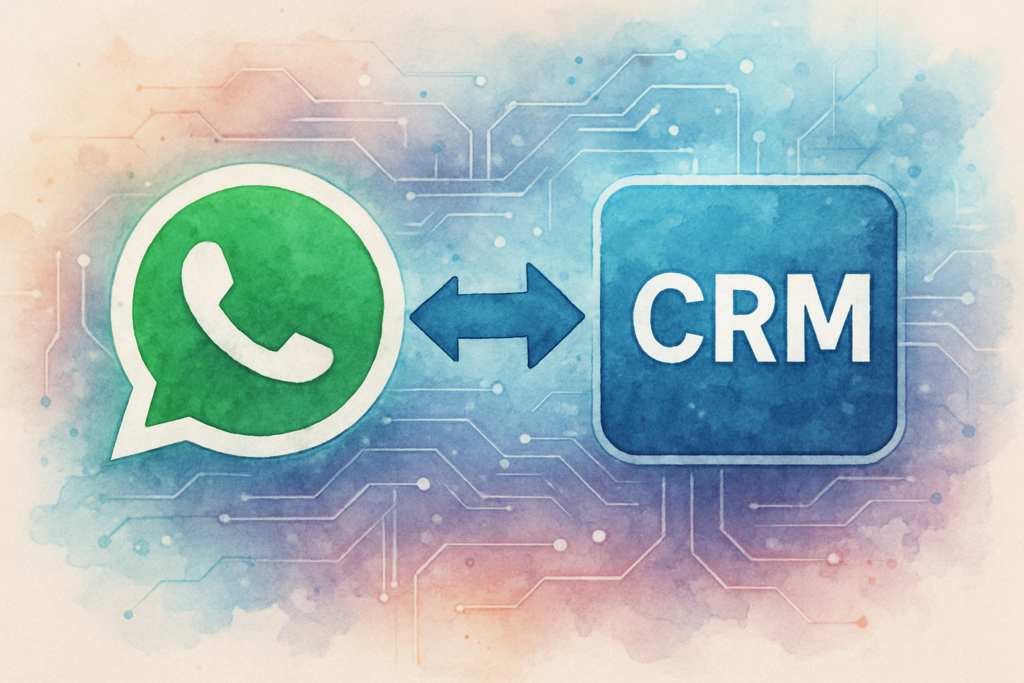
What is WhatsApp CRM integration? It’s the process of connecting WhatsApp Business API with your CRM platform to centralise customer conversations, automate workflows, and maintain comprehensive customer records in one unified system.
Why does it matter? Integration eliminates data silos, reduces manual data entry by up to 80%, and enables your team to deliver faster, more personalised customer experiences whilst maintaining complete conversation history.
Who benefits most? E-commerce businesses, customer support teams, sales organisations, and any company that relies on WhatsApp for customer communication can dramatically improve efficiency and customer satisfaction.
Let’s explore how WhatsApp CRM integration can revolutionise your customer engagement strategy and deliver measurable results for your business in 2026.
Understanding WhatsApp CRM Integration in 2026
WhatsApp CRM integration represents the seamless connection between WhatsApp Business API and your customer relationship management platform. This integration creates a unified ecosystem where every customer interaction, whether it occurs on WhatsApp or through other channels, is automatically captured, organised, and accessible within your CRM system.
The importance of this integration cannot be overstated. According to recent industry data, businesses using integrated communication platforms report 47% higher customer satisfaction rates compared to those using disconnected systems. When your team can view complete customer histories, previous conversations, purchase records, and preferences all in one place, they’re empowered to deliver exceptional, contextualised service.
The Evolution of Business Messaging
The landscape of business communication has shifted dramatically. Traditional channels like email and phone calls now compete with instant messaging platforms that customers prefer for their convenience and immediacy. WhatsApp has emerged as the dominant player, with businesses sending over 100 billion messages monthly through the platform.
This shift has created new challenges. Customer data scattered across multiple platforms leads to fragmented experiences, whilst manual processes consume valuable time that could be spent on strategic activities. Integration solves these problems by creating a single source of truth for all customer interactions.
Key Components of Successful Integration
Effective WhatsApp CRM integration relies on several critical components working in harmony:
- API connectivity: The WhatsApp Business API serves as the technical bridge, enabling secure, scalable communication between platforms
- Data synchronisation: Bi-directional data flow ensures information updates automatically across both systems in real-time
- Automation capabilities: Intelligent workflows trigger actions based on customer behaviour, conversation content, or predefined rules
- Analytics integration: Comprehensive reporting combines messaging metrics with CRM data for deeper insights
Current Market Trends
The adoption of WhatsApp CRM integration is accelerating rapidly. Research indicates that 73% of businesses plan to increase their investment in conversational commerce platforms over the next two years. This growth is driven by changing customer expectations—67% of consumers now expect businesses to offer messaging support, and 59% prefer messaging over traditional channels.
Furthermore, businesses implementing integrated messaging solutions report average response time reductions of 65% and conversion rate improvements of up to 40%. These compelling statistics demonstrate why WhatsApp CRM integration has become essential rather than optional for forward-thinking organisations.
5 Powerful Benefits of WhatsApp CRM Integration
Implementing WhatsApp CRM integration delivers transformative advantages that impact every aspect of your customer engagement strategy. Let’s examine the five most significant benefits that businesses are experiencing in 2026.
1. Centralised Customer Communication
The most immediate benefit is the consolidation of all customer conversations into your CRM platform. Your team no longer needs to switch between applications or manually transfer information. Every WhatsApp message, whether it’s a product enquiry, support request, or sales conversation, automatically appears within the relevant customer record.
This centralisation creates a complete 360-degree view of each customer. When a team member opens a customer profile, they instantly see the entire interaction history—previous purchases, support tickets, email exchanges, and WhatsApp conversations—all in chronological order. This comprehensive visibility enables more informed decision-making and personalised service delivery.
2. Dramatic Efficiency Improvements
Manual data entry represents one of the biggest time drains for sales and support teams. Integration eliminates this burden by automatically capturing and organising information. Contact details, conversation summaries, customer preferences, and transaction data flow seamlessly into your CRM without human intervention.
The time savings are substantial. Businesses report that automation reduces administrative tasks by 70-80%, freeing team members to focus on high-value activities like relationship building and strategic problem-solving. Additionally, automated workflows can trigger follow-up tasks, assign conversations to appropriate team members, and escalate urgent issues without manual oversight.
3. Enhanced Customer Experience
Today’s customers expect personalised, contextual interactions regardless of which channel they use. WhatsApp CRM integration makes this possible by ensuring every team member has access to complete customer information during conversations.
Imagine a customer reaching out via WhatsApp about a delayed order. With integration, your support agent immediately sees the order details, shipping status, previous conversations, and the customer’s communication preferences—all without asking the customer to repeat information. This seamless experience builds trust and loyalty whilst reducing resolution times.
Moreover, integration enables sophisticated personalisation at scale. Automated messages can include customer names, reference previous purchases, and offer relevant product recommendations based on browsing history or past behaviour.
4. Improved Team Collaboration
When customer conversations live within your CRM, collaboration becomes effortless. Multiple team members can view ongoing conversations, add internal notes, and seamlessly hand off customers between departments without losing context.
This collaborative approach is particularly valuable for complex customer journeys that involve multiple touchpoints. A lead might start with a sales conversation, transition to technical questions for the product team, and eventually require support assistance. Integration ensures smooth transitions with complete information transfer at each stage.
Team leaders also gain valuable oversight capabilities. They can monitor conversation quality, identify training opportunities, and ensure service level agreements are met—all from within the CRM dashboard.
5. Data-Driven Decision Making
Perhaps the most strategic benefit is the wealth of actionable insights that integration provides. When WhatsApp conversations are connected to your CRM, you can analyse messaging data alongside other customer metrics to identify patterns, trends, and opportunities.
Which products generate the most enquiries? What questions do customers ask most frequently? Which team members achieve the highest conversion rates? How does response time impact customer satisfaction? Integration enables you to answer these questions with concrete data rather than guesswork.
Advanced analytics can reveal customer sentiment, predict churn risk, and identify upselling opportunities. These insights inform strategic decisions about product development, marketing campaigns, and resource allocation.
Implementation Guide: Setting Up WhatsApp CRM Integration
Successfully implementing WhatsApp CRM integration requires careful planning and execution. Follow this comprehensive guide to ensure a smooth deployment that delivers maximum value.
Step 1: Assess Your Requirements
Begin by clearly defining your integration objectives. What specific problems are you trying to solve? Which teams will use the integration? What workflows need automation? Document your requirements in detail, including:
- Expected message volumes and response time targets
- Required automation scenarios and triggers
- Data fields that need synchronisation between systems
- Reporting and analytics requirements
- Compliance and data security considerations
This assessment phase should involve stakeholders from sales, marketing, customer support, and IT to ensure all perspectives are considered.
Step 2: Choose Your Integration Approach
There are several paths to achieving WhatsApp CRM integration, each with distinct advantages:
Native integrations: Many modern CRM platforms like Salesforce, HubSpot, and Zoho CRM offer built-in WhatsApp integration capabilities. These solutions typically provide the fastest implementation with minimal technical complexity.
Third-party platforms: Specialised integration platforms like Twilio, MessageBird, or Interakt offer robust features and flexibility, particularly for businesses with complex requirements or custom CRM systems.
Custom development: For organisations with unique needs or proprietary systems, custom API integration provides maximum control and customisation possibilities.
Step 3: Obtain WhatsApp Business API Access
To integrate WhatsApp with your CRM, you’ll need access to the WhatsApp Business API. This requires:
- A verified business profile with accurate company information
- A dedicated phone number that isn’t currently used with WhatsApp
- Approval from WhatsApp (typically processed through your chosen integration partner)
- Compliance with WhatsApp’s commerce and business policies
The approval process usually takes 1-2 weeks, though timelines can vary. Ensure your business documentation is complete and accurate to avoid delays.
Step 4: Configure Integration Settings
Once you have API access, configure the integration according to your requirements. Key configuration tasks include:
Data mapping: Define which WhatsApp data fields correspond to CRM fields. For example, map WhatsApp contact names to CRM contact records, message content to activity logs, and conversation metadata to custom fields.
Workflow automation: Set up automated actions triggered by specific events. Examples include creating new leads when unknown contacts message you, assigning conversations based on keywords or customer segments, and sending automated responses for common enquiries.
Template messages: Create and submit message templates for approval. WhatsApp requires pre-approved templates for business-initiated conversations, so prepare templates for common scenarios like order confirmations, appointment reminders, and promotional messages.
Step 5: Train Your Team
Technology alone doesn’t guarantee success—your team needs proper training to leverage the integration effectively. Develop comprehensive training programmes covering:
- How to access and respond to WhatsApp messages within the CRM
- Best practices for professional WhatsApp communication
- Using automation features and templates appropriately
- Maintaining data quality and updating customer records
- Compliance requirements and privacy considerations
Consider creating quick reference guides and video tutorials that team members can access when needed.
Step 6: Test Thoroughly Before Launch
Before rolling out to customers, conduct extensive testing to identify and resolve issues. Test scenarios should include:
- Sending and receiving messages across different devices and networks
- Verifying data synchronisation accuracy and timing
- Confirming automation triggers work as expected
- Testing edge cases and error handling
- Validating reporting and analytics accuracy
Involve team members from different departments in testing to gain diverse perspectives and catch potential issues.
Step 7: Launch and Monitor
Begin with a phased rollout rather than switching everything at once. Start with a small team or customer segment, monitor performance closely, and address any issues before expanding. Track key metrics like response times, customer satisfaction scores, and team adoption rates to measure success and identify improvement opportunities.
Overcoming Common WhatsApp CRM Integration Challenges
Whilst WhatsApp CRM integration offers tremendous benefits, implementation isn’t without challenges. Understanding these obstacles and their solutions helps ensure successful deployment.
Challenge 1: Data Privacy and Compliance
WhatsApp conversations often contain sensitive customer information, making data privacy a critical concern. Businesses must comply with regulations like GDPR, CCPA, and industry-specific requirements whilst maintaining secure integration.
Solution: Implement robust data governance policies that define what information is collected, how it’s stored, and who can access it. Ensure your integration partner provides enterprise-grade security features including encryption, access controls, and audit trails. Obtain explicit customer consent for data collection and provide transparent privacy policies. Regular security audits and compliance reviews should be standard practice.
Challenge 2: Message Volume Management
As WhatsApp adoption grows, message volumes can quickly overwhelm teams without proper systems in place. High volumes without adequate resources lead to delayed responses and poor customer experiences.
Solution: Leverage automation strategically to handle routine enquiries whilst routing complex issues to human agents. Implement intelligent chatbots for frequently asked questions, order status checks, and basic troubleshooting. Use conversation routing rules to distribute messages based on team capacity, expertise, and priority levels. Monitor queue depths and response times to identify when additional resources are needed.
Challenge 3: Maintaining Conversation Context
Customers expect seamless experiences even when conversations span multiple sessions or involve different team members. Losing context frustrates customers and reduces efficiency.
Solution: Ensure your integration captures complete conversation history and makes it easily accessible within customer records. Implement conversation tagging and categorisation to quickly identify discussion topics. Use internal notes features to share context between team members during handoffs. Train staff to review customer history before responding to ensure continuity.
Challenge 4: Balancing Automation and Personalisation
Whilst automation improves efficiency, over-reliance on automated responses can make interactions feel impersonal and frustrate customers seeking human assistance.
Solution: Design automation thoughtfully, using it for appropriate scenarios whilst ensuring easy escalation to human agents. Personalise automated messages using customer data from your CRM—include names, reference previous interactions, and tailor content to customer segments. Provide clear options for customers to reach human support when needed. Regularly review automated conversation flows and refine them based on customer feedback.
Challenge 5: Integration Maintenance and Updates
Both WhatsApp and CRM platforms regularly release updates that can affect integration functionality. Without proper maintenance, integrations can break or underperform.
Solution: Choose integration partners that provide ongoing support and automatically handle platform updates. Establish monitoring systems that alert you to integration issues before they impact customers. Schedule regular reviews of integration performance and configuration to ensure it continues meeting your evolving needs. Maintain documentation of your integration setup and customisations to facilitate troubleshooting.
Conclusion
WhatsApp CRM integration has evolved from a competitive advantage to a business necessity in 2026. By connecting your messaging platform with your customer relationship management system, you create a powerful ecosystem that enhances efficiency, improves customer experiences, and drives measurable business results.
The five powerful benefits we’ve explored—centralised communication, dramatic efficiency improvements, enhanced customer experience, improved team collaboration, and data-driven decision making—demonstrate why forward-thinking organisations are prioritising this integration. Businesses that successfully implement WhatsApp CRM integration report significant improvements in customer satisfaction, team productivity, and revenue growth.
However, success requires more than simply connecting two platforms. It demands careful planning, thoughtful implementation, comprehensive training, and ongoing optimisation. By following the implementation guide and addressing common challenges proactively, you can maximise the value of your WhatsApp CRM integration whilst avoiding costly pitfalls.
The customer communication landscape will continue evolving, but one trend is clear: integrated, seamless experiences across all channels are no longer optional—they’re expected. WhatsApp CRM integration positions your business to meet these expectations whilst building stronger customer relationships and driving sustainable growth.
Ready to transform your customer engagement strategy with WhatsApp CRM integration? The Crunch specialises in helping businesses implement powerful integration solutions tailored to their unique needs. Our team of experts will guide you through every step of the process, from initial planning to successful deployment and beyond.
Don’t let disconnected systems hold your business back. Contact The Crunch today to schedule your free consultation and discover how WhatsApp CRM integration can revolutionise your customer communications. Visit https://thecrunch.io/get-a-proposal/ to get started.
Frequently Asked Questions (FAQ)
1. What is WhatsApp CRM integration?
2. How does WhatsApp CRM integration work?
3. What are the benefits of integrating WhatsApp with a CRM?
4. How do I get started with WhatsApp CRM integration?
5. Is WhatsApp CRM integration secure?
6. How much does WhatsApp CRM integration cost?
7. Can I automate messages with WhatsApp CRM integration?
8. What CRMs support WhatsApp integration?
9. How does WhatsApp CRM integration compare to email or SMS integration?
10. Are there any limitations to WhatsApp CRM integration?
11. Can I use WhatsApp CRM integration for marketing campaigns?
12. What should I consider before integrating WhatsApp with my CRM?