QUICK ANSWER
A restaurant AI chatbot answers the four questions you get all day, takes reservations into a real calendar, and handles the WhatsApp orders currently piling up on somebody’s phone. In Malaysia it runs from RM 299 a month on a self-serve platform, or RM 200 to RM 2,500 managed. It is worth it if you take bookings or WhatsApp orders. It is not worth it if you are a walk-in warung with a queue out the door, and no honest vendor should tell you otherwise.
Restaurant enquiries are the most repetitive in any industry. Are you open. Do you have parking. Is there halal certification. Can I book for eight on Saturday. Do you deliver to my area.
Those five questions are most of your inbound volume, and answering them by hand is why nobody replies to the reservation request until after the customer has booked somewhere else.
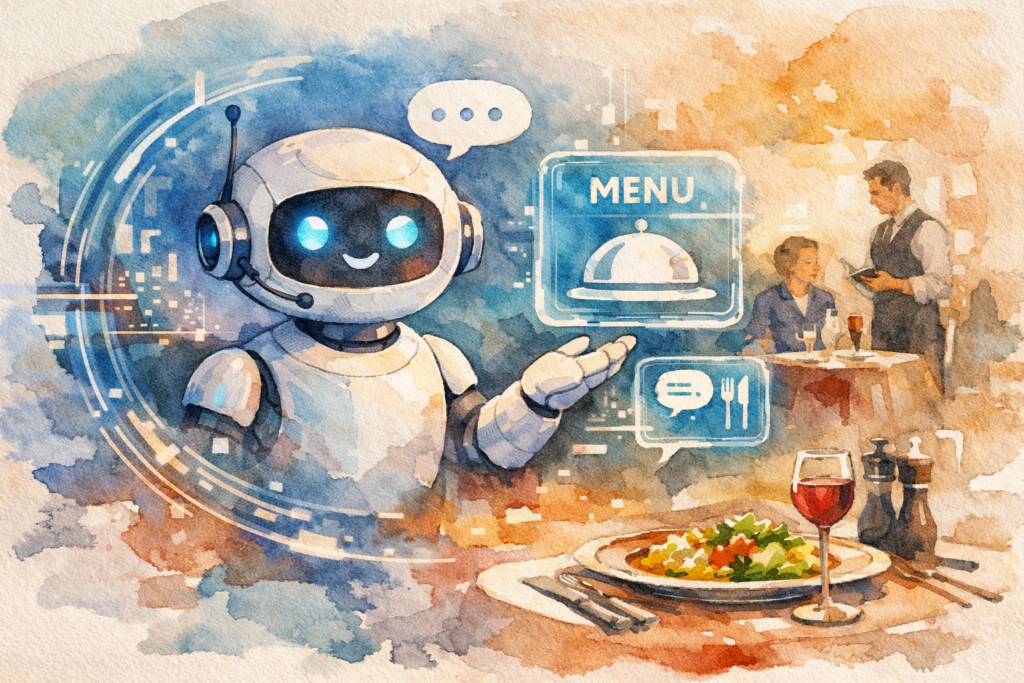
What an AI chatbot for restaurant actually handles
Five jobs, in rough order of how much they are worth to a Malaysian restaurant.
(1) Reservations. Party size, date, time, seating preference, straight into the booking system. This is the one that pays for the rest.
(2) The repetitive questions. Hours, location, parking, halal status, whether you take walk-ins, whether there is a private room.
(3) WhatsApp orders. For restaurants taking direct orders rather than working exclusively through the delivery platforms, this is where the margin is, because there is no commission on it.
(4) Confirmations and reminders. A reservation reminder the day before is the single cheapest reduction in no-shows available to a restaurant.
(5) Post-visit follow-up. A review request sent an hour after the bill, to the people who actually came.
The commission question
This is the part of restaurant economics that makes automation worth more here than in most industries.
An order through a delivery platform carries a commission. An order taken directly on your own WhatsApp does not. For a restaurant on thin margins, moving even a modest share of repeat customers from the platform to a direct channel changes the shape of the business.
An AI chatbot is how you make direct ordering practical without hiring somebody to watch a phone all evening. That is the honest commercial case, and it is stronger than anything about answering hours faster.
Two caveats keep it honest. The delivery platforms bring you customers you would not otherwise reach, so this is about rebalancing rather than leaving. And WhatsApp broadcast messages to your own list are billed by Meta as marketing templates, so the channel is cheap rather than free. Our WhatsApp chatbot page covers how that billing works.
What an AI chatbot for restaurant costs
| Option | Published price | Currency |
|---|---|---|
| Wati | RM 299/mo Growth, RM 799/mo Pro, billed annually | Ringgit |
| SleekFlow | RM 469/mo Pro AI, RM 1,419/mo Premium AI | Ringgit |
| respond.io | $79/mo Starter, $159 Growth, $279 Advanced | US dollars |
| AiSensy | Free tier at zero, paid plans in rupees | Indian rupees |
| The Crunch, the author of this page | RM 200 to RM 2,500/mo, managed | Ringgit |
Meta charges separately, and less than most restaurant owners assume. Only template messages are billed, and replying to a customer who messaged you first is free inside the service window, as set out on the WhatsApp Business Platform pricing page. Malaysia is now billed in ringgit.
That distinction matters here more than in most industries. Answering reservation enquiries costs you almost nothing. Broadcasting Friday’s promotion to two thousand contacts is where the bill appears.
Set it up around the reservation, not the conversation
The mistake restaurants make is building a bot that chats well and books nothing.
(1) Connect the booking system first. If you run Google Workspace, availability and booking go through the Google Calendar API. If you use a restaurant reservation platform, check whether it publishes an API before you buy anything, because that single fact decides the price of the build.
(2) Write the five answers properly. Hours, parking, halal status, private dining, walk-in policy. Get these exactly right and most of your volume is handled.
(3) Set the escalation rule. Large groups, dietary requirements, complaints and anything about an allergy go to a person immediately. A confident wrong answer about allergens is a serious problem, not an inconvenience.
(4) Turn on the reminder. One message the day before a reservation. This is usually the highest-return single thing in the whole deployment.
(5) Only then add ordering. Menu, modifiers, payment. Do it after the reservation flow is proven, because it is far more complex and the failure modes are worse.
?
When a restaurant should not buy this. If you do not take reservations, do not take direct orders, and your queue forms on the pavement regardless, automation solves a problem you do not have. Spend the money on the kitchen. The restaurants that get the most from this are booking-led, delivery-heavy, or running more than one outlet.
The Malaysian specifics
Halal status is not a normal FAQ. It is a factual question about certification with a right answer, and getting it wrong is not a customer service problem, it is a trust problem you may not recover from. State the certification status precisely, or route the question to a person. Do not let a model paraphrase it. JAKIM publishes the certification framework, and your status is either current or it is not.
Language. Reservation requests arrive in mixed English, Bahasa Malaysia and Mandarin, often inside one message. Ask any vendor to demonstrate a genuinely mixed message rather than a clean sentence.
Festive periods. Raya, Chinese New Year and Deepavali produce reservation volume that no front desk can absorb, and they are precisely when your staff are also short. That surge, rather than the average week, is the real case for automation in this industry.
Customer data. Reservation records and conversation history are personal data under Malaysia’s Personal Data Protection Act, administered by the Personal Data Protection Department. If you are building a marketing list from reservations, get consent properly rather than assuming it.
Plan it around the festive surge
Most industries have a busy season. Restaurants in Malaysia have three, and they are the whole argument.
Raya, Chinese New Year and Deepavali each produce a block of large-group reservation enquiries that arrives weeks in advance, concentrates into evenings, and lands precisely when your own staff are taking leave. A front desk that copes comfortably in an ordinary March cannot absorb it, and the bookings you lose are the largest ones of the year.
Three things follow from that if you are planning a deployment.
(1) Go live at least a month before a festive period, not during one. A system nobody has tested meeting your highest-value bookings is a bad trade.
(2) Build the large-group path deliberately. Set the party size above which the bot stops booking and hands to a person, because a table of twenty is a negotiation rather than a reservation.
(3) Write the set-menu answers in advance. Festive menus, deposits and minimum spends generate most of the questions in those weeks, and they change every year.
Judged on an average Tuesday the case for automating a restaurant is real but modest. Judged on the three weeks before Raya it is obvious. Price the decision on the surge, because that is where the money actually is.
More than one outlet changes the problem
Single-outlet restaurants have a volume problem. Groups have a routing problem, and it is harder.
A customer messaging your brand does not know or care which branch handles them. They ask about parking, and the answer differs by outlet. They book a table, and it has to land in the right diary. They complain about last night, and it needs to reach the manager who was actually on shift.
(1) Ask which outlet first, before anything else. Every answer downstream depends on it, and asking later means re-asking.
(2) Hold the answers per outlet, not per brand. Hours, parking, halal certification and private dining all vary. One shared knowledge base will be wrong somewhere.
(3) Route escalations to the right manager. A complaint that lands in a head office inbox on Saturday night is a complaint nobody answers.
(4) Keep one number. Splitting your brand across several WhatsApp numbers pushes the routing problem onto the customer, which is exactly backwards.
This is where a managed build earns its fee over a self-serve platform, because outlet routing is genuinely fiddly and it is the part that breaks quietly when a new branch opens.
What to ask before you buy
Six questions. Ask them of any vendor, including us.
(1) Does my booking system have an API? Answer this before the first sales call. It decides what is possible and most of what it costs.
(2) Will you show me a booking appear in a real diary during the demo? Not a transcript afterwards. If they will not, the integration is not built.
(3) How do you lock the halal answer? A vendor who does not immediately understand why this is different from other questions has not deployed in this market.
(4) What is my all-in monthly cost including Meta charges at my broadcast volume? Not the plan price. If you send weekly promotions to a large list, the Meta side may exceed the subscription.
(5) Show me a mixed-language conversation. Real reservation requests switch between English, Bahasa Malaysia and Mandarin mid-sentence. A clean scripted demo proves nothing.
(6) What happens when it does not know? The escalation path matters more than the answer rate, particularly for anything touching allergies.
How to tell whether it worked
Three numbers, measured for one month before and one month after.
(1) No-show rate. The reminder message attacks this directly and the effect shows up fast.
(2) Reservations made outside opening hours. These are bookings you previously did not get at all.
(3) Direct orders as a share of total orders. If this is not moving, the commission argument above is not being realised and something in the setup is wrong.
Do not measure total conversations. It goes up the moment you switch anything on and tells you nothing.
OUR METHODOLOGY
Every price on this page was read directly from the vendor’s own published pricing page in September 2026, rendered in a browser rather than taken from a summary, and each is linked so you can verify it. Meta’s charging rules were read from Meta’s own documentation rather than from a vendor’s description of them.
Currency is reported as each vendor publishes it and has not been converted. We sell managed automation and have listed our own pricing in the same table under the same headings, and we have said plainly above which restaurants should not buy this at all. If a figure here has changed since we read it, tell us and we will correct it within 48 hours.
Frequently asked questions
01How much does a restaurant AI chatbot cost in Malaysia?+
Self-serve platforms start at RM 299 per month with Wati or RM 469 with SleekFlow, and AiSensy runs a free tier.
A managed service that builds the flows, connects your booking system and maintains it runs RM 200 to RM 2,500 per month, with custom builds quoted on the scope of the systems it has to write into.
Meta charges separately for WhatsApp, but only for template messages. Replying to a customer who messaged you first is free.
02Can it take reservations directly into my booking system?+
If your booking system publishes an API, yes, and the reservation exists the moment the conversation ends.
If it does not, the bot can collect the details but somebody still has to enter them, which moves the work rather than removing it.
Check that one fact before you buy anything, because it decides both what is possible and what the build costs.
03Will it reduce no-shows?+
A reminder message the day before a reservation is the most reliable return in the whole deployment, and it is also the simplest thing to set up.
Measure your no-show rate for a month before you start so you have something to compare against. Most restaurants have a strong opinion about their no-show rate and no actual number.
04Can it handle halal questions?+
It should answer with your exact certification status as a fixed fact, or route the question to a person. It should never paraphrase or infer.
This is a question with a right answer, and getting it wrong damages trust in a way an incorrect opening time does not.
Set this as a locked response during the build rather than leaving it to the model.
05Does it work with delivery platforms?+
It works alongside them rather than inside them. The platforms run their own ordering flow and you cannot automate within it.
The value is in building a direct channel next to those platforms, where orders carry no commission.
Treat it as rebalancing rather than replacing, because the platforms genuinely bring you customers you would not otherwise reach.
06Can it take orders and payment?+
Yes, but build it second. Menus with modifiers, availability and payment are considerably more complex than reservations, and the failure modes are worse.
Prove the reservation flow first. If that works and your team trusts it, ordering is a sensible next step.
A bot that takes a wrong order is more expensive than one that takes no orders.
07Which restaurants should not bother?+
Walk-in businesses that take no reservations and no direct orders. If people simply turn up and queue, there is no enquiry to automate.
Very small operations where the owner answers every message within minutes already have the outcome automation delivers.
The businesses that gain most are booking-led, delivery-heavy, or running more than one outlet.
08How long does it take to set up?+
A bot answering the common questions and taking reservation details can be live in days.
A mid-tier scope that connects to a live booking system and a CRM deploys in 30 days. If your reservation platform has no public API, that system rather than the AI sets the timeline.
Aim to be live well before a festive period rather than during one.
Where to start
Count last month’s reservation enquiries and how many arrived when the restaurant was closed. That second number is what you are currently losing.
Then check one thing before you speak to any vendor: whether your booking system publishes an API. It determines everything else. For how this runs on WhatsApp specifically, see our WhatsApp chatbot page and the WhatsApp bot guide. For the cost picture across automation generally, our AI agent pricing page, and for how a booking-led business runs it end to end, the clinic deployment page covers the same mechanics. If you would rather someone looked at your enquiry mix, send us a month of messages and we will tell you honestly whether the reservation flow is worth automating at your volume.