Imagine having a tireless team member who works 24/7, never takes breaks, and handles repetitive tasks with perfect accuracy. That’s exactly what an AI software agent brings to your business.
In today’s fast-paced digital landscape, businesses are drowning in routine tasks that consume valuable time and resources. From responding to customer inquiries to processing data and scheduling appointments, these repetitive activities prevent teams from focusing on strategic initiatives that drive growth.
AI software agents have emerged as game-changing solutions that automate these mundane processes, allowing businesses to operate more efficiently and cost-effectively. These intelligent systems can learn from patterns, make decisions, and execute tasks without human intervention.
In this comprehensive guide, we’ll explore the 10 best AI software agents available in 2026, examining their capabilities, benefits, and how they can transform your business operations. Whether you’re a small startup or an established enterprise, you’ll discover practical solutions to automate your workflows and unlock unprecedented productivity gains.
Understanding AI Software Agents and Their Impact on Business
What Are AI Software Agents?
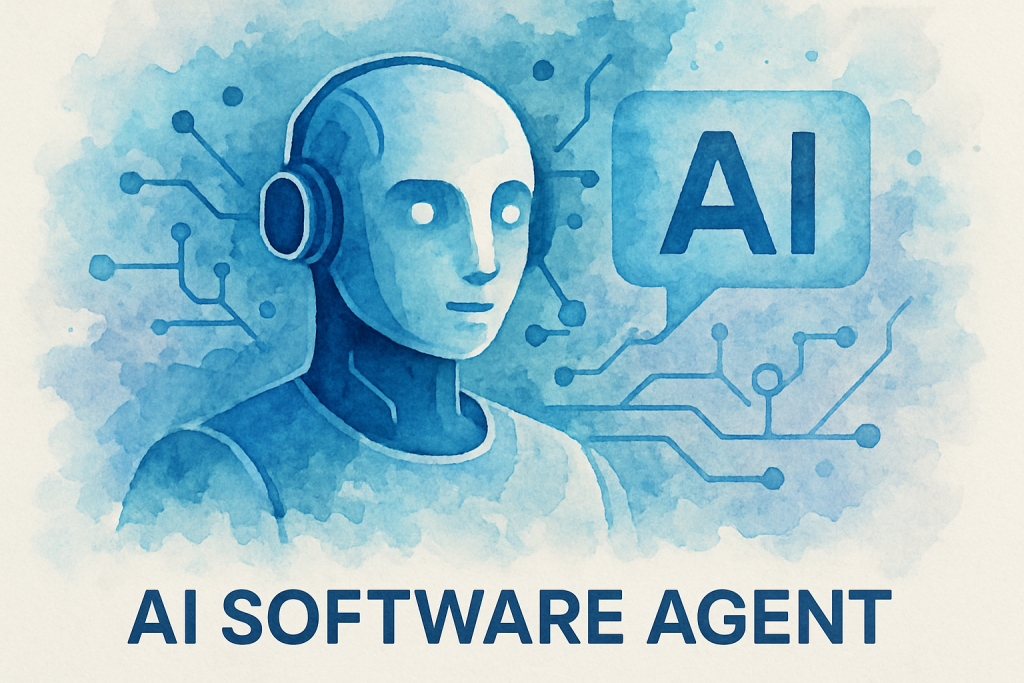
An AI software agent is an autonomous program that perceives its environment, makes decisions, and takes actions to achieve specific goals. Unlike traditional software that follows rigid instructions, these intelligent agents can adapt to changing circumstances and learn from experience.
These digital assistants operate across various business functions, from customer service and sales to data analysis and project management. They leverage machine learning, natural language processing, and advanced algorithms to understand context, predict outcomes, and execute complex tasks.
The Growing Importance of Automation in 2026
According to recent research by McKinsey, businesses that implement AI automation see an average productivity increase of 40% and cost reductions of up to 30%. The global AI market is projected to reach $1.8 trillion by 2030, with software agents representing a significant portion of this growth.
The shift toward remote and hybrid work models has accelerated the adoption of AI agents. Companies need scalable solutions that maintain operational efficiency regardless of where their teams are located.
Key Characteristics of Effective AI Agents
The most powerful AI software agents share several essential characteristics:
- Autonomy: They operate independently without constant human supervision
- Reactivity: They respond quickly to changes in their environment
- Proactivity: They anticipate needs and take initiative
- Learning capability: They improve performance over time through experience
- Integration: They seamlessly connect with existing business systems
Top 10 AI Software Agents for Business Automation
1. UiPath: Enterprise-Grade Robotic Process Automation
UiPath leads the market in robotic process automation (RPA), offering sophisticated AI agents that handle complex business processes. Their platform excels at automating data entry, invoice processing, and compliance reporting.
2. Zapier: No-Code Workflow Automation
Zapier democratizes automation by enabling non-technical users to create powerful AI-driven workflows. With connections to over 5,000 applications, this AI software agent bridges gaps between different business tools.
The platform’s strength lies in its simplicity and versatility. Users can automate lead capture, social media posting, email marketing, and data synchronization without writing a single line of code.
3. Intercom: Conversational AI for Customer Engagement
Intercom’s AI agents revolutionize customer communication by providing intelligent chatbots that handle inquiries, qualify leads, and resolve support tickets. Their natural language processing capabilities enable human-like conversations.
The platform learns from every interaction, continuously improving response accuracy and customer satisfaction rates. Businesses report up to 67% reduction in support ticket volume after implementing Intercom’s AI agents.
4. Salesforce Einstein: AI-Powered CRM Intelligence
Salesforce Einstein integrates AI agents directly into the world’s leading CRM platform. These agents analyze customer data, predict sales opportunities, and automate routine sales tasks.
5. Microsoft Power Automate: Enterprise Integration Specialist
Microsoft’s Power Automate offers robust AI software agents that seamlessly integrate with the Microsoft 365 ecosystem. These agents excel at document processing, approval workflows, and data migration tasks.
The platform’s AI Builder feature enables businesses to create custom machine learning models without data science expertise. This empowers organizations to develop tailored automation solutions for unique business needs.
6. Drift: Revenue Acceleration Through Conversational AI
Drift specializes in conversational marketing and sales automation. Their AI agents engage website visitors in real-time, qualify leads, and schedule meetings with sales representatives automatically.
The platform’s intelligent routing ensures prospects connect with the right team members instantly. Companies using Drift report 10x increases in qualified meeting bookings and significant improvements in conversion rates.
7. Automation Anywhere: Intelligent Document Processing
Automation Anywhere provides enterprise-grade AI agents focused on document-intensive processes. Their IQ Bot technology extracts data from invoices, contracts, and forms with exceptional accuracy.
The platform’s cognitive automation capabilities handle exceptions and variations in document formats, reducing manual intervention. Financial services and healthcare organizations particularly benefit from these specialized agents.
8. HubSpot Operations Hub: Marketing and Sales Automation
HubSpot’s Operations Hub delivers AI software agents that streamline marketing campaigns, lead nurturing, and customer onboarding. The platform’s workflow automation connects marketing, sales, and service teams.
Smart content personalization, automated email sequences, and lead scoring algorithms work together to create seamless customer experiences. The system adapts messaging based on user behavior and preferences.
9. Workato: Enterprise Automation and Integration
Workato offers sophisticated AI agents designed for complex enterprise environments. Their platform handles multi-step workflows across cloud applications, databases, and on-premise systems.
The intelligent automation recipes learn from usage patterns and suggest optimizations. Workato’s agents excel at data synchronization, ensuring information consistency across all business systems.
10. Zendesk AI: Customer Service Excellence
Zendesk’s AI agents transform customer support operations through intelligent ticket routing, automated responses, and sentiment analysis. The system identifies urgent issues and escalates them appropriately.
Their Answer Bot resolves common questions instantly, while AI-powered insights help support teams identify trends and improve service quality. Organizations achieve faster resolution times and higher customer satisfaction scores.
Implementing AI Software Agents: A Strategic Approach
Step 1: Identify Automation Opportunities
Begin by mapping your current business processes and identifying repetitive, time-consuming tasks. Look for activities that follow predictable patterns and don’t require complex human judgment.
Common automation candidates include data entry, email responses, report generation, appointment scheduling, and invoice processing. Prioritize processes that consume significant resources or create bottlenecks.
Step 2: Choose the Right AI Software Agent
Select an AI agent that aligns with your specific needs, technical capabilities, and budget. Consider factors like integration requirements, scalability, ease of use, and vendor support.
Start with a pilot project focusing on one or two processes. This approach minimizes risk and allows you to demonstrate value before expanding automation efforts.
Step 3: Design and Configure Workflows
Map out detailed workflows that define how your AI software agent will operate. Specify triggers, actions, conditions, and exception handling procedures.
Most modern platforms offer visual workflow builders that simplify configuration. Include stakeholders from relevant departments to ensure workflows meet actual business requirements.
Step 4: Test and Refine
Thoroughly test your AI agents in a controlled environment before full deployment. Monitor performance metrics, identify edge cases, and refine logic as needed.
Establish clear success criteria such as time saved, error reduction, or cost savings. Use these benchmarks to measure ROI and justify further automation investments.
Step 5: Train Your Team
Provide comprehensive training to ensure team members understand how to work alongside AI agents. Address concerns about job displacement by emphasizing how automation frees them for higher-value work.
Create documentation covering common scenarios, troubleshooting procedures, and escalation paths. Designate automation champions who can support colleagues and drive adoption.
Step 6: Monitor and Optimize
Regularly review and optimize workflows based on performance data and user feedback. AI software agents improve over time, so ongoing refinement maximizes their value.
Overcoming Common Challenges with AI Software Agents
Integration Complexity
Many businesses struggle with integrating AI agents into existing technology stacks. Legacy systems may lack modern APIs, creating connectivity challenges.
Solution: Choose platforms with extensive integration libraries and consider middleware solutions that bridge gaps between systems. Work with experienced implementation partners who understand your technical environment.
Data Quality and Consistency
AI software agents rely on clean, consistent data to function effectively. Poor data quality leads to errors and undermines automation benefits.
Solution: Implement data governance practices before deploying AI agents. Establish data standards, validation rules, and cleansing procedures. Regular data audits ensure ongoing quality.
Change Management Resistance
Employees may resist automation due to fears about job security or discomfort with new technologies. This resistance can derail implementation efforts.
Solution: Communicate transparently about automation goals and benefits. Involve employees in the implementation process and highlight how AI agents eliminate tedious tasks, allowing them to focus on meaningful work.
Security and Compliance Concerns
Automated processes handling sensitive data raise security and regulatory compliance questions. Organizations must ensure AI agents meet industry standards.
Solution: Select vendors with robust security certifications and compliance frameworks. Implement proper access controls, encryption, and audit trails. Regularly review automation workflows for compliance adherence.
Scalability Limitations
Some AI software agents perform well initially but struggle as transaction volumes increase or business requirements evolve.
Solution: Choose enterprise-grade platforms designed for scalability. Plan for growth by selecting solutions with flexible pricing models and performance guarantees. Regularly assess capacity and upgrade as needed.
Conclusion: Transform Your Business with AI Software Agents
AI software agents represent a fundamental shift in how businesses operate, offering unprecedented opportunities to automate routine tasks and unlock human potential. The 10 solutions we’ve explored provide powerful capabilities across various business functions, from customer service to data processing.
Successful implementation requires strategic planning, careful vendor selection, and ongoing optimization. Start small, demonstrate value, and gradually expand your automation footprint. The businesses that embrace AI agents today will gain significant competitive advantages in efficiency, cost management, and customer experience.
The ROI from AI software agents extends beyond immediate cost savings. These intelligent systems free your team to focus on innovation, strategy, and relationship-building—activities that truly differentiate your business in the marketplace.
As we’ve seen, the technology is mature, accessible, and delivering measurable results across industries. The question isn’t whether to adopt AI agents, but how quickly you can implement them to stay competitive.
Ready to transform your business operations with AI automation? Contact The Crunch to schedule a free consultation and discover how AI software agents can revolutionize your workflows. Our experts will assess your unique needs and design a customized automation strategy that delivers real results. Get your free proposal today and take the first step toward a more efficient, productive future.
Frequently Asked Questions (FAQ)
1. What is an AI software agent?
2. How do AI software agents work?
3. What are the main benefits of using AI software agents?
4. How do I get started with AI software agents?
5. What are common use cases for AI software agents?
6. How do AI software agents compare to traditional automation tools?
7. Are AI software agents expensive to implement?
8. What are the risks or concerns with using AI software agents?
9. Do I need programming skills to use AI software agents?
10. Can AI software agents integrate with existing business systems?
11. How do I choose the right AI software agent for my needs?
12. How can I measure the success of an AI software agent?