An AI answering service picks up your business calls around the clock, understands what the caller wants, and books, routes or logs the outcome without a human. Published 2026 entry pricing runs from $24.95 a month for roughly 30 calls up to $30,000 a year for enterprise contracts. The four pricing models matter more than the headline rate.
Most AI answering service comparisons list features. Features are not where the money goes wrong. The money goes wrong because four vendors quote four incompatible units: one charges per call, one per minute, one per agent seat, one per resolved conversation. A business answering 400 calls a month can pay $60 or $600 depending only on which unit it picked, for functionally similar software.
This page prices eight platforms against their own published rate cards, read in September 2026, then explains which unit fits which call pattern. We have been deploying conversational systems for Malaysian, Singapore and Hong Kong SMBs since 2019 and now deliver remotely for clients elsewhere, so the production section is written from deployments rather than from vendor documentation.
What an AI Answering Service Actually Does
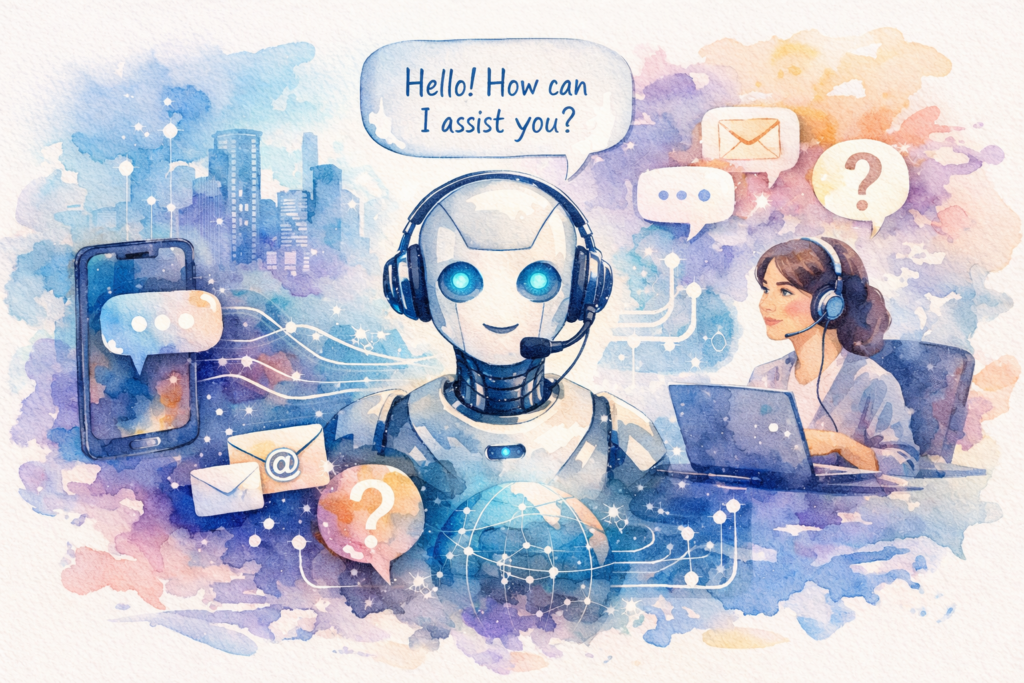
An AI answering service is software that answers an inbound phone call, holds a real conversation, and completes a task. That last part is what separates it from everything that came before it.
A voicemail box records. An IVR menu routes by keypad. A call centre script reader reads from a page. An AI answering service does none of those things: it listens to an open-ended sentence, works out the intent, checks a real system for an answer, and writes the result back.
Three capabilities decide whether a given product is the real thing:
(1) Open speech understanding. The caller says “I need to move Thursday’s appointment to sometime next week, preferably morning”. A menu cannot parse that. An agent has to.
(2) Live lookup. Opening hours, prices and availability come from a source of truth, not from the model’s memory. An agent that improvises a price has cost you a customer and possibly a refund.
(3) Write access with confirmation. The booking is created in the calendar and read back before the call ends, rather than assumed.
An AI answering service that does only the first is a demo. Products that do all three are infrastructure, and they are priced accordingly.
The Four Pricing Models, and Which Suits Your Call Pattern
Before the platform list, understand how an AI answering service bills you. Comparing a per-call plan to a per-minute plan by headline price is the single most common budgeting mistake in this category.
Per call
$0.70 – $1.50 per extra call
You buy a bucket of calls. Overage is charged per additional call regardless of how long it lasts. Suits businesses with short, predictable calls such as appointment confirmations. Punishing if your calls run long, because a nine-minute call costs the same as a ninety-second one and you are paying the vendor’s margin on the difference.
Per minute
$0.05 – $0.50 per minute
You buy talk time. Fair when call lengths vary widely, and the only model that scales down honestly for a quiet month. Watch the rounding: some vendors bill in 30-second increments, which adds roughly 15 to 20 percent on a book of short calls.
Per agent seat
$66 – $249 per agent / month
A flat fee per configured AI agent with unlimited talk time, metered instead on unique customers or logic flows. The best value at high call volume and the worst at low volume, because the floor does not move. Read the secondary meter carefully, because that is where the real limit sits.
Human-staffed hybrid
$8.50 – $11.50 per call
Real people answer, with AI assisting. An order of magnitude more expensive per call, and worth it when a missed nuance costs more than the call does. Law firms and medical practices often land here for intake specifically, while automating everything else.
How We Sourced These Numbers
Every figure below was read off the vendor’s own published pricing page in September 2026 and is quoted in the unit that vendor uses. Where a vendor publishes only an enterprise minimum, we say so rather than estimating. Voice pricing moves often and several vendors pass model and telephony costs through at cost, so treat these as the published rate at a point in time and confirm on the live page before you commit. We do not take affiliate commission from any platform listed.
The 8 Best AI Answering Services in 2026
These are the AI answering service platforms worth shortlisting, ordered by monthly entry price, lowest first, because that is the constraint most businesses are actually working within.
1. Upfirst
BEST FOR LOW CALL VOLUME
Upfirst has the lowest published entry point of any platform here, and a per-call model that gets cheaper as you scale up the tiers.
- Starter: $24.95 a month, 30 calls included, $1.50 per additional call
- Premium: $59.95 a month, 90 calls, $1.00 per extra
- Pro: $159.95 a month, 300 calls, $0.75 per extra
- Scale: $299 a month, 600 calls, $0.70 per extra
- Trial: 14 days, full feature access, no credit card
Every tier includes 24/7 answering, call recordings, transcription, appointment scheduling and spam blocking, with no contract.
2. RingCentral AI Receptionist
BEST IF YOU ALREADY RUN RINGEX
RingCentral sells this both as a standalone product and as a cheaper add-on to an existing RingEX phone plan, which makes it the obvious pick if your phone system is already theirs.
- Standalone: $49 a month including 100 minutes
- Add-on to RingEX: $39 a month, also 100 minutes
- Overage: $0.50 per minute, billed in 30-second increments
- Trial: 14 days on either plan
Available in the United States and Canada. The 30-second rounding matters more than it looks: a book of two-minute calls effectively bills at closer to 2.5 minutes each.
3. Rosie
BEST FOR MINUTE-BASED SIMPLICITY
Rosie prices in plain minute buckets with no per-call arithmetic, which makes forecasting straightforward for businesses whose call lengths vary.
- Professional: $49 a month, 250 minutes, 2 custom message scenarios
- Scale: $149 a month, 1,000 minutes, 5 scenarios
- Growth: $299 a month, 2,000 minutes, unlimited scenarios
- Website texting add-on: $50 a month, 25 conversations, $1 each thereafter
- Trial: 7 days
At $49 for 250 minutes the effective rate is about $0.196 a minute, which undercuts RingCentral’s standalone tier by a wide margin on talk time.
4. Goodcall
BEST FOR UNLIMITED TALK TIME
Goodcall is the only platform here that does not meter minutes at all. It charges per agent and meters unique customers instead, which changes the economics completely for businesses with long calls.
- Starter: $79 per agent per month, 1 logic flow, 100 unique customers
- Growth: $129 per agent, 3 logic flows, 250 unique customers
- Scale: $249 per agent, 25 logic flows, 500 unique customers
- Overage: $0.50 per unique customer beyond the plan
- Annual: 15 percent off, bringing Starter to $66 a month
Unlimited minutes and tokens on every tier. The real ceiling is the unique-customer count and the number of logic flows, so a business with many repeat callers gets exceptional value and a business with high first-time call volume does not.
5. Retell AI
BEST FOR TRANSPARENT PER-MINUTE COSTS
Retell AI publishes the clearest component breakdown of any vendor here, which makes it the easiest to model before you commit.
- All-in range: $0.07 to $0.31 per minute
- Components: voice infrastructure $0.055/min, synthesis $0.015/min, language model $0.003 to $0.16/min, telephony about $0.015/min
- Free tier: $10 in credits and 20 free concurrent calls
- Concurrency: $8 per concurrency per month beyond the free 20
- Extras: phone numbers $2 a month, extra knowledge bases $8 each
The spread in that range is almost entirely which reasoning model you pick. Twenty free concurrent calls covers more small-business volume than most owners expect.
6. Vapi
BEST FOR TEAMS WITH THEIR OWN API KEYS
Vapi charges only for its own hosting and passes speech, language and synthesis through at cost, dropping those to zero if you supply your own keys.
- Hosting: $0.05 per minute
- Model costs: at cost, or $0 with your own API keys
- Concurrency: 10 lines included on Build, then $10 per line per month
- Compliance: HIPAA at $2,000 a month, zero data retention at $1,000 a month
- Retention: 14 days of call history on Build
That HIPAA line is the detail nobody mentions in comparison posts. A regulated healthcare deployment on Vapi is not a cheap deployment, whatever the per-minute rate suggests.
7. Smith.ai
BEST WHEN A HUMAN MUST ANSWER
Smith.ai is the outlier here and belongs on the list precisely because of it. Real agents answer, staffed 24/7, with AI assisting rather than replacing.
- Starter: $300 a month, 30 calls, $11.50 per call over
- Basic: $810 a month, 90 calls, $10.50 per call over
- Pro: $2,100 a month, 300 calls, $8.50 per call over
- Setup: none, on any plan
- Guarantee: 30-day money back, no charge for spam calls, 10 percent off annually
At $10 a call this is roughly ten times the cost of a pure AI platform. That is the correct price when the call is a first conversation with a prospective client worth thousands, which is why legal and medical intake often sits here.
8. Synthflow
BEST FOR ENTERPRISE PROCUREMENT
Synthflow has moved to an enterprise-only posture and publishes a single figure: contracts start at $30,000 annually.
- Entry point: $30,000 a year, published
- Priced on: call volume, concurrency, telephony setup, integrations, security requirements, launch support
- Included: launch support and security review
- Not published: per-minute rates or self-serve tiers
Useful as a market marker even if you never buy it. Thirty thousand a year is roughly where the self-serve segment of this category ends and procurement begins.
AI Answering Service Comparison Table
Every AI answering service below, side by side. All figures as published in September 2026, and entry price is the lowest paid tier rather than the free trial.
| Platform | Entry price | Pricing model | What is included | Best fit |
|---|---|---|---|---|
| Upfirst | $24.95/mo | Per call | 30 calls, $1.50 over | Lowest volume, cheapest test |
| RingCentral | $39-49/mo | Per minute | 100 min, $0.50/min over | Existing RingEX customers |
| Rosie | $49/mo | Per minute | 250 min, 2 scenarios | Best minutes per dollar |
| Goodcall | $79/agent/mo | Per agent seat | Unlimited min, 100 customers | Long calls, repeat callers |
| Retell AI | $0.07/min | Per minute, usage | $10 credits, 20 concurrency | Builders wanting transparency |
| Vapi | $0.05/min | Per minute, usage | Models at cost, 10 lines | Developer teams with own keys |
| Smith.ai | $300/mo | Per call, human | 30 calls, live agents 24/7 | High-value intake calls |
| Synthflow | $30,000/yr | Enterprise contract | Launch and security support | Procurement-led buying |
?How many calls do you actually miss?
This is the number that decides everything, and almost nobody measures it before shopping. Pull your phone records for one ordinary month and count calls that rang out, went to voicemail with no message, or arrived outside opening hours. Multiply by your average customer value and your typical close rate. If that figure is smaller than $25 a month, no product on this page is worth buying. If it is larger than a few hundred, the cheapest tier here pays for itself in a week and the decision is only which unit fits your call pattern.
What Goes Wrong With AI Answering Services in Production
An AI answering service demo is one cooperative caller in a quiet room asking an expected question. Real phone lines are not that. Five failures account for most of the deployments we get asked to rescue, and none of them show up in a trial.
(1) Latency that only appears on real networks. A response loop measuring 700 milliseconds on a developer laptop measures far more over a mobile connection in a noisy shop. Callers start talking over the agent, which triggers interruption handling, which restarts the loop. The conversation degrades into two parties talking across each other. Test on a phone, outdoors, at the time of day your customers actually ring.
(2) Confident wrong answers about price and availability. If the agent is allowed to reason about prices rather than retrieve them, it will eventually quote one that does not exist. This is the failure with a direct financial consequence and the fix is architectural: prices come from a lookup and the agent has no authority to generate one.
(3) Bookings that were never written. The agent says the caller is booked for Tuesday, the caller hangs up satisfied, and the calendar write silently failed. Nobody discovers it until someone does not arrive. Anything the agent promises has to be read back from the system that stores it before the call ends.
(4) No escalation path. Roughly one call in eight is something an agent should not attempt: a complaint, a clinical question, a caller in distress. Without a warm handoff the agent keeps trying, and the customer remembers the business that made them argue with a robot.
(5) Accent and code-switching failures. Transcription accuracy varies sharply by accent, and in Malaysian and Singaporean calls a caller mixing two languages in one sentence is normal rather than exceptional. An agent configured for a single language mis-transcribes the mixed portions and then answers the wrong question confidently.
Underneath all five sits the same architectural question: is the transcription model streaming partial results, is the reasoning model small enough to answer inside the caller’s patience, and does every promise get verified against a real system. Providers such as Deepgram for transcription and Twilio for telephony sit underneath most of the platforms on this page, so many of these behaviours are shared rather than vendor-specific.
Buy a Platform, or Have One Built
Seven of the eight AI answering service platforms above are excellent at what they do, and for most businesses buying one is the right answer. Three situations change that.
Buy a platform. Correct when the agent answers questions and books into a calendar the platform already integrates with. A capable operator is live in a fortnight on Upfirst, Rosie or Goodcall, and the running cost is the subscription and nothing else. Start here unless one of the next two applies.
Build in-house. Correct when you have engineers who can own a latency budget and want full control of the stack. The platform fee drops close to zero on Vapi with your own keys. The cost moves to salaries and to whoever is on call when the telephony provider has an incident.
Have it built. Correct when the agent must read from and write to systems with no off-the-shelf connector, when it has to operate across languages in the same call, or when a wrong answer carries a regulatory consequence.
The Crunch has been deploying conversational systems for Malaysian, Singapore and Hong Kong SMBs across healthcare, retail, property and education since 2019, with trilingual support across English, Bahasa Malaysia, Mandarin and Cantonese, and a 30-day deployment timeline for mid-tier scope. We deliver remotely for clients outside the region. Engagements start from USD 1,500 to USD 2,000.
We are worth a conversation when the agent has to integrate with something awkward, handle more than one language, or survive a regulator’s question. Below that, a subscription from the table above is the cheaper and faster answer and you should take it. For the underlying technology see our guide to the AI voice agent stack; for the text-channel equivalent see AI customer service agents; for wider cost context see AI agent pricing; and if the job is specifically scheduling, our AI appointment booking bot page covers that narrower build. When you are ready to scope something, request a proposal.
01What is an AI answering service?+
An AI answering service is software that answers your business phone calls around the clock, holds an open conversation with the caller, and completes a task such as booking an appointment or capturing a lead.
(1) It transcribes what the caller says while they are still speaking.
(2) It works out the intent and checks a real system for the answer.
(3) It replies in a synthesised voice and writes the outcome back into your calendar or CRM.
The difference from an IVR menu is that it understands open speech rather than keypad choices, and the difference from voicemail is that it completes the task rather than recording a message.
02How much does an AI answering service cost?+
Published 2026 entry pricing runs from $24.95 a month to $30,000 a year depending on the model.
(1) Per call: Upfirst from $24.95 a month for 30 calls, $0.70 to $1.50 per additional call.
(2) Per minute: Rosie from $49 a month for 250 minutes, RingCentral from $39 as an add-on with $0.50 per minute overage.
(3) Per agent seat: Goodcall from $79 per agent with unlimited minutes, metered on unique customers.
(4) Human-staffed: Smith.ai from $300 a month for 30 calls at $8.50 to $11.50 per call over.
Work out your average call length first. A per-minute and a per-call plan that look identical on the pricing page can differ threefold on the invoice.
03Is an AI answering service better than a human one?+
It is roughly ten times cheaper per call and never closes. A human service handles nuance, emotion and unusual requests better, and Smith.ai at $8.50 to $11.50 a call is the honest benchmark for what you are saving.
Most businesses do best splitting the two. Automate appointment booking, opening hours, directions, order status and callbacks. Route complaints, clinical questions and high-value new enquiries to a person. The economics only work against you if you automate the calls that decide whether someone becomes a customer.
04Can an AI answering service book appointments?+
Yes, and it is the single most common reason businesses buy one. Every platform on this page supports appointment scheduling on its entry tier.
The thing to verify is not whether it can book, but whether it confirms the booking was actually written. Ask any vendor directly how the agent handles a failed calendar write. If the answer is that it tells the caller they are booked and moves on, that is the failure mode that costs you a no-show and a reputation.
05How long does it take to set up an AI answering service?+
It depends almost entirely on integration rather than on the voice layer.
(1) A subscription platform answering questions and booking into a supported calendar can be live within a day or two, and every vendor here offers a trial of 7 to 14 days.
(2) A mid-tier build integrating with an existing CRM or practice management system runs to a 30-day deployment timeline for mid-tier scope.
(3) Multi-channel or regulated deployments with procurement review reasonably take twelve weeks or more.
06Will callers know they are talking to an AI?+
Many will, and the ones who do not usually work it out within two or three turns. Trying to hide it is a mistake that backfires when the caller realises.
Disclose it in the opening line and give an immediate route to a person. In practice callers accept an AI that is fast, accurate and honest about what it is far more readily than one that pretends. Several jurisdictions are also moving towards requiring disclosure, so building it in now avoids a rework later.
07Is an AI answering service HIPAA or PDPA compliant?+
Not by default, and compliance is usually a paid add-on rather than a setting. Vapi publishes HIPAA support at $2,000 a month and zero data retention at $1,000 a month, which changes the economics of a healthcare deployment entirely.
For Malaysian and Singaporean deployments the relevant framework is the Personal Data Protection Act. The questions that matter are the same in both regimes: where call recordings are stored, how long they are retained, and whether transcripts are used to train models.
08Can an AI answering service handle more than one language?+
Yes, though it is harder than vendors imply. Each language needs its own transcription accuracy testing, its own voice, and its own handling of code-switching, which is when a caller mixes two languages within one sentence.
Code-switching is what breaks naive implementations. In Malaysian and Singaporean calls it is the norm, and an agent configured for a single language will mis-transcribe the mixed portions and then answer confidently from a wrong transcript.
09Which AI answering service is cheapest?+
On headline entry price, Upfirst at $24.95 a month. On talk time, Rosie at roughly $0.196 a minute on the $49 tier. On raw platform cost, Vapi at $0.05 a minute plus model costs at cost.
Cheapest overall depends entirely on your call pattern. Short frequent calls favour per-call pricing. Long variable calls favour per-minute. High volume with repeat callers favours Goodcall’s per-agent model with unlimited minutes. There is no single cheapest option, which is why the pricing-model section above matters more than the vendor list.
10How do I know if my AI answering service is working?+
Measure outcomes, not conversations. A high call-completion rate means very little if the bookings never reached the calendar.
(1) Task completion verified in the destination system, not from the agent’s own transcript.
(2) Escalation rate, and whether it falls as the agent is tuned.
(3) Median time to first response, measured on real caller connections rather than in the dashboard.
(4) Calls abandoned in the first fifteen seconds, which is the clearest signal that callers dislike the experience.