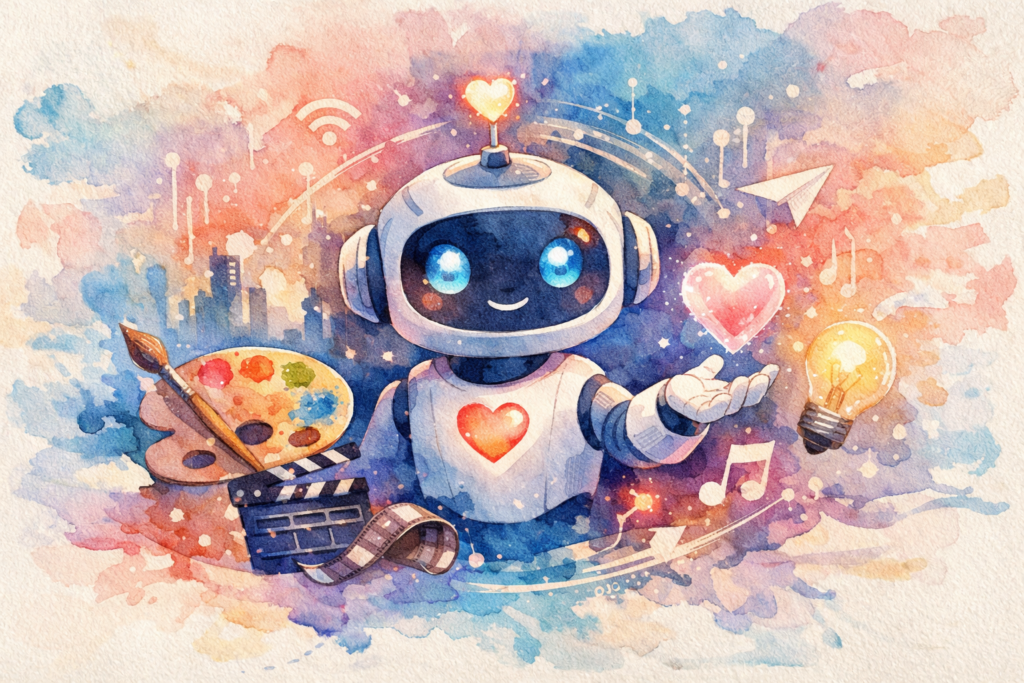
Imagine having a creative partner that never sleeps, never runs out of ideas, and can transform your wildest concepts into reality within minutes. That’s not science fiction anymore—it’s the promise of lovable AI, a revolutionary approach to artificial intelligence that’s reshaping how creators, designers, and developers bring their visions to life. Whilst traditional AI tools often feel cold and mechanical, lovable AI platforms are designed with human creativity at their core, making the technology feel less like a tool and more like a collaborative companion.
The creative industry faces a persistent challenge: balancing the demand for rapid output with the need for quality and originality. Deadlines loom, client expectations soar, and creative burnout becomes an occupational hazard. Enter lovable AI—a new generation of artificial intelligence that doesn’t just automate tasks but genuinely enhances the creative process, making it more intuitive, efficient, and dare we say, enjoyable.
Quick Answers
What is Lovable AI? Lovable AI refers to user-friendly artificial intelligence platforms designed specifically for creative professionals, offering intuitive interfaces and collaborative features that enhance rather than replace human creativity.
How does it differ from traditional AI? Unlike conventional AI tools that require technical expertise, lovable AI prioritises accessibility, natural language interaction, and seamless integration into creative workflows.
Who can benefit from it? Designers, developers, content creators, marketers, and anyone involved in creative work can leverage lovable AI to accelerate their projects whilst maintaining creative control.
In this comprehensive guide, we’ll explore seven transformative ways that lovable AI is revolutionising creative work, from rapid prototyping to intelligent design assistance. Whether you’re a seasoned professional or just beginning your creative journey, understanding these capabilities will help you stay ahead in an increasingly AI-augmented world.
Understanding Lovable AI and Its Growing Impact
Lovable AI represents a paradigm shift in how we interact with artificial intelligence. Rather than requiring users to adapt to complex technical interfaces, these platforms adapt to human needs, preferences, and creative processes. The term “lovable” isn’t just marketing speak—it reflects a fundamental design philosophy that prioritises user experience, emotional connection, and creative empowerment.
At its core, lovable AI combines advanced machine learning algorithms with intuitive interfaces that feel natural to use. These platforms understand context, learn from user preferences, and provide suggestions that genuinely enhance creative output rather than simply automating repetitive tasks. According to research from McKinsey & Company, generative AI could add between $2.6 trillion to $4.4 trillion annually to the global economy, with creative industries positioned to capture significant value from these technologies.
The Evolution of Creative AI Tools
The journey from early AI experiments to today’s lovable AI platforms has been remarkable. Early creative AI tools were often clunky, producing generic outputs that required extensive manual refinement. Today’s platforms, however, leverage sophisticated neural networks trained on vast datasets, enabling them to understand nuance, style, and creative intent.
Platforms like Lovable exemplify this evolution, offering developers and designers the ability to build full-stack applications through natural language prompts. This represents a fundamental shift from code-first to intent-first development, where creators can focus on what they want to build rather than how to build it.
Current Market Trends and Adoption Rates
The adoption of AI in creative workflows is accelerating rapidly. A 2024 survey by Adobe found that 73% of creative professionals now use AI tools regularly in their work, up from just 31% in 2022. This dramatic increase reflects both improved tool quality and growing recognition of AI’s potential to enhance rather than replace human creativity.
Investment in creative AI startups has surged, with venture capital funding in this sector reaching $4.5 billion in 2023 alone. This financial backing is accelerating innovation, leading to more sophisticated, user-friendly platforms that truly deserve the “lovable” designation.
Seven Transformative Benefits of Lovable AI
1. Rapid Prototyping and Iteration
One of the most significant advantages of lovable AI is its ability to transform ideas into functional prototypes at unprecedented speed. What once took days or weeks can now be accomplished in hours or even minutes. This acceleration doesn’t compromise quality—instead, it allows creators to explore more possibilities, test multiple approaches, and refine their vision through rapid iteration.
For developers, platforms like Lovable enable the creation of full-stack applications through conversational prompts. Simply describe what you want to build, and the AI generates functional code, complete with responsive design and modern frameworks. This democratises development, allowing designers and product managers to create working prototypes without extensive coding knowledge.
2. Enhanced Creative Exploration
Lovable AI serves as an infinite source of creative inspiration. When you’re stuck in a creative rut, these platforms can generate dozens of variations on a theme, suggest unexpected combinations, or introduce elements you hadn’t considered. This isn’t about replacing human creativity—it’s about expanding the creative palette and pushing beyond familiar patterns.
Designers using AI-powered tools report exploring 3-5 times more creative directions than they would manually, according to research from Forrester Research. This expanded exploration leads to more innovative final products and helps creators break free from creative constraints.
3. Intelligent Design Assistance
Modern lovable AI platforms don’t just execute commands—they provide intelligent assistance throughout the creative process. They can suggest improvements to layouts, identify accessibility issues, recommend colour palettes based on brand guidelines, and even predict user experience problems before they occur.
This intelligent assistance is particularly valuable for maintaining consistency across large projects. The AI can ensure that design elements align with established patterns, that code follows best practices, and that the final product meets quality standards without requiring constant manual oversight.
4. Seamless Collaboration and Communication
Lovable AI platforms excel at bridging communication gaps between team members with different skill sets. Designers can communicate their vision to developers through natural language, whilst developers can quickly visualise how code changes will affect the user experience. This reduces misunderstandings and accelerates the collaborative process.
The AI acts as a translator between disciplines, ensuring that everyone on the team can contribute effectively regardless of their technical background. This democratisation of the creative process leads to more diverse input and ultimately better products.
5. Automated Optimisation and Refinement
Beyond initial creation, lovable AI continuously optimises and refines outputs. It can automatically adjust responsive layouts for different screen sizes, optimise code for performance, suggest SEO improvements for content, and identify potential security vulnerabilities. This ongoing optimisation ensures that creative work meets professional standards without requiring exhaustive manual review.
According to Gartner, organisations using AI-powered optimisation tools report a 40% reduction in time spent on quality assurance and refinement tasks, allowing teams to focus on higher-value creative decisions.
6. Personalised Learning and Skill Development
Working with lovable AI is itself a learning experience. These platforms provide contextual explanations, suggest best practices, and help users understand the reasoning behind recommendations. Over time, creators develop deeper expertise in their craft whilst the AI adapts to their personal style and preferences.
This personalised learning approach is particularly valuable for professionals looking to expand their skill sets. A designer can gradually learn development concepts through working with AI-generated code, whilst a developer can improve their design sensibilities by understanding AI-suggested improvements.
7. Reduced Creative Burnout
Perhaps the most “lovable” aspect of these AI platforms is their ability to reduce creative burnout. By handling tedious, repetitive tasks and providing inspiration when creativity wanes, these tools help maintain creative energy and enthusiasm. Creators can focus on the aspects of their work they find most fulfilling whilst delegating the mundane elements to AI assistance.
A study by Deloitte found that creative professionals using AI assistance reported 35% lower stress levels and 28% higher job satisfaction compared to those working without AI support. This improvement in wellbeing translates directly to better creative output and longer, more sustainable careers.
Implementing Lovable AI in Your Creative Workflow
Step 1: Assess Your Current Workflow
Before integrating lovable AI into your process, take time to analyse your current workflow. Identify bottlenecks, repetitive tasks, and areas where you frequently experience creative blocks. This assessment will help you determine where AI assistance can provide the most value.
Create a detailed map of your creative process, noting time spent on each activity and pain points that slow progress. This baseline understanding will allow you to measure the impact of AI integration and adjust your approach as needed.
Step 2: Choose the Right Platform
Not all AI platforms are created equal. Select tools that align with your specific needs, integrate well with your existing software stack, and offer the level of control you require. For web development and application building, Lovable offers an excellent balance of power and accessibility.
Consider factors such as pricing structure, learning curve, community support, and the platform’s track record for updates and improvements. Many platforms offer free trials—take advantage of these to test functionality before committing.
Step 3: Start Small and Scale Gradually
Don’t attempt to revolutionise your entire workflow overnight. Begin by incorporating lovable AI into one specific aspect of your work—perhaps prototyping, content generation, or design exploration. Master this integration before expanding to other areas.
This gradual approach allows you to develop best practices, understand the AI’s capabilities and limitations, and build confidence in the technology. It also minimises disruption to ongoing projects and client commitments.
Step 4: Establish Clear Guidelines and Quality Standards
Define clear criteria for when to use AI assistance and when human judgement should take precedence. Establish quality standards for AI-generated outputs and create review processes to ensure consistency with your brand and professional standards.
Document these guidelines so that team members understand expectations and can work consistently with AI tools. This documentation should evolve as you gain experience and discover new use cases.
Step 5: Maintain Creative Control
Remember that lovable AI is a tool to enhance your creativity, not replace it. Always maintain final creative control over outputs. Use AI suggestions as starting points or inspiration rather than finished products. Your unique perspective, experience, and creative vision remain irreplaceable.
Develop a critical eye for AI-generated content. Understand its strengths—speed, variation, consistency—and its limitations—lack of true understanding, potential for generic outputs, and inability to grasp subtle cultural nuances.
Step 6: Continuously Learn and Adapt
AI technology evolves rapidly. Stay informed about new features, capabilities, and best practices. Participate in user communities, attend webinars, and experiment with new approaches. The most successful AI users are those who view it as an ongoing learning journey rather than a one-time implementation.
Share your experiences with colleagues and learn from their approaches. The collective knowledge of the creative community will help everyone maximise the benefits of lovable AI whilst avoiding common pitfalls.
Overcoming Common Challenges with Lovable AI
Challenge 1: Maintaining Originality and Authenticity
One concern many creators have about using lovable AI is the potential loss of originality. If everyone uses similar AI tools, won’t all creative work start looking the same? This is a valid concern, but one that can be addressed through thoughtful implementation.
Solution: Use AI as a starting point rather than an endpoint. Customise and refine AI-generated outputs to reflect your unique style and perspective. Combine AI assistance with traditional creative techniques, and always inject your personal vision into the final product. The most successful creators use AI to handle foundational elements whilst focusing their human creativity on distinctive touches that set their work apart.
Challenge 2: Technical Learning Curve
Despite being designed for accessibility, lovable AI platforms still require some learning. Understanding how to craft effective prompts, interpret AI suggestions, and integrate outputs into existing workflows takes time and practice.
Solution: Invest time in structured learning. Most platforms offer tutorials, documentation, and community forums. Dedicate specific time to experimentation without project pressure. Start with simple tasks and gradually increase complexity as your confidence grows. Consider the learning phase as an investment that will pay dividends through increased efficiency and creative possibilities.
Challenge 3: Quality Consistency
AI outputs can vary in quality, sometimes producing excellent results and other times generating content that requires significant refinement. This inconsistency can be frustrating, particularly when working under tight deadlines.
Solution: Develop a systematic approach to prompting and refinement. Learn which types of requests produce the most reliable results and create templates for common tasks. Build in time for review and iteration. As you gain experience with a particular lovable AI platform, you’ll develop intuition about when to trust its outputs and when to apply more scrutiny.
Challenge 4: Integration with Existing Tools
Many creative professionals work with established toolchains and workflows. Integrating new AI platforms without disrupting existing processes can be challenging, particularly in team environments where multiple stakeholders are involved.
Solution: Look for AI platforms that offer robust integration capabilities with popular creative tools. Lovable, for instance, generates code compatible with standard development frameworks, making integration straightforward. Start by using AI for standalone tasks before attempting deeper workflow integration. Communicate clearly with team members about changes and provide training to ensure smooth adoption.
Challenge 5: Cost Considerations
Professional-grade lovable AI platforms often come with subscription costs that can add up, particularly for freelancers or small studios. Balancing the benefits against the financial investment requires careful consideration.
Solution: Calculate the return on investment by measuring time saved and quality improvements. Many creators find that even modest time savings quickly justify subscription costs. Start with platforms offering free tiers or trials to validate benefits before committing to paid plans. Consider the cost not just in monetary terms but also in terms of reduced stress, improved work-life balance, and expanded creative possibilities.
The Future of Creative Work with Lovable AI
As we look ahead, the integration of lovable AI into creative workflows will only deepen. These platforms will become more intuitive, more powerful, and more seamlessly integrated into our daily work. The creators who thrive in this evolving landscape will be those who embrace AI as a collaborative partner whilst maintaining their unique creative voice.
The transformation isn’t about humans versus machines—it’s about humans empowered by machines. Lovable AI handles the heavy lifting, the repetitive tasks, and the technical complexities, freeing creators to focus on what they do best: imagining new possibilities, making nuanced creative decisions, and bringing authentic human perspective to their work.
Whether you’re building applications, designing interfaces, creating content, or developing digital experiences, lovable AI offers tangible benefits that can transform your creative practice. The seven ways we’ve explored—rapid prototyping, enhanced exploration, intelligent assistance, seamless collaboration, automated optimisation, personalised learning, and reduced burnout—represent just the beginning of what’s possible.
The key to success lies in approaching these tools with curiosity, maintaining creative control, and continuously learning as the technology evolves. Start small, experiment boldly, and discover how lovable AI can enhance your unique creative vision.
Ready to transform your creative workflow with cutting-edge AI solutions? The team at The Crunch specialises in helping creative professionals and businesses integrate AI tools effectively into their processes. We offer personalised consultations to assess your needs, recommend appropriate platforms, and develop implementation strategies tailored to your specific goals. Schedule your free consultation today and discover how lovable AI can elevate your creative work to new heights.
Frequently Asked Questions (FAQ)
1. What is lovable AI?
2. How does lovable AI work?
3. What are the benefits of using lovable AI?
4. How is lovable AI different from traditional AI?
5. Is lovable AI safe to use?
6. How much does lovable AI cost?
7. How can I get started with lovable AI?
8. Can lovable AI be customized for my brand?
9. What are common concerns about lovable AI?
10. Who can benefit from lovable AI?
11. Does lovable AI require technical skills to use?
12. Can lovable AI improve customer loyalty?