
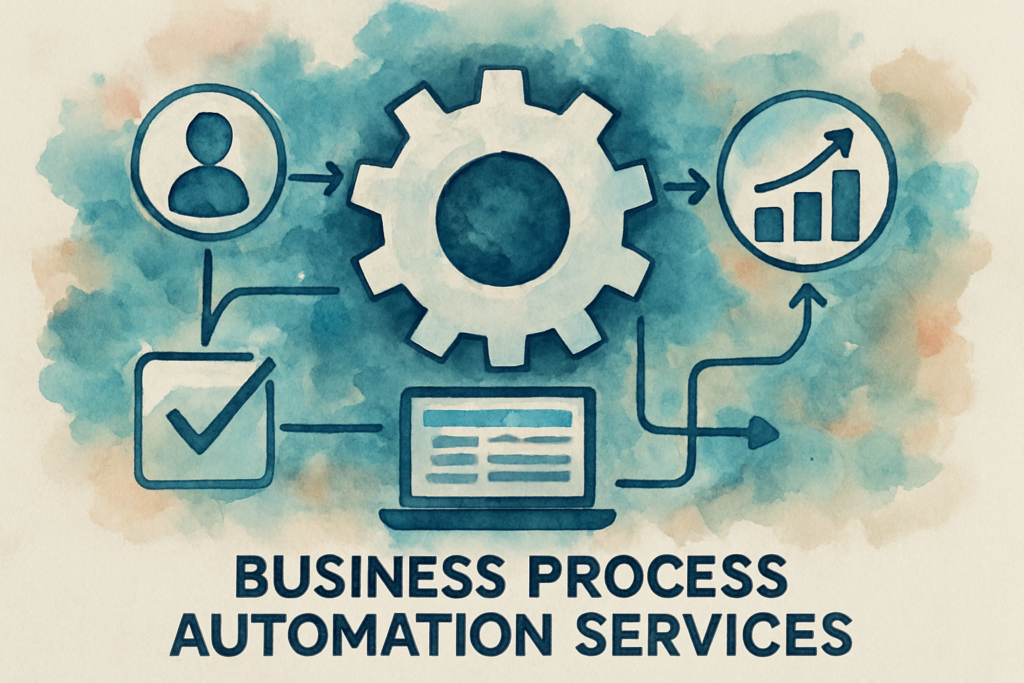
Picture this: Your team is drowning in repetitive tasks, manually processing invoices, responding to the same customer queries, and spending hours on data entry that could be done in minutes. Meanwhile, your competitors are scaling effortlessly, delivering faster results, and freeing their teams to focus on strategic growth. What’s their secret? Business process automation services.
In 2026, automation isn’t just a competitive advantage—it’s a necessity. Companies that embrace business process automation services are reducing operational costs by up to 90% whilst improving accuracy and employee satisfaction. Yet, with hundreds of platforms claiming to revolutionise your workflows, choosing the right solution can feel overwhelming.
This comprehensive guide cuts through the noise to reveal the seven best business process automation services transforming businesses this year. Whether you’re a small startup or an established enterprise, you’ll discover practical solutions that deliver measurable results.
Quick Answer: What Are the Best Business Process Automation Services?
The top business process automation services for 2026 include Zapier for no-code integrations, UiPath for enterprise robotic process automation, Monday.com for workflow management, ServiceNow for IT service automation, Pega for intelligent automation, Automation Anywhere for cloud-native RPA, and Kissflow for process management. Each platform offers unique strengths tailored to different business needs, from simple task automation to complex enterprise workflows.
Understanding Business Process Automation in 2026
Business process automation (BPA) refers to the use of technology to execute recurring tasks or processes in a business where manual effort can be replaced. Unlike simple task automation, BPA focuses on streamlining complex, multi-step workflows that span across departments, systems, and stakeholders.
The importance of business process automation services has skyrocketed as organisations face mounting pressure to do more with less. According to Gartner, by 2026, 80% of organisations will have adopted some form of intelligent automation, up from just 20% in 2021. This dramatic shift reflects the tangible benefits companies are experiencing: reduced operational costs, improved accuracy, faster processing times, and enhanced employee satisfaction.
Current Trends Shaping Business Process Automation
The automation landscape in 2026 is characterised by several transformative trends. Artificial intelligence and machine learning have moved from experimental features to core capabilities, enabling systems to handle unstructured data, make intelligent decisions, and continuously improve performance. Hyperautomation—the combination of multiple automation technologies—has become the standard approach for enterprises seeking comprehensive digital transformation.
Low-code and no-code platforms have democratised automation, allowing business users without technical backgrounds to design and deploy automated workflows. This shift has accelerated adoption rates and reduced dependency on IT departments. Meanwhile, cloud-native solutions have replaced on-premise installations, offering greater scalability, flexibility, and cost-effectiveness.
The ROI of Implementing Automation Services
The financial impact of business process automation services is substantial and measurable. Research from McKinsey indicates that organisations implementing comprehensive automation strategies achieve 20-35% improvements in operational efficiency within the first year. Time savings are equally impressive, with routine processes that once took hours now completed in minutes.
Beyond direct cost savings, automation delivers strategic advantages including improved compliance through consistent process execution, enhanced customer experiences through faster response times, and better data quality that supports informed decision-making. Companies also report significant improvements in employee morale as teams are freed from mundane tasks to focus on creative, strategic work.
The 7 Best Business Process Automation Services for 2026
1. Zapier
Zapier remains the gold standard for no-code automation, connecting over 6,000 applications without requiring any programming knowledge. Its intuitive interface allows users to create “Zaps”—automated workflows that trigger actions across multiple platforms based on specific conditions.
Key Benefits:
- Extensive app ecosystem covering virtually every business tool
- Multi-step workflows with conditional logic and filters
- Built-in AI features for data formatting and text processing
- Affordable pricing tiers suitable for businesses of all sizes
Zapier excels at connecting disparate systems, making it ideal for small to medium-sized businesses seeking quick wins without technical overhead. Common use cases include lead management, customer onboarding, social media automation, and data synchronisation across platforms.
2. UiPath
UiPath has established itself as the enterprise leader in robotic process automation (RPA), offering sophisticated capabilities for automating complex, rule-based processes. The platform combines attended and unattended bots with AI-powered document understanding and process mining tools.
Key Benefits:
- Advanced computer vision for legacy system automation
- Comprehensive process discovery and analytics
- Enterprise-grade security and governance features
- Scalable architecture supporting thousands of concurrent bots
Large organisations in finance, healthcare, and manufacturing rely on UiPath to automate high-volume transactional processes such as invoice processing, claims management, and regulatory reporting. The platform’s AI capabilities enable it to handle exceptions and unstructured data that traditional automation tools cannot process.
3. Monday.com
Monday.com has evolved from a project management tool into a comprehensive work operating system with powerful automation capabilities. Its visual, customisable interface makes it accessible to teams across all departments whilst offering sophisticated workflow automation features.
Key Benefits:
- Intuitive visual workflow builder requiring no technical skills
- Pre-built automation recipes for common business processes
- Seamless integration with popular business applications
- Collaborative features that keep teams aligned
Monday.com shines in scenarios requiring cross-functional collaboration, such as marketing campaign management, product development workflows, and customer success operations. Its flexibility allows teams to automate everything from simple notifications to complex approval chains.
4. ServiceNow
ServiceNow dominates the IT service management space, offering comprehensive automation for IT operations, customer service, and enterprise workflows. The platform’s strength lies in its ability to unify disparate systems and create seamless end-to-end processes.
Key Benefits:
- Powerful workflow engine with AI-driven recommendations
- Extensive ITSM capabilities including incident and change management
- Low-code application development environment
- Robust reporting and analytics dashboards
Enterprises use ServiceNow to automate IT service delivery, employee onboarding, procurement processes, and customer service operations. The platform’s machine learning capabilities continuously optimise workflows based on historical data and outcomes.
5. Pega
Pega combines business process management with AI-powered decisioning to deliver intelligent automation that adapts to changing conditions. The platform excels at orchestrating complex, long-running processes that require human intervention at specific stages.
Key Benefits:
- Advanced case management for complex workflows
- Real-time AI decisioning and predictive analytics
- Dynamic process optimisation based on business outcomes
- Industry-specific solutions for financial services, healthcare, and insurance
Pega is particularly strong in customer service automation, claims processing, and regulatory compliance workflows where decisions must be made based on multiple variables and business rules. Its ability to handle exceptions and adapt processes in real-time sets it apart from more rigid automation platforms.
6. Automation Anywhere
Automation Anywhere offers a cloud-native RPA platform that combines ease of use with enterprise-grade capabilities. The platform’s focus on intelligent automation integrates RPA with AI, machine learning, and analytics to handle increasingly complex processes.
Key Benefits:
- Cloud-native architecture with rapid deployment
- IQ Bot for intelligent document processing
- Discovery Bot for identifying automation opportunities
- Extensive bot marketplace with pre-built automations
Organisations leverage Automation Anywhere for finance and accounting automation, HR processes, supply chain operations, and customer service. The platform’s cloud-first approach eliminates infrastructure concerns whilst providing the scalability needed for enterprise deployments.
7. Kissflow
Kissflow provides an accessible, unified platform for process management and automation that bridges the gap between simple workflow tools and complex enterprise solutions. Its strength lies in empowering business users to design and deploy automated processes without IT involvement.
Key Benefits:
- User-friendly interface with drag-and-drop process design
- Pre-built process templates for common business functions
- Integrated case management and project collaboration
- Affordable pricing suitable for growing businesses
Kissflow is ideal for mid-sized organisations seeking to automate departmental processes such as procurement, HR workflows, vendor management, and approval processes. Its balance of simplicity and functionality makes it accessible to non-technical users whilst providing sufficient power for complex workflows.
Implementing Business Process Automation: A Practical Guide
Successfully implementing business process automation services requires a strategic approach that balances quick wins with long-term transformation. The following step-by-step guide will help you navigate the implementation journey whilst avoiding common pitfalls.
Step 1: Identify and Prioritise Automation Opportunities
Begin by conducting a comprehensive process audit across your organisation. Look for processes that are repetitive, rule-based, high-volume, and prone to human error. These represent your best automation candidates. Engage with employees who perform these tasks daily—they possess invaluable insights into pain points and inefficiencies.
Prioritise opportunities based on three criteria: potential ROI, implementation complexity, and strategic importance. Quick wins—processes that deliver significant value with minimal complexity—should be tackled first to build momentum and demonstrate value. According to Forrester Research, organisations that start with high-impact, low-complexity processes achieve 40% faster adoption rates.
Step 2: Select the Right Automation Platform
Choosing the appropriate business process automation services depends on your specific requirements, technical capabilities, and budget. Consider factors such as integration capabilities with existing systems, scalability to support future growth, ease of use for your team’s skill level, and total cost of ownership including licensing, implementation, and maintenance.
Don’t overlook vendor support and community resources. Platforms with active user communities, comprehensive documentation, and responsive support teams significantly reduce implementation risks. Request demonstrations and pilot programmes to evaluate platforms in your actual environment before committing to enterprise-wide deployments.
Step 3: Design and Document Your Automated Processes
Thoroughly document current processes before automating them. Create detailed process maps that identify all steps, decision points, exceptions, and stakeholders. This documentation serves as your blueprint for automation and helps identify opportunities for process improvement before automation.
Resist the temptation to simply automate existing processes without optimisation. Automation amplifies both efficiencies and inefficiencies. Streamline processes by eliminating unnecessary steps, consolidating redundant activities, and standardising variations before implementing automation. This approach, known as “process mining,” can reduce process steps by 30-50% according to industry benchmarks.
Step 4: Implement in Phases with Continuous Testing
Adopt an agile implementation approach, deploying automation in manageable phases rather than attempting a “big bang” rollout. Start with a pilot programme involving a small team or department. This allows you to identify issues, refine processes, and build internal expertise before scaling.
Establish robust testing protocols that cover normal operations, edge cases, and failure scenarios. Include end-users in testing to ensure the automated process meets practical needs and doesn’t introduce new complications. Monitor key performance indicators closely during the initial deployment period to validate expected benefits and identify areas requiring adjustment.
Step 5: Train Teams and Foster Adoption
Technology alone doesn’t guarantee success—people drive adoption. Invest in comprehensive training programmes that equip employees with the skills to work alongside automated systems. Address concerns about job security by emphasising how automation eliminates tedious tasks and creates opportunities for more meaningful work.
Designate automation champions within each department who can provide peer support and encourage adoption. Celebrate successes and share metrics demonstrating the positive impact of automation on team productivity and work quality. According to Deloitte, organisations with strong change management programmes achieve 3.5 times higher success rates in automation initiatives.
Best Practices for Sustained Success
Establish a centre of excellence (CoE) to govern automation initiatives, share best practices, and maintain standards across the organisation. Implement continuous monitoring and optimisation processes to ensure automated workflows remain efficient as business requirements evolve. Regularly review automation performance against established KPIs and adjust as needed.
Maintain comprehensive documentation of all automated processes, including logic, dependencies, and exception handling procedures. This documentation proves invaluable during troubleshooting, audits, and knowledge transfer. Finally, stay informed about emerging automation technologies and continuously evaluate opportunities to enhance existing automations with new capabilities.
Overcoming Common Challenges in Business Process Automation
Whilst business process automation services deliver substantial benefits, implementation journeys often encounter obstacles. Understanding these challenges and their solutions helps organisations navigate the transformation successfully.
Challenge 1: Resistance to Change
Employee resistance represents the most significant barrier to automation success. Team members may fear job displacement, distrust new technology, or simply prefer familiar working methods. This resistance can manifest as passive non-adoption or active sabotage of automation initiatives.
Solution: Address concerns transparently through open communication about automation’s purpose and impact. Involve employees in the automation design process, incorporating their feedback and expertise. Demonstrate how automation eliminates frustrating, repetitive tasks whilst creating opportunities for skill development and more engaging work. Provide adequate training and support to build confidence in using new systems.
Challenge 2: Integration Complexity
Modern businesses operate with diverse technology stacks comprising legacy systems, cloud applications, and custom-built tools. Integrating business process automation services with these disparate systems often proves technically challenging, particularly when dealing with older systems lacking modern APIs.
Solution: Conduct thorough technical assessments before selecting automation platforms, prioritising solutions with extensive integration capabilities and pre-built connectors. Consider middleware or integration platforms that bridge gaps between incompatible systems. For legacy systems, explore RPA solutions that can interact with applications through user interfaces rather than requiring direct system integration. Budget adequate time and resources for integration work—it typically consumes 40-60% of implementation effort.
Challenge 3: Inadequate Process Documentation
Many organisations lack comprehensive documentation of their current processes, making it difficult to design effective automations. Undocumented variations, exceptions, and tribal knowledge create gaps that undermine automation efforts.
Solution: Invest time in thorough process discovery and documentation before automation. Use process mining tools that automatically map workflows by analysing system logs and user activities. Conduct workshops with process owners and practitioners to capture tacit knowledge and identify all process variations. This upfront investment pays dividends by ensuring automations handle real-world scenarios rather than idealised processes.
Challenge 4: Scope Creep and Unrealistic Expectations
Automation projects frequently suffer from expanding scope as stakeholders identify additional opportunities or request feature additions. Simultaneously, unrealistic expectations about implementation timelines and benefits can lead to disappointment and perceived failure.
Solution: Establish clear project boundaries and governance processes that evaluate scope changes against strategic priorities and resource availability. Set realistic expectations by sharing industry benchmarks and case studies that reflect typical implementation timelines and outcomes. Adopt an iterative approach that delivers value incrementally rather than promising comprehensive transformation in unrealistic timeframes. Celebrate incremental wins to maintain momentum and stakeholder support.
Challenge 5: Insufficient Ongoing Maintenance
Automated processes require ongoing maintenance as business requirements evolve, systems are updated, and exceptions emerge. Organisations often underestimate the resources needed for continuous optimisation and support.
Solution: Establish dedicated resources for automation maintenance and optimisation. Implement monitoring systems that proactively identify issues before they impact operations. Create clear escalation procedures for handling exceptions and failures. Budget 15-20% of initial implementation costs annually for ongoing maintenance and enhancement. Treat automation as a continuous improvement journey rather than a one-time project.
The Future of Business Process Automation Services
As we progress through 2026, business process automation services continue evolving rapidly. Artificial intelligence and machine learning are transforming automation from rule-based task execution to intelligent systems that learn, adapt, and make decisions. Generative AI is enabling natural language interfaces that allow users to create automations through simple conversational commands.
The convergence of automation technologies—RPA, AI, process mining, and low-code development—is creating hyperautomation platforms that address end-to-end business processes rather than isolated tasks. This holistic approach delivers greater value whilst reducing the complexity of managing multiple point solutions.
Organisations that embrace business process automation services strategically position themselves for sustained competitive advantage. The efficiency gains, cost reductions, and enhanced agility delivered by automation free resources for innovation and growth. As automation technologies become more accessible and powerful, the question is no longer whether to automate but how quickly you can transform your operations.
Take the Next Step Towards Automation Excellence
Business process automation services represent one of the most impactful investments organisations can make in 2026. The platforms highlighted in this guide—from Zapier’s accessible no-code automation to UiPath’s enterprise-grade RPA—offer proven solutions for businesses at every stage of their automation journey.
Success requires more than selecting the right technology. It demands strategic planning, thoughtful implementation, and ongoing optimisation. By following the practical guidance outlined in this article, you can avoid common pitfalls whilst maximising the return on your automation investments.
The organisations thriving in today’s competitive landscape share a common characteristic: they’ve embraced automation as a core capability rather than a peripheral initiative. They’ve freed their teams from repetitive tasks, accelerated their operations, and created capacity for innovation and growth.
Ready to transform your business processes and unlock new levels of efficiency? The experts at The Crunch specialise in helping organisations identify automation opportunities, select appropriate solutions, and implement transformative automation strategies. Don’t navigate this journey alone—schedule your free consultation today to discover how business process automation services can revolutionise your operations and drive sustainable growth.
Frequently Asked Questions (FAQ)
1. What is business process automation (BPA)?
2. How does business process automation work?
3. What are the main benefits of business process automation services?
4. How do I know which processes in my business can be automated?
5. How much do business process automation services cost?
6. What is the difference between business process automation and robotic process automation (RPA)?
7. Will automation replace my employees?
8. How secure is business process automation?
9. How long does it take to implement business process automation?
10. What are common challenges when adopting business process automation?
11. How do I get started with business process automation services?
12. Can business process automation integrate with my existing software?